
A practical guide to confirmed Switch 2 upgrade pack prices, which paid upgrades look safe, which need closer scrutiny, and how to budget before rebuying games you already own.
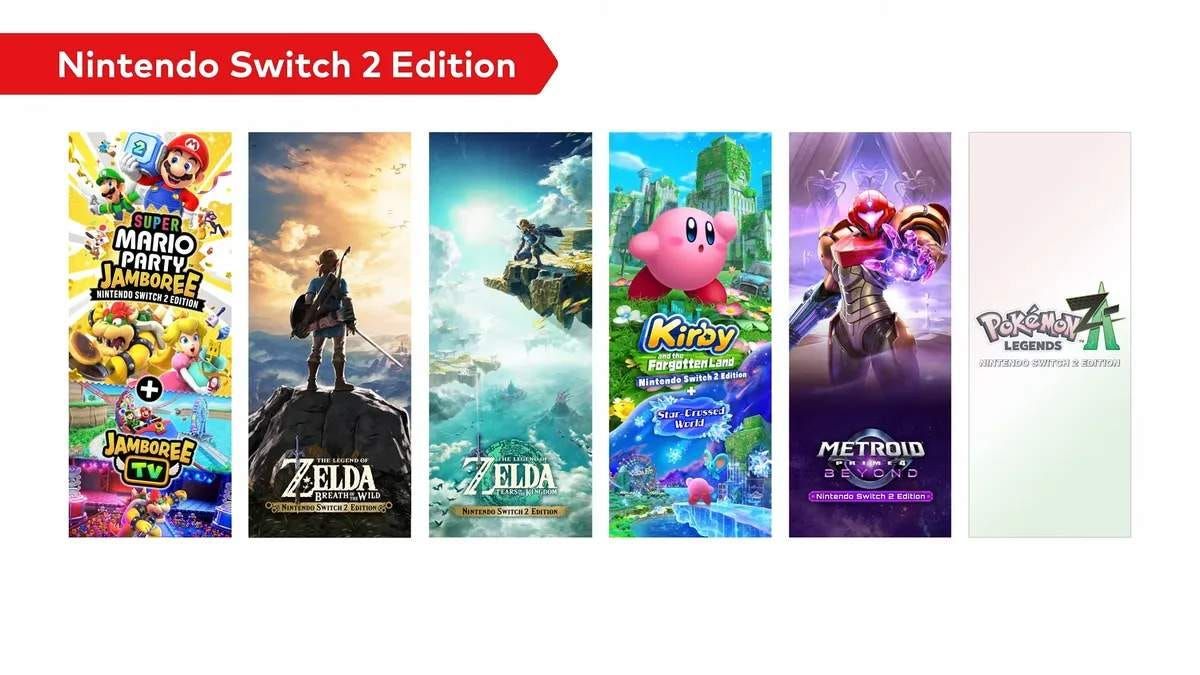
Image: theshortcut.com
The confirmed price spread is wider than a simple upgrade fee
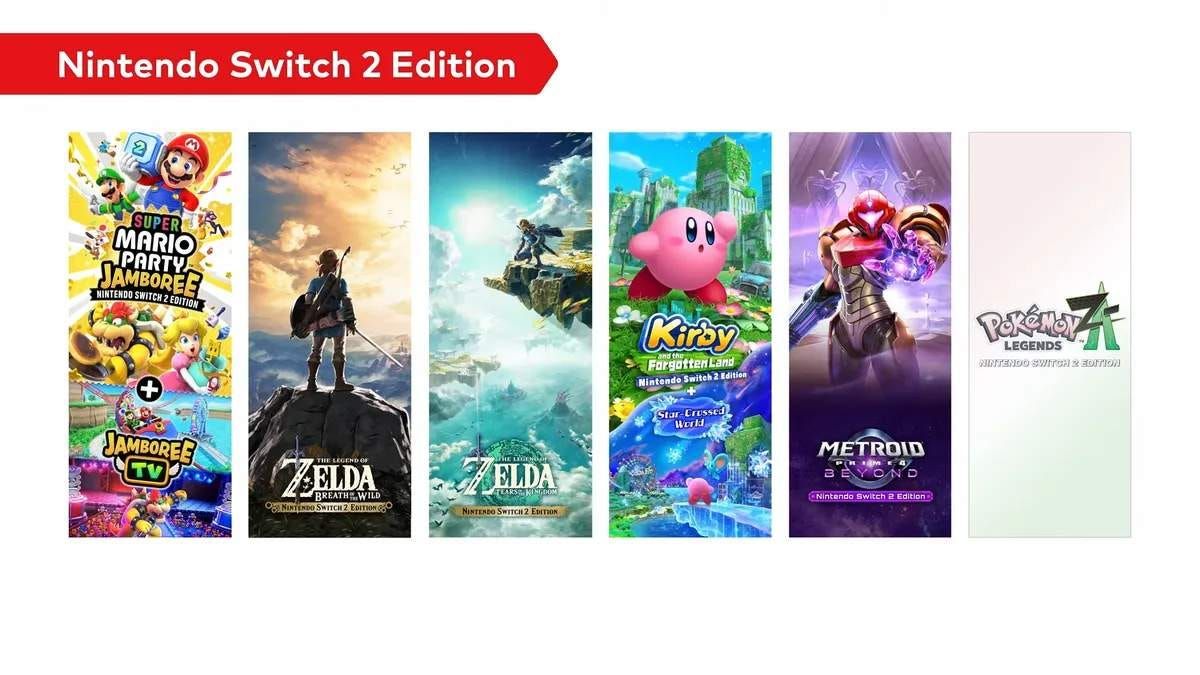
Store pages have now confirmed Nintendo Switch 2 Upgrade Pack pricing across a broad range of games, according to NintendoEverything’s July 4 roundup, and the headline tension is obvious: some upgrades are free, while others climb as high as $19.99. That range turns the Switch 2 transition into a budgeting problem for anyone carrying a large Switch library into Nintendo’s new hardware.
The most expensive confirmed example in NintendoEverything’s list is Kirby and the Forgotten Land – Nintendo Switch 2 Edition + Star-Crossed World at $19.99. Below that, Atelier Yumia: The Alchemist of Memories & the Envisioned Land is listed at $10.00, while Beyblade X Evobattle and Hello Kitty Island Adventure are each listed at $9.99. A-Train: All Aboard Tourism sits at $6.99. Several games fall into the $4.99 tier, including 4PGP, Animal Crossing: New Horizons, Broken Sword – Shadow of the Templars: Reforged, Card-en-Ciel, Human Fall Flat, and Kuukiyomi 4: Consider It.
The lower paid tiers are where the upgrade economy becomes harder to judge at a glance. NintendoEverything lists Botany Manor, Demon Castle Story, Dream Town Island, and Game Dev Story at $3.99; Bang Bang Bandits at $3.00; Braid: Anniversary Edition and Fruit Mountain Party at $2.99; Fantasy Life i: The Girl Who Steals Time and Inazuma Eleven: Victory Road at $2.59; Chippy&Noppo at $2.40; Dark Auction at $1.00; and Isekai Rondo and Isekai Villain at $0.99. Those are small individual charges, but they can add up quickly if players upgrade reflexively instead of deliberately.
At the same time, NintendoEverything notes that many of the free upgrades in the list come from third-party publishers. The confirmed free tier includes Asphalt Legends, Ball x Pit, Blood: Refreshed Supply, Brotato, Cast ’n’ Chill, Citizen Sleeper, Citizen Sleeper 2, Core Keeper, Cozy Grove, Dave the Diver, Dinkum, Disney Dreamlight Valley, Dispatch, Divinity: Original Sin 2, Factorio, Final Fantasy Tactics: The Ivalice Chronicles, Hades 2, High On Life, Hollow Knight, Hollow Knight: Silksong, Kingdom’s Return: Time-Eating Fruit and the Ancient Monster, and Little Rocket Lab. As a buyer guide, that creates the first rule: free upgrades are the easy wins, but paid upgrades need to be sorted by use case, not by nostalgia.
Know which kind of Switch 2 purchase you are looking at
Before comparing Switch 2 upgrade pack prices, players need to identify the product category. PCMag breaks Switch 2 software into three groups: native Switch 2 games made for the new console, Switch 2 Edition games that upgrade Switch titles with performance or visual improvements, and standard Switch 1 games that can still be played on Switch 2 through backward compatibility.
That distinction is the foundation of any smart budget. A native Switch 2 game is a new purchase. A standard Switch 1 game may run without an upgrade. A Switch 2 Edition sits in the middle, where the player may already own the base game but still needs an Upgrade Pack to access the enhanced version. PCMag also reports that physical versions of Switch 2 Edition titles include the Switch game and Upgrade Pack on the same cartridge, a detail that matters for buyers comparing digital upgrades against boxed copies.
The practical question is not simply whether a game has a Switch 2 logo somewhere on the store page. The question is whether you own the right base version, whether an Upgrade Pack exists for that title, and whether the Switch 2 Edition offers enough improvement or added material to justify the fee. Nintendo’s own Nintendo Switch Online + Expansion Pack page gives a clear example of this requirement language: members can access The Legend of Zelda: Breath of the Wild and The Legend of Zelda: Tears of the Kingdom Switch 2 Edition Upgrade Packs at no additional cost, but Nintendo states that players must own the physical or digital version of the game and must have an active membership.
That wording should shape expectations for every other upgrade. An Upgrade Pack is not a substitute for owning the game. It is an add-on path for owners, and the value depends on your existing copy, your subscription status where applicable, and the specific edition structure on the storefront.
The free tier is the safest first stop, with one caveat
The easiest recommendation is to claim or download free upgrades for games you already own and still intend to play. There is little downside when the store page confirms a $0 Upgrade Pack, especially for replayable or long-tail games such as Factorio, Dave the Diver, Divinity: Original Sin 2, Hades 2, Hollow Knight, Hollow Knight: Silksong, Core Keeper, Brotato, Disney Dreamlight Valley, and Citizen Sleeper 2, all of which appear in NintendoEverything’s free list.
From a strategy perspective, these free upgrades are the best way to stretch the early Switch 2 library without cannibalizing your budget for new releases. PCMag points out that Switch 2 pricing is already uneven, citing Mario Kart World at $80, Donkey Kong Bananza at $70, and Final Fantasy VII Remake Intergrade at $40 on Nintendo’s store. Against that backdrop, a free upgrade for an existing game is valuable because it preserves spending power for titles that cannot be upgraded from your current library.
The caveat is SKU clarity. A Reddit discussion on r/NintendoSwitch argues that some cross-generation third-party releases appear as separate Switch and Switch 2 products rather than games with Upgrade Packs. That Reddit post is community interpretation, not an official Nintendo policy statement, but it highlights a real consumer risk: players can assume every cross-gen game has an upgrade path when the storefront may instead present separate products.
So the free tier is financially straightforward, but players should still open the exact store listing and confirm that the item is an Upgrade Pack tied to the version they own. If the Switch 2 product is a separate SKU rather than an Upgrade Pack, the $0 logic may not apply.
The under-$5 upgrades are impulse-priced, but should not be impulse buys
The biggest paid cluster in NintendoEverything’s list sits below $5. That includes $4.99 upgrades for 4PGP, Animal Crossing: New Horizons, Broken Sword – Shadow of the Templars: Reforged, Card-en-Ciel, Human Fall Flat, and Kuukiyomi 4: Consider It. It also includes the $3.99 tier for Botany Manor, Demon Castle Story, Dream Town Island, and Game Dev Story, plus $2.99 for Braid: Anniversary Edition and Fruit Mountain Party, $2.59 for Fantasy Life i and Inazuma Eleven: Victory Road, $2.40 for Chippy&Noppo, $1.00 for Dark Auction, and $0.99 for Isekai Rondo and Isekai Villain.
These prices are low enough to feel painless individually. The budget trap is volume. Ten small upgrades at $2.99 to $4.99 can turn into the price of a discounted new game, a controller deal, or storage. IGN’s June 2026 Switch 2 accessory roundup, for example, listed a 256GB Samsung P9 Express microSD Express card at $39.99 during a sale. That is an accessory price, not an upgrade-pack price, but it is a useful reminder that the real Switch 2 transition budget includes hardware-adjacent costs too.
For the under-$5 tier, the cleanest buying rule is frequency. If you play the game weekly, upgrade it early. If you are keeping it installed for someday, wait. A small upgrade fee has the best value when it improves a game already in rotation. It has weaker value when it becomes a paid promise to revisit a backlog title.
Animal Crossing: New Horizons is the interesting case in this tier because the audience profile is different from a short campaign game. At $4.99 in NintendoEverything’s list, the fee is modest, but the game’s value depends heavily on whether your island is still active. A player who checks in regularly will feel a small improvement more often than a player who last opened the game years ago. That is not a technical verdict on the upgrade, since the provided sources do not specify its enhancement details. It is a usage-based way to avoid paying again for a game you have emotionally retired.
The $6.99 to $19.99 upgrades deserve a higher burden of proof
Once an Upgrade Pack crosses the $6.99 line, the decision changes. NintendoEverything lists A-Train: All Aboard Tourism at $6.99, Beyblade X Evobattle and Hello Kitty Island Adventure at $9.99, Atelier Yumia at $10.00, and Kirby and the Forgotten Land – Nintendo Switch 2 Edition + Star-Crossed World at $19.99. These are the upgrades that should make players pause before checking out.
The Kirby listing is the clearest example. At $19.99, it reaches the top of the confirmed price range in NintendoEverything’s roundup, and the title itself names Star-Crossed World as part of the Nintendo Switch 2 Edition package. That does not automatically make it a bad value, but it means the buying question is different from a $2.99 performance patch. Players should verify exactly what the Upgrade Pack includes on the store page, whether they want the new material named in the edition title, and whether they would rather apply that $19.99 toward a full Switch 2 release.
The $9.99 and $10.00 tier needs similar scrutiny. Atelier Yumia at $10.00 and Hello Kitty Island Adventure at $9.99 may be easy recommendations for active players, but less obvious for owners who bought in, bounced off, and are hoping the Switch 2 version will change their relationship with the game. Upgrade pricing can make old friction feel cheaper to revisit, but it does not guarantee that a game’s structure, pacing, or core loop now fits your taste.
A-Train: All Aboard Tourism at $6.99 is the kind of price that sits awkwardly between impulse and deliberate purchase. For simulation players who spend dozens of hours optimizing routes and economies, a paid upgrade could be rational if the listed improvements matter to their play. For someone who only sampled it, the better strategy is to wait until player reports or official store details make the benefit unmistakable.
Subscriptions and physical copies complicate the cheapest path
Nintendo’s own membership page introduces one major exception to simple one-time pricing. Nintendo Switch Online + Expansion Pack members get access to the Breath of the Wild and Tears of the Kingdom Switch 2 Edition Upgrade Packs at no additional cost, according to Nintendo, but an active membership is required and players must own the physical or digital game. That is a different economic model from buying a standalone Upgrade Pack outright.
For existing Expansion Pack subscribers, those Zelda upgrades are easy to prioritize because they do not add another fee at checkout. For non-subscribers, the provided source material does not include membership pricing, so the responsible guidance is to compare the subscription’s total value for your household rather than treating the Zelda upgrades as automatically free. Nintendo’s page also lists access to classic game libraries and select DLC as Expansion Pack benefits, including GameCube games for Switch 2 owners, but the subscription only makes sense if you will use enough of what it includes.
Physical ownership adds another layer. PCMag reports that physical Switch 2 Edition releases include the Switch game and Upgrade Pack on the same cartridge. That can be convenient for new buyers, collectors, or households sharing carts, but it does not answer every existing-owner scenario. If you already own a physical Switch copy, you still need to confirm whether the Upgrade Pack works with that copy and whether the storefront recognizes your entitlement.
The Reddit discussion raises a related concern around third-party cross-gen releases and separate SKUs. Again, that post is not an official source, but it captures the confusion players are trying to solve: some games may look like natural upgrade candidates while being sold differently. Until Nintendo or publishers provide clearer universal guidance, the safest move is to check each game individually instead of assuming the platform has a single Smart Delivery-style rule.
A practical upgrade plan before spending on games you already own
The best Switch 2 paid upgrades strategy is to treat your old library like a draft board. Start with confirmed free upgrades for games you actively play. Move next to the sub-$5 paid upgrades that match your current habits. Put the $6.99 to $19.99 upgrades into a waiting room until you have read the exact store description, confirmed ownership requirements, and decided whether the Switch 2 Edition content or improvements are worth diverting money from new games.
That approach matters because the Switch 2 game upgrade cost is no longer a single category. NintendoEverything’s list shows everything from $0 to $19.99. PCMag’s broader pricing context shows a new console market where Nintendo’s own software can run from $70 to $80, while at least one third-party Switch 2 release, Final Fantasy VII Remake Intergrade, is listed at $40. IGN’s accessory reporting shows that storage and peripherals can also claim part of the early-adopter budget. A player who upgrades every familiar icon on day one may end up spending the price of a new game without making a clear choice.
My buyer-guide read is simple: do not pay to make your backlog look newer. Pay to improve the games you are actually going to play on Switch 2 this month. Free upgrades can be claimed broadly. $0.99 to $4.99 upgrades are sensible when the game is already in your routine. $9.99 and $10.00 upgrades should be treated like small DLC purchases. Kirby’s $19.99 Upgrade Pack, because it is the top confirmed price in the list and carries the Star-Crossed World branding, deserves the same scrutiny you would give any paid expansion.
The Nintendo upgrade pack list is useful because it replaces uncertainty with numbers. It does not replace judgment. Before rebuying or upgrading a game you already own, confirm the exact edition, check whether your physical or digital copy qualifies, look for any subscription entitlement, and decide whether the upgrade serves your current play habits. That is how Switch 2 owners keep upgrade convenience from becoming a quiet second launch tax.