
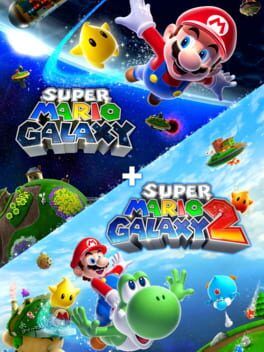

The limited-time Switch 2 bundle with Super Mario Galaxy 1 and 2 is more than a small discount. It shows how Nintendo wants to price its new hardware, push early adoption with a marquee 3D Mario package, and set expectations for how it will sell its back catalog on Switch 2.
Nintendo’s limited-time Switch 2 + Super Mario Galaxy 1+2 bundle looks simple on the surface: new hardware, two beloved 3D Mario games, and a small discount compared to buying everything separately. Underneath that, though, is a clear signal of how Nintendo is thinking about price, value, and software strategy in the first phase of the Switch 2 era.
Price positioning in a world of creeping costs
At $499.99, the Switch 2 bundle slots into an increasingly expensive console market. Standalone Switch 2 hardware is effectively positioned just under that figure, and picking up Super Mario Galaxy 1 and 2 individually would normally push the total cost about $20 higher. That discount does not look impressive in isolation, but it matters for two reasons.
First, it lets Nintendo claim a value play at a time when players are watching every price hike. Sony has already nudged PS5 prices up in some regions, and game MSRPs across platforms have been trending higher. Nintendo itself has been experimenting with flexible pricing on Switch 2 software, with some premium titles carrying a higher tag than the historic $59.99 standard. In that context, even a modest $20 savings is less about generosity and more about anchoring perception. Nintendo can advertise this as a full next-gen starter kit that still undercuts the combined list price and appears more consumer friendly than its competitors’ recent moves.
Second, the bundle quietly creates a psychological floor for early Switch 2 ownership. If $499.99 is framed as the “complete” price for getting in with a prestige Mario experience, it softens the blow of any future increases in base hardware cost or game pricing. Buyers lock in a known deal now and avoid the worry that waiting six months will mean paying more for the same combination of hardware and must-play software.
A marquee 3D Mario as the adoption engine
Nintendo rarely wastes a flagship 3D Mario on a throwaway promotion. Using Super Mario Galaxy 1 and 2 as the headliners for a launch-window Switch 2 bundle underscores how serious Nintendo is about converting fence-sitters quickly.
Galaxy and Galaxy 2 are not niche remasters. They are among the highest-rated 3D platformers ever made, with a reputation that spans multiple console generations. Packaging them together as an enhanced double feature gives Nintendo a way to say that a new Switch 2 buyer is not just catching up on old content but accessing a curated, definitive Mario experience that plays to the hardware’s strengths.
From a platform perspective, this reduces friction in two ways. First, it answers the classic launch question of “What do I play first?” with a single, powerful suggestion that appeals to nostalgic players and new fans at the same time. Second, it ensures that Switch 2 adoption is anchored to a game that shows off Nintendo’s design DNA in three-dimensional space: inventive gravity puzzles, varied galaxies, and tight platforming tuned for modern controls and higher fidelity.
Value versus buying hardware and software separately
On paper, the bundle is only about $20 cheaper than purchasing a Switch 2 and the Galaxy games a la carte. In practice, that small discount stretches further because of how players actually buy into a platform.
New hardware buyers rarely stop at one game. They often add an extra title, a memory card, an online subscription, or an extra controller. A hardware-only purchase looks cheaper at checkout, but the “real” entry point usually climbs quickly once software is factored in. The Galaxy bundle collapses some of that decision-making into a single transaction: here is the console, here are two full-length, critically acclaimed games, and here is a modest but tangible discount to nudge you into choosing this configuration instead of piecing it all together.
From Nintendo’s angle, that is efficient. It nudges average revenue per user upward without the optics of an aggressive price hike. Rather than discounting hardware deeply, Nintendo discounts software just enough to make this the default Switch 2 choice for anyone even mildly interested in Mario. The company preserves its margin on the console, sells two games immediately, and keeps players in its ecosystem long enough that accessory and online service spending become more likely later.
For consumers, the value proposition depends on intent. Anyone who was going to buy a Switch 2 and at least one 3D Mario anyway will find the bundle hard to argue against. Those who are indifferent to Mario or more focused on third-party releases may not see the same upside, but they are also not the main audience for this promotion.
What the bundle signals about Nintendo’s early-gen software strategy
The Galaxy bundle is also a glimpse into how Nintendo plans to handle its back catalog and tentpole brands on Switch 2 in the first couple of years.
One clear signal is that Nintendo sees curated legacy collections as a key part of the early library. Instead of rushing a brand-new flagship 3D Mario to meet the hardware launch date at any cost, Nintendo is comfortable leaning on upgraded classics that already have proven pull. That buys development teams more time to build a truly next-generation Mario while ensuring that the console’s first wave of buyers still associate Switch 2 with a high-end 3D Mario experience.
Another signal is the way Nintendo is segmenting value. Core legacy titles like Galaxy 1 and 2 are not being handed out cheaply or bundled as an afterthought. They are presented as premium software that justifies a higher overall buy-in when paired with hardware. That approach suggests we will likely see more “platform-defining” bundles built around Zelda, Mario Kart, and potentially Pokémon, each framed as high-value starter kits rather than deep discounts.
There is also an implication for how Nintendo may treat its digital storefront and subscription services. By anchoring Galaxy 1 and 2 inside a paid hardware bundle instead of, for example, dropping them into Nintendo Switch Online immediately, Nintendo is reinforcing the idea that enhanced legacy titles remain standalone products first and subscription perks second. Expect the best-known Wii and Wii U era upgrades on Switch 2 to appear as full-price or bundled offerings long before they show up as part of any all-you-can-play catalog.
Finally, the limited-time window on the Galaxy bundle tells us how Nintendo plans to manage urgency. By restricting the offer to a defined period, Nintendo encourages early adoption and secures a predictable wave of hardware sales without committing to that same level of value indefinitely. Once the promo ends, the company can watch how baseline Switch 2 demand holds up, then decide whether to reintroduce similar bundles, adjust hardware pricing, or shift attention to other franchises.
Beyond packaging: a template for the Switch 2 era
Seen purely as a deal, the Switch 2 + Super Mario Galaxy 1+2 bundle is fine but not spectacular. Viewed as a strategic move, it is much more interesting. Nintendo is setting a tone for the generation: premium hardware, premium software, and curated bundles that pretend to be simple discounts while actually guiding how and when players buy in.
If you were already planning to pick up a Switch 2 and dive into 3D Mario, this bundle is the version Nintendo would like you to see as the “default.” For everyone else, it is an early sign that the company is going to lean on its strongest brands, its back catalog, and tightly controlled time-limited offers to define what value looks like on Switch 2.