

Nintendo’s 2025 Japanese eShop rankings for Switch and Switch 2 reveal how Mario Kart World, Pokémon Legends: Z‑A, Mario Kart 8 Deluxe, and a wave of evergreen hits and indies define the country’s digital tastes at the close of the Switch era and the first year of Switch 2.
As 2025 wraps, Nintendo has pulled back the curtain on Japan’s best-selling digital games across both Nintendo Switch and Nintendo Switch 2. The rankings are a snapshot of a rare transition year: one console is closing out a historic run while its successor is exploding out of the gate.
Nintendo’s own data, alongside late-December eShop charts, shows a marketplace that looks familiar on the surface yet is quietly reshuffling underneath. Mario Kart World and Pokémon Legends: Z‑A sit at the center of that story, flanked by an army of evergreen Switch favorites and a surprisingly muscular indie and download-only scene.
Mario Kart World’s immediate dominance on Switch 2
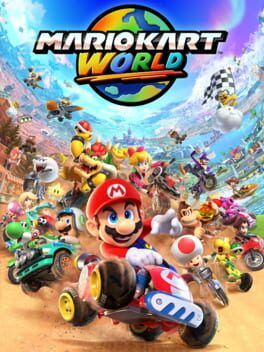
On Switch 2, Mario Kart World is the unquestioned digital heavyweight in Japan for 2025. It tops Nintendo’s full-year ranking for paid downloads, cementing itself as the default system-seller in the console’s first year.
This is not just another strong Mario Kart. Multiple independent reports have already flagged Mario Kart World as the fastest-selling entry in the series in Japan, and Nintendo’s own digital chart backs that up. Bundles that pack Mario Kart World with the hardware clearly accelerate its numbers, but the eShop performance suggests players are buying it standalone in droves.
Mechanically, Mario Kart World leans into scale and connectivity, with interconnected environments and a stronger focus on online and party play. In Japan, that lines up almost perfectly with how Switch 2 is positioned: a family and friend machine where everyone knows what they are getting when they boot up a Mario Kart. The fact that it roars to the top of the digital charts in the same year as its physical dominance paints a clear picture. In Japan, Switch 2 ownership practically implies Mario Kart World ownership.
The broader implication is that Nintendo is not in a hurry to replace Mario Kart again. Digital performance of this magnitude in year one suggests this could be the franchise’s digital pillar for the entirety of the Switch 2 life cycle, just as Mario Kart 8 Deluxe was for Switch.
Pokémon Legends: Z‑A splits its success across generations
If Mario Kart World is the banner for Switch 2, Pokémon Legends: Z‑A is the bridge between generations. On Switch 2 it lands second on the full-year digital chart, chasing Mario Kart World but keeping close enough to feel like a co-headliner for 2025.
The twist is that Legends: Z‑A is also the number one digital game on the original Switch’s 2025 list. Nintendo’s rankings highlight that the game is pulling significant paid downloads on both platforms, with the older hardware still contributing meaningfully late into its life.
That dual success says a lot about how Japanese players are treating the cross-gen period. In a market where handheld-style play and portability have always been core, many players are still content with their existing Switch hardware if a massive franchise like Pokémon still supports it. Switch 2 may be the shiny new device, but Pokémon’s reach is so wide that it continues to energize the outgoing platform’s digital ecosystem.
It also reinforces a long-running pattern in Japan. Pokémon is the rare series that can move hardware and software on its own, yet here it shares the stage with Mario Kart instead of replacing it. Mario Kart World may define what people play together in Japanese living rooms, but Pokémon Legends: Z‑A dictates what many play alone on trains and commutes, whether on a brand-new Switch 2 or the Switch they have owned for years.
Mario Kart 8 Deluxe refuses to fade away
The older Mario Kart is not going quietly. On the December 27, 2025 eShop chart for Japan, Mario Kart 8 Deluxe reclaims the weekly number one position for all games, ahead of Pokémon Legends: Z‑A and other evergreen juggernauts like Super Smash Bros. Ultimate and Minecraft.
Holiday weeks traditionally belong to known quantities that are easy to recommend, and Mario Kart 8 Deluxe perfectly fits that profile. What makes this more interesting in 2025 is that it is happening in parallel to Mario Kart World’s breakout on Switch 2. Japan’s digital charts are effectively showing two different yet overlapping Mario Kart audiences.
On Switch 2, many new or upgrading players are buying Mario Kart World as their default racing game. On the original Switch, Mario Kart 8 Deluxe continues to function as the long-term evergreen that keeps selling whenever new users join the ecosystem or families add a second or third copy.
This dual-Kart reality underlines a key trait of Nintendo’s digital strategy in Japan. Rather than hard-resetting the library with a next-gen launch, Nintendo allows its previous generation evergreen hits to keep breathing. The result is that digital storefront rankings become a cross-generational conversation instead of a clean break.
Smash, Party, Minecraft and Zelda stabilize the charts
Beyond the flagship pairings of Mario Kart and Pokémon, the Japanese 2025 digital charts are dense with Nintendo mainstays and global hits that give the rankings a familiar spine.
Super Smash Bros. Ultimate appears high on both the full-year ranking and the late December chart. For a game that is now several years old, its continued digital relevance in Japan signals a thriving competitive and casual scene that still buys digitally, whether for convenience or to hop online quickly.
Super Mario Party Jamboree grabs a strong position near the top of the late December eShop ranking. Party games have always been critical to the Switch ecosystem, and Jamboree’s high placement hints that in the first holiday season with Switch 2 in the wild, Japanese players still default to Mario-branded party experiences when they want something approachable for gatherings.
Minecraft, which never truly leaves the top of any chart, remains a fixture of both the yearly and weekly lists. Its steady presence is less about spikes and more about constant new adopters, many of whom in Japan are kids or families who are digital-first.
Zelda is more fractured but still prominent. Tears of the Kingdom and Breath of the Wild continue to show up in the combined 2025 digital rankings, while newer entries like The Legend of Zelda: Echoes of Wisdom find their way into the top ranges. Combined, they suggest that there is always a steady flow of players entering the Zelda funnel for the first time, even as newer titles debut.
These familiar titles help smooth out the volatility that Switch 2’s launch could have introduced. They ensure that the eShop has a stable core of predictable best-sellers that anchor the storefront even as new IP, expansions and sequels try to carve out space.
Metroid, Hogwarts, sports and more diversify the paid download field
One of the more intriguing aspects of Nintendo’s 2025 digital data is how varied the mid to upper tier of the rankings has become. Nintendo’s internal list shows titles like Metroid Prime 4: Beyond, Hogwarts Legacy, NBA 2K26 and Kirby and the Forgotten Land holding their own in the national digital conversation.
Metroid Prime 4: Beyond standing out in the yearly ranking shows that even historically niche Nintendo franchises can gain more mainstream digital traction when placed on a platform as ubiquitous as Switch and Switch 2. Japan has long favored portable and hybrid experiences, and Metroid Prime 4’s presence suggests that narrative-driven, single player adventures can still command sustained attention alongside the usual multiplayer giants.
Hogwarts Legacy and NBA 2K26 underline the role of Western third parties and sports in Japan’s digital mix. They may not challenge Mario Kart or Pokémon at the very top, but their ability to chart means that Japanese digital buyers are increasingly comfortable dipping into global hits that are not heavily localized to domestic tastes.
Meanwhile, Kirby and the Forgotten Land, as well as other Nintendo “B-tier” franchises, round out the list, giving families more colorful, character-driven options that occupy a middle ground between the big tentpoles and smaller indies.
Together, these games prove that Switch and Switch 2 digital storefronts in Japan are not monolithic. They are dominated by a few mega-hits, but there is still room for ambitious story games, licensed blockbusters and sports titles to carve out consistent revenue.
Hollow Knight: Silksong and the rise of download-only favorites
If the full-game list is about comfort food, the download-only rankings for 2025 highlight Japanese curiosity. Nintendo’s chart for titles without a standard retail release is topped by Hollow Knight: Silksong, which not only leads the digital-only category but also climbs high on the overall ranking that includes boxed titles.
That double success indicates that the appetite for challenging, meticulously crafted 2D action games is very real in Japan, at least in digital spaces. The original Hollow Knight also charts in the download-only list, showing that Silksong’s visibility pushed many players back to the first game.
Super Mario Galaxy 2 appearing in the download-only rankings, tied to the specific way Nintendo distributes it in Japan, is another signal that fans are eager to fill gaps in their Mario library digitally when physical options are limited or absent.
Hades 2 and Stardew Valley maintain strong visibility, continuing a trend where roguelikes and life sims function as comfort genres for digital users. These are games designed to be dipped into repeatedly, which pairs naturally with handheld play.
It is notable how crowded the rest of the download-only top tier has become: Terraria, Pizza Tower, Deltarune, Among Us, various Five Nights at Freddy’s and Poppy Playtime entries, and party experiences like multiple Jackbox Party Packs all secure spots. That mix shows that Japan’s digital audience comfortably coexists across different price points, tones and session lengths, from intense platformers to laid-back farming to bite-sized horror.
What these rankings reveal about Japanese player preferences in 2025
Taken together, Nintendo’s 2025 digital rankings for Switch and Switch 2 in Japan reveal a few consistent patterns about where the audience is and where it is headed.
First, the country still gravitates toward familiar multiplayer staples when a new console arrives. Mario Kart World being the year’s top digital seller on Switch 2 and Mario Kart 8 Deluxe swinging back to number one in weekly charts at the end of the year both highlight a culture that prizes shared play and reliability.
Second, cross-generation strategies work. Pokémon Legends: Z‑A thriving on both Switch and Switch 2 shows that big publishers do not have to abandon older hardware in Japan right away to succeed digitally. Instead, they can double-dip across generations and let players migrate at their own pace.
Third, evergreen titles remain the backbone of Nintendo’s digital revenue. Smash, Minecraft, Mario Party, Zelda, Animal Crossing and assorted Mario platformers keep appearing near the top of lists and backfill any quiet periods between big new releases.
Fourth, the download-only chart shows that Japan’s digital audience is more adventurous than it might appear if you only looked at boxed sales. Hollow Knight: Silksong and its peers demonstrate that there is space for challenging indies, retro-inspired platformers and more niche experiences to thrive without ever touching store shelves.
Finally, the overlap between Switch and Switch 2 charts suggests that the transition is additive rather than replacement-driven. Switch is not being abandoned overnight, especially in a region where handheld-style systems have long life tails. Instead, it is becoming the budget and family entry point, while Switch 2 defines the new high end. Digital sales data in 2025 shows those ecosystems feeding into each other rather than competing.
As we head into 2026, the key question is whether Nintendo and its partners can sustain this balance, keeping evergreen juggernauts like Mario Kart World at the top while still giving new IP and riskier projects enough oxygen. If the 2025 rankings are any indication, Japanese players on Switch and Switch 2 are willing to support both, as long as the games fit neatly into the rhythms of everyday portable play.