
Nintendo’s new developer comments show GameChat was shaped by prototypes, user testing, screen sharing, and practical hardware limits. Here is what Switch 2 owners should know.
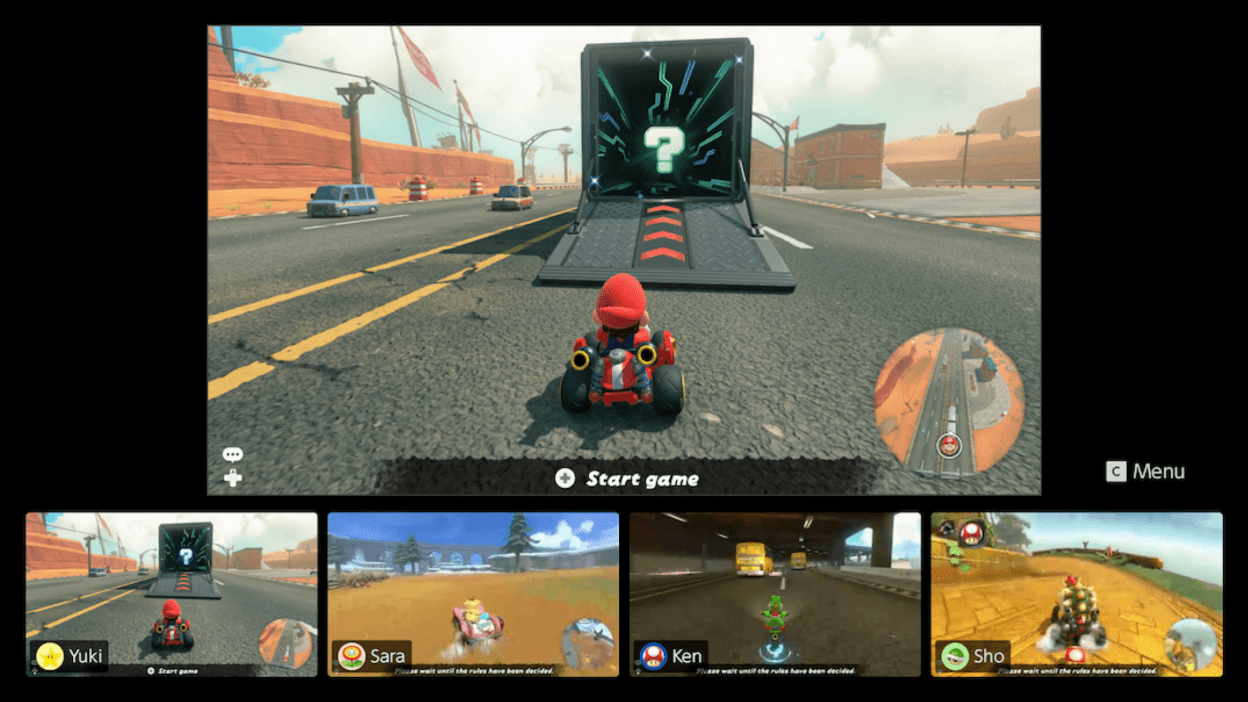
Image: mashable.com
Nintendo’s clearest look yet at GameChat starts with an old problem
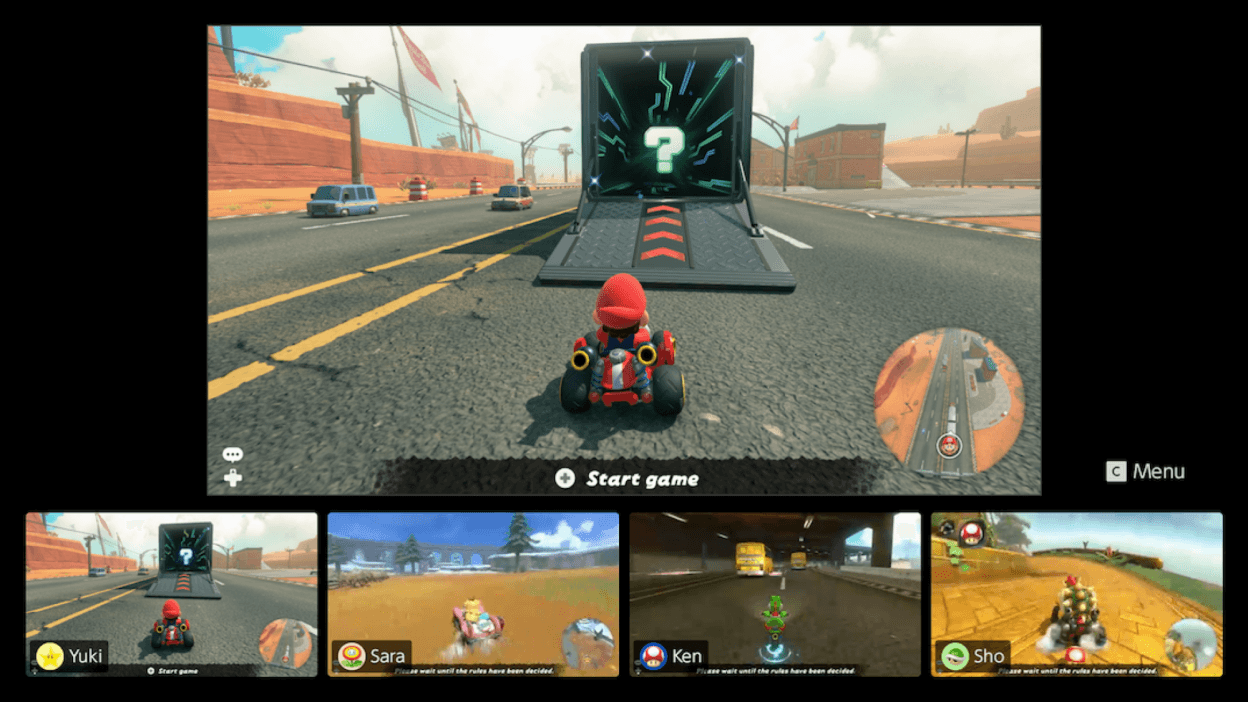
Nintendo has now explained that Switch 2 GameChat was built around a specific design concern: voice chat alone was not enough to recreate the feeling of friends gathering around the same screen. In a developer post summarized by Nintendo Everything, Nintendo said its team found that when people only talked by voice, “no one comments on the game being played, and the game itself gets left behind.” That observation pushed the feature beyond Nintendo Switch 2 voice chat and toward a combined system of voice, screen sharing, and optional video.
That is the strongest new detail in Nintendo’s latest explanation, because it reframes GameChat as a social design project rather than a late catch-up feature. Nintendo’s official Switch 2 features page says players can start a chat with friends using the C Button, share a game screen while chatting, and use the Nintendo Switch 2 camera or another compatible USB-C camera for face-to-face video. Nintendo Everything reports that up to twelve people can use voice chat, up to four friends can share their screens, and video chat is supported.
The tension is obvious. Nintendo is adding a console-level communication layer after years in which many Switch players relied on phones, third-party services, or game-specific implementations. But Nintendo’s own account suggests the company was not trying to copy a standard chat app wholesale. It was trying to decide which forms of communication actually keep the game in the conversation.
The design target was couch play, translated online
Nintendo’s developer post, as quoted by Nintendo Everything, describes GameChat as an attempt to recreate the “fun of gathering with friends and playing games” in an online setting. The product manager cited the kind of local play where people laugh, talk, give advice, and react while looking at the same screen. That framing matters because it explains why screen sharing became central to Nintendo GameChat explained as a Switch 2 feature.
In most online voice systems, the shared object is the match, raid, lobby, or party. If everyone is playing the same thing, that can be enough. Nintendo’s challenge is different. Switch has long leaned into mixed play styles, family use, local multiplayer habits, and portable sessions where one person may be playing something entirely different from another. In that environment, voice chat without visual context can become background noise. Screen sharing gives the group a common reference point, even when only one person is showing what they are doing.
From a strategy perspective, this is the key meta shift in the Switch 2 features pitch. Nintendo is using GameChat to make the console itself feel like the social space, instead of treating each individual game as the sole meeting point. If that works, the value of a GameChat session is not limited to competitive coordination. It can support spectatorship, advice, casual hangouts, and the old living-room habit of one person playing while others comment.
Nintendo tested GameChat before Switch 2 hardware was final
The feature did not begin as a finished Switch 2 app. GoNintendo and Nintendo Wire both cite Nintendo’s Japanese developer material in reporting that work on Switch 2 features such as GameChat began around 2020, before Nintendo had settled on what its next dedicated gaming console would be. According to the quoted Nintendo account, the team first made a PC prototype to test playing games while using voice chat and video chat.
That PC stage showed Nintendo the appeal of chatting while sharing a game screen, but it did not answer the harder console question. GoNintendo reports that Nintendo wanted to know whether a dedicated game system could move between game and chat without interrupting play, and whether that transition would feel natural. A PC, with variable and expandable hardware, could not reproduce the constraints of a fixed console.
That led Nintendo to build a development prototype based on the already released Nintendo Switch, according to GoNintendo and Nintendo Wire. The reporting says Nintendo had to work around Switch resource limits involving memory, CPU, and GPU because a typical configuration could not run all GameChat functions at once. That detail is important for understanding why this feature arrives as a Switch 2 system feature rather than a retrofit for the original Switch. The sources do not describe a public upgrade path for bringing GameChat to original Switch hardware, and Nintendo’s own Switch 2 page presents it as part of the Switch 2 feature set.
The interface was cut down after first-time users got overwhelmed
Nintendo’s most revealing usability detail is not the camera or the screen sharing cap. It is the button count. Nintendo Everything reports that Nintendo tested GameChat with first-time users and found that they tended to use only voice calls because the range of functions was overwhelming. Nintendo’s team then “gradually reduced the number of main buttons” and repeatedly tested the feature with new users.
The result, according to Nintendo Everything, was a three-button focus: microphone, game sharing screen, and camera. That is a very Nintendo solution to a very modern communication problem. Voice, video, screen sharing, party controls, privacy choices, and system overlays can quickly become a dashboard. Nintendo appears to have treated complexity as a threat to adoption, especially for a feature intended to be used while a game is already demanding attention.
This is where the design choice has long-term consequences. A stripped-down interface can make GameChat easier to start, especially through the C Button that Nintendo advertises on its official features page. The tradeoff is that Nintendo has to hide or simplify the kinds of options heavy voice-chat users may expect from other platforms. The provided materials do not detail deeper moderation tools, audio routing controls, overlay customization, or quality settings. Until Nintendo spells those out, the confirmed design story is one of access and immediacy, not advanced chat-room management.
The practical limits are part of the feature, not fine print
For players searching Switch 2 GameChat details, the requirements matter as much as the concept. Nintendo’s official Switch 2 features page says online features, including GameChat, require internet access, a Nintendo Account, and a Nintendo Switch Online membership. Nintendo also states that video features require a Nintendo Switch 2 camera or another compatible USB-C camera, sold separately. GameChat is also listed as unavailable in some countries, with Nintendo directing users to support materials for terms and requirements.
The confirmed capacity figures come through Nintendo Everything’s report on the developer post: up to twelve people can voice chat, and up to four friends can share their screens. Those numbers shape the real use case. A twelve-person voice room can cover a large friend group, but the four-person screen-sharing limit means GameChat is not designed as a wall of every player’s feed at once. It is better read as a shared session where a few people show gameplay while the wider group talks.
There are also accessory and display implications. Nintendo’s broader Switch 2 page promotes the console’s larger 1080p handheld screen, TV output up to 4K in supported circumstances, HDR, VRR, and frame rates up to 120 fps in compatible games. Those system features may make shared viewing more pleasant, but Nintendo’s GameChat language does not promise that every shared screen will preserve a game’s full local image quality or performance. The sources provided do not specify GameChat stream resolution, latency, bandwidth needs, battery impact, or how individual games handle the overhead of simultaneous chat and sharing.
GameChat could change Switch social habits, if Nintendo keeps friction low
The forward-looking question is whether GameChat becomes part of normal Switch 2 play or remains a novelty that players try once. Nintendo’s own development account suggests the company understood the risk. The team identified that voice alone could leave the game out of the social loop, then reduced the interface after newcomers ignored most of the available tools. Those are practical responses to adoption problems, not marketing slogans.
For Nintendo, the business incentive is clear from the official requirements. GameChat is tied to Nintendo Switch Online for online use, which gives the subscription a system-level social function beyond multiplayer access and library benefits. For players, that also means the feature is not simply a free local console utility when used online. Anyone planning around Switch 2 GameChat should confirm their Nintendo Account status, Nintendo Switch Online membership, camera needs, country availability, and friend group size before assuming it will work for a planned game night.
As a social layer, GameChat’s smartest move is that it treats watching as part of playing. That fits Nintendo’s history with shared-screen play and could be especially powerful for strategy games, co-op problem solving, racing rivalries, and casual backseat coaching. The unanswered questions are technical and operational: how stable it feels under real network conditions, how well it coexists with demanding games, how parental controls and privacy tools feel in daily use, and whether developers build around it creatively. Nintendo has now explained the design path. The next test is whether Switch 2 owners make GameChat a habit.