
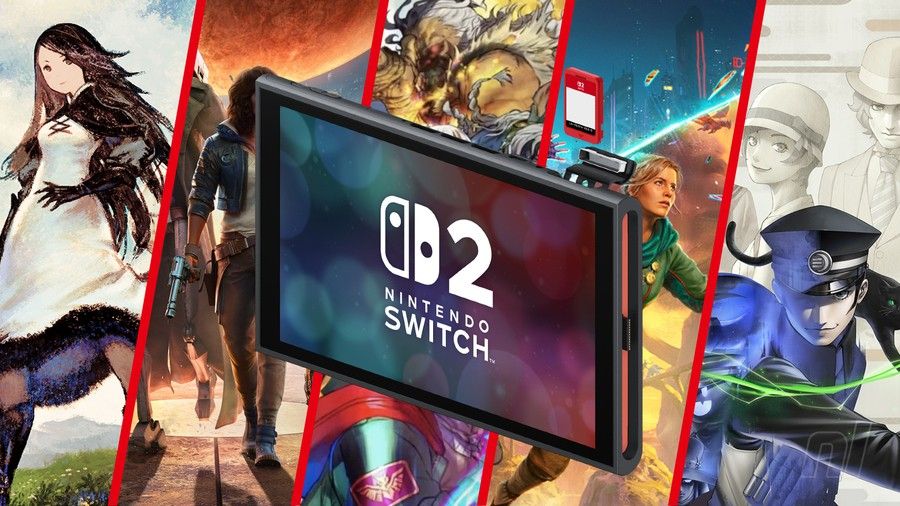

NIS president Kenzo Saruhashi says the publisher does not currently see a sales difference for Switch 2 Game-Key Cards, but physical buyers still need to check exactly what is in the box.
Image: nintendolife.com
NIS is not seeing a sales penalty for Switch 2 Game-Key Cards
Nippon Ichi Software president and CEO Kenzo Saruhashi told RPG Site at PAX West 2026 that the company currently does not see a sales difference between Switch 2 software sold on Game-Key Cards and comparable physical media offerings. My Nintendo News reported the exchange on September 8, noting that Saruhashi was asked directly whether Game-Key Cards were affecting sales performance and whether other platforms with discs or cartridges containing all game data were seeing stronger sales by comparison.
His answer was brief: “Currently, we don’t see a difference in the sales between them.” That is the strongest concrete development in the current Game-Key Card debate because it comes from a publisher that has used the format for multiple Switch 2 releases, including titles My Nintendo News identifies as The Legend of Heroes: Trails beyond the Horizon and Disgaea 7: Vows of the Virtueless. Nintendo Everything’s September 7 Switch 2 game-key card list also includes Disgaea 7 Complete and Disgaea Mayhem among the games using the format.
The tension is obvious. Switch 2 physical buyers have spent months asking whether Nintendo game-key cards weaken ownership, preservation, storage planning, and collector value. NIS, at least for now, is saying the format is not showing up as a sales problem. That does not settle the philosophical argument, and it does not tell us how every publisher is performing, but it does suggest that the loudest objections online may not be translating into a clear commercial penalty for at least one active third-party publisher.
What a Game-Key Card actually gives you
Nintendo Everything describes Switch 2 game-key cards as a hybrid between a traditional physical release and a download code. The box includes a cartridge, but the cartridge does not contain the full game data. Players need to download the game first, then keep the card inserted whenever they play. According to Nintendo Everything’s explainer, once the game has been downloaded, players do not need to remain connected online to play, although the card remains required as the access key.
That makes the format different from the code-in-box releases that appeared during the original Switch era. Nintendo Everything points out that a download code in a retail case could not be lent to a friend or resold after redemption. A Game-Key Card still comes with a physical cartridge, so lending and resale are possible in a way they were not with one-use codes. The tradeoff is that the cartridge itself is not a self-contained copy of the game.
For players who treat physical games as convenient retail purchases, that may be good enough. For collectors, preservation-minded buyers, and anyone managing limited storage, it is a very different proposition. Wikipedia’s Switch 2 games list describes physical Switch 2 games as cartridges that slot into the console and digital games as eShop purchases stored on internal storage or microSD Express, while also noting that Game-Key Cards require an internet connection for the initial download. The practical distinction is simple: a box on the shelf no longer tells you whether the playable game data is on the card.
Why NIS may be comfortable with the format
Saruhashi’s comment is narrow, but it carries weight because NIS has a Switch 2 audience that overlaps heavily with physical RPG and strategy collectors. Disgaea, Trails-adjacent releases, and niche Japanese games often attract players who care about boxes, shelf copies, and long-term access. If that audience were broadly rejecting Game-Key Cards at checkout, NIS would be one of the publishers likely to feel it early.
The available sources do not provide NIS sales numbers, regional splits, digital-to-physical ratios, or title-by-title performance. Saruhashi also did not say Game-Key Cards are preferred by players, only that NIS currently does not see a difference in sales between the formats RPG Site asked about. That distinction matters. A format can be disliked by a visible group of buyers and still perform adequately if enough players prioritize platform availability, launch timing, portability, or retail discounts.
My Nintendo News frames lower production costs as one reason third-party developers and publishers appreciate Game-Key Cards, especially for larger games that can still occupy physical retail space without becoming a download-code-only product. RPG Site’s separate reporting on complete cartridges shows the other side of that cost equation. Rune Factory: Guardians of Azuma Nintendo Switch 2 Edition is listed there as a complete-on-cartridge release using a 64GB Switch 2 cartridge, and RPG Site notes that the Switch 2 physical version is priced $10 higher than other platforms. The sources do not say that every full cartridge requires a price increase, but they do show why publishers may weigh card capacity, retail presence, and production cost before choosing a format.
The Nintendo Switch 2 games list is already full of format differences
Nintendo Everything’s September 7 list shows how quickly Game-Key Cards have become part of the Switch 2 retail landscape. The outlet’s list includes major third-party names such as 007 First Light, Assassin’s Creed Shadows, Borderlands 4, Bravely Default: Flying Fairy HD Remaster, Cronos: The New Dawn, Digimon Story: Time Stranger, Dragon Ball Sparking Zero, Dragon Quest 1 & 2 HD-2D Remake, and Dragon Quest 11 S among games with Game-Key Card releases. The same list also flags exceptions and regional differences, including Brigandine Abyss having a non-Game-Key Card version with the full game on cartridge available elsewhere, and Daemon X Machina: Titanic Scion being listed as Japan-only for Game-Key Card while the west gets the full game on cartridge.
That last point is the part physical buyers should pay attention to. The Switch 2 physical games market is not split cleanly into “physical” and “digital.” It now includes full cartridges, Game-Key Cards, Switch 2 Edition releases, regional variants, and occasional publisher-confirmed exceptions. A Nintendo Switch 2 games list can tell you which games exist on the platform, but it will not always answer the ownership question unless it tracks the exact retail format.
RPG Site’s complete-cartridge RPG list exists because that information has become valuable in its own right. The outlet lists games such as Cyberpunk 2077: Ultimate Edition, Rune Factory: Guardians of Azuma Nintendo Switch 2 Edition, and Story of Seasons: Grand Bazaar Nintendo Switch 2 Edition as complete physical releases, with publisher confirmations cited for full cartridge playability. For Cyberpunk 2077: Ultimate Edition, RPG Site reports CD Projekt Red confirmed the full game and Phantom Liberty expansion are included on the card with no download required. For Story of Seasons: Grand Bazaar, RPG Site reports Marvelous USA confirmed the game and upgrade pack are included on cartridge rather than being a Game-Key Card or code in a box.
Sales confidence does not erase buyer confusion
The most useful reading of the NIS Switch 2 comment is not that Game-Key Cards have won the argument. It is that at least one publisher using the format does not see a current sales reason to reverse course. That could encourage continued third-party use if other publishers see similar results, especially for larger games where a full cartridge might be more expensive or logistically awkward.
For buyers, the uncertainty remains at the point of purchase. Analytics Insight reported that Nintendo said physical software made up 38.5% of software sales in the first quarter of fiscal 2027, covering March 30 through June 30, 2026, while digital sales made up 61.5%. The same report notes that Nintendo’s digital category includes downloadable games, extra content, subscriptions, and other digital sales. Even with digital leading overall, that physical share is large enough that packaging clarity still affects a meaningful slice of the Switch 2 audience.
The challenge is that “physical” now covers experiences with different long-term value. A full cartridge can reduce the need for a large initial download and may be more attractive to collectors. A Game-Key Card keeps resale and lending alive compared with code-in-box releases, but it relies on an initial download and does not preserve the game data on the card itself. If you are buying for a child, a shared household, a handheld travel setup, or a shelf collection, those differences matter in daily use.
How physical buyers should shop before committing
If you want Switch 2 physical games but are unsure about Game-Key Cards, treat the retail format as a purchase detail on the same level as price, language support, and performance. Check the publisher’s product page, the retailer listing, the box art, and format-tracking resources before buying. Nintendo Everything’s Game-Key Card list is useful for identifying releases that use the format, while RPG Site’s cartridge-focused RPG list is useful when you specifically want a complete physical RPG release.
The safest path for collectors is to wait for explicit publisher confirmation that the full game is on the cartridge. RPG Site’s examples show that some publishers are willing to state this clearly, including CD Projekt Red for Cyberpunk 2077: Ultimate Edition and Marvelous USA for Story of Seasons: Grand Bazaar. If no such confirmation exists and the game is known to be on a Game-Key Card, assume you will need to download the game before playing and keep the card inserted afterward.
NIS’s position gives third-party publishers a practical signal: the format can survive visible criticism if the games themselves remain desirable. For players, the better response is not panic buying or blanket rejection. It is sharper shopping. Switch 2 game-key cards are still physical enough to trade, lend, and resell, but they are not the same as a cartridge containing the full game. Until Nintendo and publishers make that distinction impossible to miss at retail, the burden remains on buyers to ask one extra question before checkout: is the game on the card, or is the card only the key?