
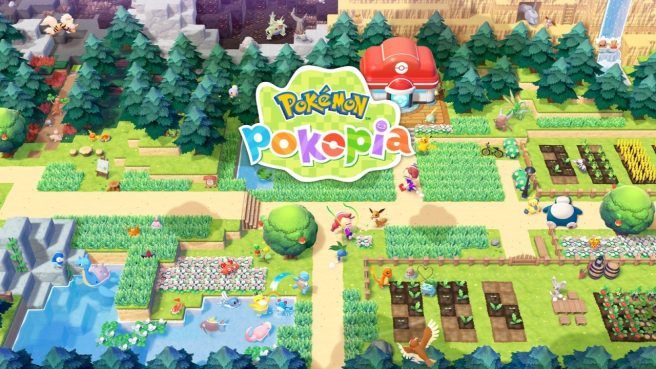

Nintendo’s first-half 2026 Japan eShop rankings put Pokémon Pokopia and Tomodachi Life on top, revealing a split between Switch 2 early adopters and the still-active Switch audience.
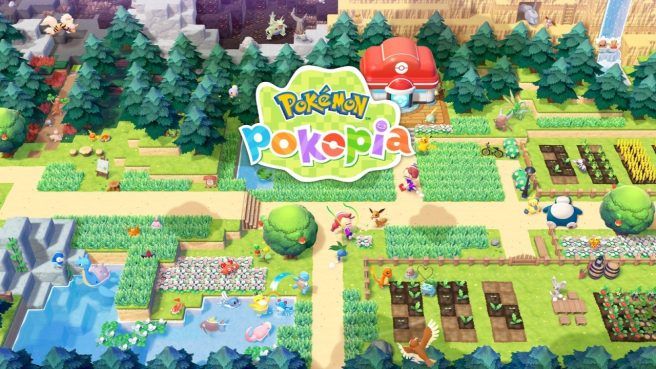
Image: nintendoeverything.com
Nintendo’s first-half list puts Pokémon ahead of the launch pack
Nintendo’s Japanese eShop rankings for the first half of 2026 put Pokémon Pokopia at No. 1 on Switch 2 and Tomodachi Life: Living the Dream at No. 1 on the original Switch, according to Nintendo’s public Japan store listing as reported by Nintendo Everything on July 17. The rankings cover January 1 through June 30, 2026, according to Nintendo Life and a Famiboards transcription of the same Nintendo page.
That top-line result creates the useful tension in this chart: Switch 2’s early digital audience did not simply line up behind the platform’s most obvious system-showcase racer, Mario Kart World, which placed second. Instead, Pokémon Pokopia led the new hardware list, while a social-life sequel, Tomodachi Life: Living the Dream, beat retro Pokémon re-releases and Japan’s baseball giant on the still-huge Switch eShop.
Nintendo has not attached sales units, download counts, revenue totals, or prices to the public list in the source material provided. Famiboards describes the Switch 2 list as a software revenue ranking and says all eShop versions of a title are counted together, while Nintendo Everything and Nintendo Life frame the data as best-selling eShop games. For readers parsing Switch 2 eShop charts, that distinction matters: a high-priced release, a deluxe edition, or a sale can affect ranking differently depending on whether Nintendo is sorting by revenue or units. The public reporting here supports the ordering, not the size of the gap between games.
There is also an eligibility caveat. Nintendo Life reports that the lists exclude games rated above CERO Z / IARC 16, while the Famiboards transcription reads Nintendo’s caveat as excluding CERO Z titles and names Resident Evil Requiem and Assassin’s Creed Shadows as examples. Those phrasings are not identical, so the safest read is that this is Nintendo’s eligible eShop ranking for Japan, rather than an unrestricted digital market chart. Nintendo Life’s article also has visible formatting gaps in the Switch 2 list text available in the source material, while Nintendo Everything, Install Base, and Famiboards reproduce a complete top 20.
Switch 2 demand is already clustered around familiar series
The Switch 2 top 20, as reproduced by Nintendo Everything and mirrored by Install Base and Famiboards, starts with Pokémon Pokopia, Mario Kart World, Dragon Quest VII Reimagined, Mario Tennis Fever, and Momotaro Dentetsu 2. The next five are Pokémon Legends Z-A, Monster Hunter Stories 3, Animal Crossing: New Horizons, Star Fox, and Kirby Air Riders. The back half is Yoshi and the Mysterious Book, Dynasty Warriors: Origins, Final Fantasy VII Remake, Final Fantasy VII Rebirth, eFootball Kick-Off, Pragmata, Dragon Quest I & II HD-2D Remake, Super Mario Party Jamboree, Super Bomberman Collection, and The Adventures of Elliot: The Millennium Tales.
The immediate read is that early Switch 2 digital spending in Japan is leaning heavily into known quantities. Pokémon appears twice in the top six. Dragon Quest appears twice in the top 20, with Dragon Quest VII Reimagined reaching third and Dragon Quest I & II HD-2D Remake placing seventeenth. Nintendo’s own family and party brands are everywhere: Mario Kart World, Mario Tennis Fever, Animal Crossing: New Horizons, Star Fox, Kirby Air Riders, Yoshi and the Mysterious Book, and Super Mario Party Jamboree all made the list.
That does not mean Switch 2 players are only buying Nintendo-published comfort food. The list also includes Monster Hunter Stories 3, Dynasty Warriors: Origins, Final Fantasy VII Remake, Final Fantasy VII Rebirth, eFootball Kick-Off, Pragmata, Super Bomberman Collection, and The Adventures of Elliot. Still, the ranking suggests the early Japan audience is rewarding recognizable brands first, then making room for a handful of third-party tentpoles and mid-sized curiosities.
Pokémon Pokopia beating Mario Kart World is the most striking detail because Mario Kart has often been treated as the obvious evergreen anchor for Nintendo hardware. Nintendo Everything called Pokopia’s win “probably no surprise” and noted that the game made a splash worldwide, including in Japan. The chart supports the broader point without giving us the numbers behind it: on Japan’s Switch 2 eShop, Pokémon’s pull was strong enough to sit above a new Mario Kart during the system’s first-half 2026 window.
The original Switch chart is still shaped by active, mainstream play
On the original Switch eShop, Nintendo’s first-half 2026 ranking opens with Tomodachi Life: Living the Dream, Pokémon FireRed, Pokémon LeafGreen, Power Pro Baseball 2, and Dragon Quest VII Reimagined. The rest of the top 10 is Rhythm Heaven Groove, Animal Crossing: New Horizons, Minecraft, Super Smash Bros. Ultimate, and Splatoon 3. From eleventh to twentieth, the list runs Pokémon Champions, Momotaro Dentetsu 2, Clubhouse Games: 51 Worldwide Classics, Super Mario Party Jamboree, Paranormasight: The Mermaid’s Curse, Pokémon Legends Z-A, Persona 5 Royal, Mega Man Star Force Legacy Collection, Fitness Boxing 3, and Mario Kart 8 Deluxe.
That is a revealing mix for anyone tracking best selling Switch games 2026. The original Switch list is not acting like a quiet back catalog shelf. It is led by a new Tomodachi Life entry, has sports demand near the top through Power Pro Baseball, and still carries current multiplayer and social staples such as Minecraft, Smash, Splatoon 3, Clubhouse Games, Super Mario Party Jamboree, and Mario Kart 8 Deluxe.
The placement of Pokémon FireRed and Pokémon LeafGreen at second and third is the chart’s clearest retro signal. The sources do not provide pricing, release format details, or whether nostalgia buyers are overlapping with newer Pokémon audiences, so that part has to remain interpretation. What the ranking can say plainly is that older Pokémon titles were among Japan’s strongest first-half eShop performers on Switch, sitting directly behind Tomodachi Life and ahead of Power Pro Baseball and Dragon Quest VII Reimagined.
Tomodachi Life: Living the Dream at No. 1 also says something about the original Switch’s role in Japan. Switch 2 may be the new platform, but the older eShop is still capable of producing a chart led by a fresh social simulation release rather than being ruled entirely by discounted evergreens. For a platformer and indie-minded reader, that is the fun part of the data: the market is not behaving as one smooth migration. Different hardware pools are rewarding different kinds of play.
June’s monthly chart shows how fast the Switch 2 order can shift
The first-half ranking becomes sharper when placed next to Nintendo’s June 2026 Japan eShop chart, reported by Nintendo Everything on July 3. For Switch 2 in June, Star Fox was No. 1, followed by eFootball Kick-Off, The Adventures of Elliot: The Millennium Tales, Pokémon Pokopia, and Final Fantasy VII Rebirth. Mario Kart World was eighth for the month, Dragon Quest VII Reimagined was tenth, and Animal Crossing: New Horizons was twentieth.
That monthly snapshot shows how launch-window or new-release energy can rearrange the conversation without necessarily overtaking the half-year leaders. Star Fox was the Switch 2 highlight in June, according to Nintendo Everything, but it placed ninth on the first-half chart. The Adventures of Elliot was third in June and also had its Digital Deluxe Edition at sixth that month, yet the title finished twentieth for the first half. Pokémon Pokopia, meanwhile, was fourth in June and still won the full January-to-June period.
On Switch, the June chart was led by Powerful Pro Baseball 2026-2027 Power Pros Edition, with another Powerful Pro Baseball 2026-2027 listing at No. 2 and Rhythm Heaven Groove at No. 3 through pre-loads, according to Nintendo Everything. Tomodachi Life: Living the Dream was fourth in June but still topped the first-half Switch ranking. Famiboards also notes that Rhythm Heaven Groove pre-downloads began before July 1 and were counted from the start of pre-download availability.
For readers using the Nintendo eShop Japan 2026 charts to judge momentum, the lesson is to separate monthly heat from accumulated first-half strength. June tells us Star Fox, eFootball, Elliot, Power Pro Baseball, and Rhythm Heaven had visible bursts. The half-year chart tells us Pokémon Pokopia and Tomodachi Life had broader staying power across the eligible period.
Smaller and specialist games still found space between giants
The Switch 2 top 20 is dominated by enormous names, but the lower half is where the texture shows. The Adventures of Elliot: The Millennium Tales placed twentieth for the first half and third in June, with a Digital Deluxe Edition appearing separately at sixth in the June Switch 2 chart. Nintendo Everything’s June list treats the base game and Digital Deluxe Edition as separate monthly entries, while Famiboards says Nintendo’s first-half ranking counted all versions of each title together. That is a small but important reporting detail: edition handling can make a game look different depending on the chart format being discussed.
From a discovery angle, Elliot’s presence is the kind of result worth pausing on. The sources do not describe its mechanics here, so we cannot claim why players bought it. What the ranking does show is that a title outside the most obvious Nintendo, Pokémon, Dragon Quest, Final Fantasy, and Monster Hunter lanes still broke into both June’s upper tier and the first-half top 20. On a young platform, that is meaningful visibility.
The original Switch list has its own pockets of specificity. Paranormasight: The Mermaid’s Curse reached fifteenth, Mega Man Star Force Legacy Collection reached eighteenth, and Fitness Boxing 3 reached nineteenth. Clubhouse Games: 51 Worldwide Classics also held thirteenth, years after Switch became a home for local and online tabletop-style play. These placements do not overturn the chart’s franchise-heavy character, but they do show that Japan’s Switch eShop remains broad enough for horror adventure, legacy collections, exercise software, and evergreen casual compilations to sit beside Pokémon, Minecraft, Smash, and Splatoon.
For players hunting beyond the obvious top five, that is where the useful shopping signal lives. A high eShop rank is not a review score, and it does not tell you difficulty, performance, or content quality. It does identify games with enough digital traction to cut through a crowded storefront, which is often the first clue that a niche release has found its audience.
How to read these rankings before you buy
The practical takeaway is simple: treat Nintendo’s first-half Japan lists as demand charts, not buying instructions. They tell us which eligible games generated the strongest eShop performance in Japan from January through June 2026, but they do not tell us physical sales, regional performance outside Japan, review consensus, player retention, discount depth, or the difference between a close race and a runaway lead.
For Switch 2 owners, the chart points to three early demand clusters. First, there are system-anchor Nintendo and Pokémon titles such as Pokémon Pokopia, Mario Kart World, Mario Tennis Fever, Animal Crossing, Star Fox, Kirby, Yoshi, and Super Mario Party Jamboree. Second, there are Japan-heavy RPG and adventure brands such as Dragon Quest, Monster Hunter Stories, Final Fantasy VII, and The Adventures of Elliot. Third, there are competitive, party, and familiar third-party names such as eFootball, Dynasty Warriors, and Bomberman.
For original Switch owners, the ranking is a reminder that the older system’s digital storefront still has fresh oxygen. Tomodachi Life: Living the Dream led the list, Pokémon FireRed and LeafGreen were right behind it, and current-use titles such as Power Pro Baseball, Rhythm Heaven Groove, Minecraft, Smash, Splatoon 3, Clubhouse Games, Fitness Boxing 3, and Mario Kart 8 Deluxe remained visible. If you are deciding whether to keep buying on Switch or shift to Switch 2, these charts do not answer upgrade-path questions or compatibility details. They do show that Japan’s Switch audience was still spending across new releases, re-releases, and long-tail multiplayer games in the first half of 2026.
The cleanest read of Japan’s Switch 2 best selling games Japan story is that the new machine opened with strong demand for trusted brands, while the original Switch kept a lively, socially driven eShop of its own. Pokémon Pokopia and Tomodachi Life: Living the Dream sit at the top, but the full rankings are more interesting than the winners alone. They show two Nintendo audiences moving at different speeds, with enough overlap to keep Pokémon, Dragon Quest, Animal Crossing, party games, and smaller surprises in play on both sides of the hardware line.