
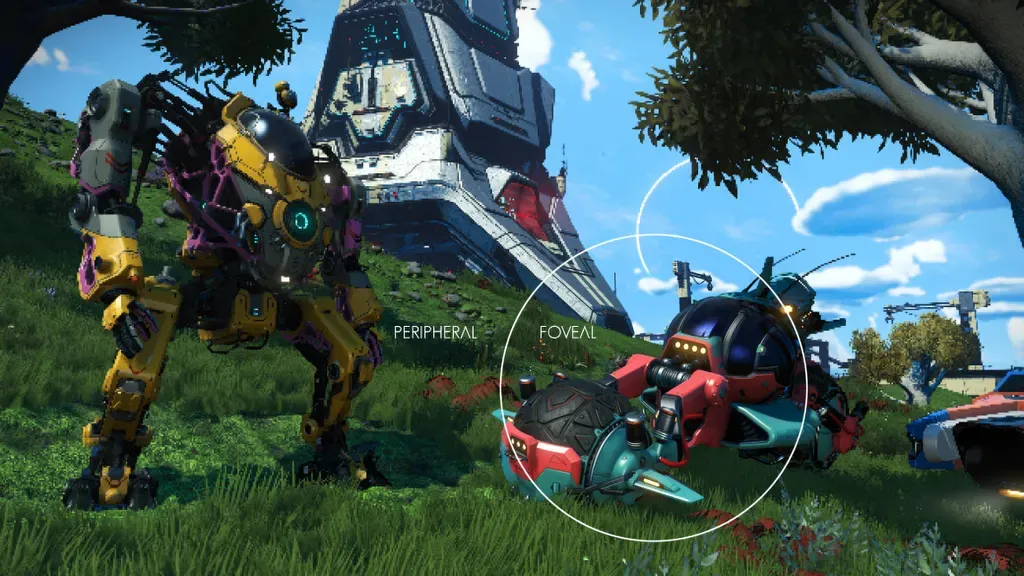

SUPERHOT VR now supports eye tracked foveated rendering on the Steam Frame standalone build. Here is what changed, how it can help VR performance, and what owners should check before trying it.
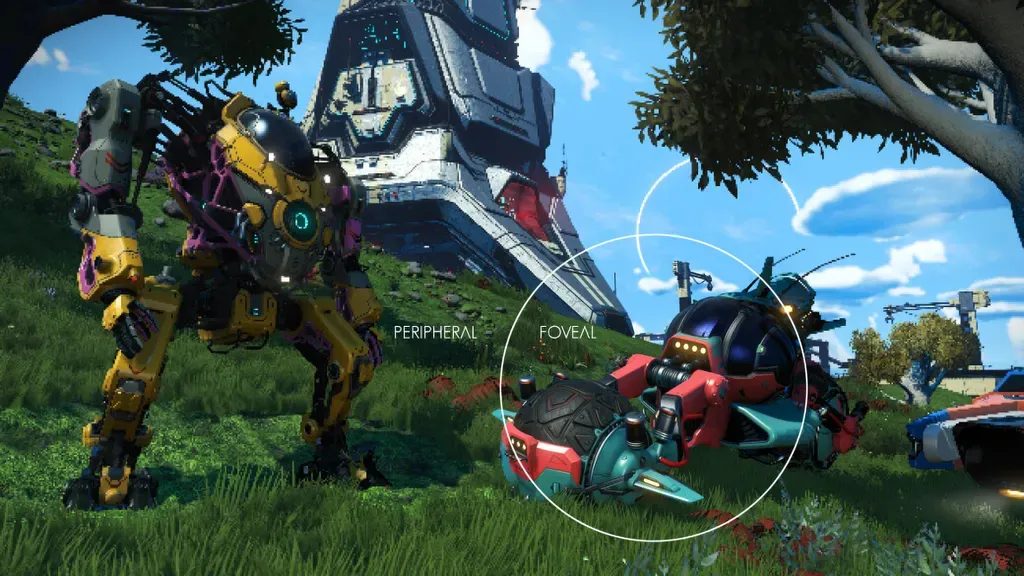
Image: uploadvr.com
SUPERHOT VR’s Steam Frame build just got a targeted performance feature
SUPERHOT VR has received a new update that adds support for eye-tracked foveated rendering on the Steam Frame standalone build, according to a Steam announcement cited by GamingOnLinux. The developer note quoted there is short but specific: support was “added” for the feature on Steam Frame’s standalone build, and it is “enabled by default.”
That is the concrete news: this is not a broad PC VR graphics overhaul, and the source material does not describe changes for other headsets. It is a Steam Frame VR support update aimed at the headset’s standalone mode, where every millisecond of rendering work matters because the game is running locally on Valve’s headset rather than being rendered by a desktop GPU.
The tension is practical. SUPERHOT VR is already a tightly staged shooter where timing, target reading, and clean visual feedback carry the experience. On a standalone headset, the platform has to keep those moments readable while staying within mobile-class thermal, battery, and performance limits. Eye tracked foveated rendering is Valve’s chosen tool for reducing that load, and SUPERHOT VR is now one of the games taking advantage of it.
How eye tracked foveated rendering helps VR performance
Foveated rendering is built around a simple idea: the headset spends the most rendering effort where your eyes are looking and reduces detail in your peripheral vision. GamingOnLinux explains the SUPERHOT VR implementation in those terms, saying Steam Frame’s eye tracking can help performance by reducing image quality outside the player’s direct focus.
That tradeoff is especially relevant in VR because the headset has to maintain a convincing, low-latency image across two displays. Steam Frame’s public specs listed on Wikipedia describe dual 2160 x 2160 LCD panels, with refresh rates from 72Hz to 144Hz, the latter described there as experimental. Higher resolutions and refresh targets increase the rendering burden, which is exactly the pressure foveated rendering is designed to relieve.
EGW.News reported that Valve implemented foveated rendering using Steam Frame’s eye tracking to reduce the amount of rendering work required while maintaining necessary image quality. UploadVR has also described Steam Frame as having eye tracking for foveated streaming. The SUPERHOT VR update appears to apply that same eye-tracking principle to the game’s standalone build, based on the Steam update language cited by GamingOnLinux.
There is an important distinction here. Foveated rendering does not magically improve every part of the image. It reallocates resources. If the eye tracking is accurate and the implementation is clean, the player should see the sharpest image where they are aiming their attention. If the handoff is too visible or the eye tracking feels late, peripheral blur can become distracting. The provided sources confirm the feature and the broad performance logic, but they do not provide benchmark data, latency measurements, or image-quality comparisons for SUPERHOT VR yet.
Why SUPERHOT VR is a sensible early test for the feature
SUPERHOT VR is a shooter built around clarity. It does not need a cluttered battlefield to create pressure. Enemies, incoming rounds, weapons, and body movement all have to read cleanly because the player is constantly judging space and timing. That makes it a useful candidate for eye tracked foveated rendering on Steam Frame: the game’s success depends less on distant scenic density and more on whether the immediate threat in your focal area stays sharp and responsive.
GamingOnLinux lists SUPERHOT VR as Steam Frame Verified, which matters for owners deciding whether to install the update immediately. A verified label is not the same as a performance review, but it is a public compatibility signal that the game is expected to run on the platform. The new update goes a step beyond compatibility by using one of Steam Frame’s hardware features directly.
From a shooter perspective, this is the right kind of optimization to watch. VR performance is not only about average frame rate. It is about whether head movement, hand movement, and visual response stay consistent. A dropped frame in a flat-screen shooter can cost a duel. In VR, uneven pacing can also hit comfort and spatial confidence. The sources do not say SUPERHOT VR had a performance problem before this patch, so that should not be assumed. The confirmed point is narrower: the update uses eye tracking to reduce rendering work in the standalone Steam Frame build.
What Steam Frame owners should check before trying the SUPERHOT VR update
The first thing owners should know is that the feature is enabled by default, according to the developer note quoted by GamingOnLinux. If you are using SUPERHOT VR on Steam Frame in standalone mode, the update should not require you to hunt through advanced settings before the feature takes effect. The source material does not mention a toggle, a calibration prompt, or a per-game graphics menu, so those details remain unconfirmed.
The second point is platform scope. The update language specifically names the Steam Frame standalone build. That means readers should not assume the same change applies to every PC VR setup, every SteamVR headset, or streamed play from a gaming PC. UploadVR describes Steam Frame as a “streaming-first” standalone VR headset with a USB dongle for a point-to-point wireless PC connection, while also noting that it can run compatible games locally through SteamOS and compatibility layers. This SUPERHOT VR update, as reported, is about the local standalone path.
Owners should also think about fit and optics before judging the feature too quickly. Overkill.wtf’s note about ordering Steam Frame prescription inserts from VR Optician is a useful reminder that headset clarity is not purely software. The author there says VR makes even mild astigmatism more obvious and reports paying €86 including shipping for prescription inserts. That is one person’s purchase note, not a universal requirement, but it points to a real user-side variable: if the lenses are smudged, the headset is sitting poorly, or your vision correction is off, foveated rendering will not fix the baseline image.
Battery is another practical constraint. iFixit’s Steam Frame teardown reports a curved two-cell lithium-polymer pack rated at 20.9 Wh in the unit it opened, and says reviewers have reported roughly one to two hours of use. The SUPERHOT VR update is framed as a performance feature, not a battery-life patch, and none of the provided sources claim it extends playtime. Still, if you are testing the update, judge it during a normal full session rather than a five-minute boot check.
The Steam Frame platform push is bigger than one shooter patch
SUPERHOT VR adding eye tracked foveated rendering fits Valve’s broader Steam Frame pitch. UploadVR reported that Valve priced Steam Frame at $1,059 for the 256GB model and $1,299 for the 1TB model, with both storage options including the headset, tracked controllers, and USB dongle. At that price, players will expect more than basic compatibility from major VR titles. They will expect games to use the hardware that separates the headset from older PC-tethered setups.
UploadVR also reported that Steam Frame runs Valve’s Linux-based SteamOS adapted for VR, can run compatible Linux and Windows games locally, and uses Proton for Windows compatibility plus FEX to translate x86 code for its ARM processor. EGW.News similarly points to Valve’s work on an ARM64 version, Vulkan driver improvements, and SteamVR technology. Those details explain why game-specific updates matter: Steam Frame support is not a simple checkbox when a game is moving through a standalone ARM-based environment with compatibility layers and headset-specific rendering features.
That context makes the SUPERHOT VR update a small but meaningful signal. A 2017 VR shooter receiving a Steam Frame-specific rendering feature suggests developers and storefront operators are still shaping the headset’s software library after launch. GamingOnLinux also frames the feature as something it hopes more developers add, especially for standalone play. That is interpretation from the outlet, but it matches the technical incentive described by Valve coverage: if eye tracking can reduce rendering work without damaging the visible target area, more standalone VR games have reason to support it.
The open questions before calling this a win
The update is confirmed, but the evidence stops short of proving the player-facing result. There are no benchmark numbers in the provided sources, no before-and-after captures, and no statement about whether SUPERHOT VR’s Steam Frame build now targets a different resolution, refresh rate, or frame-time budget. The Steam note cited by GamingOnLinux confirms support and default enablement, not measured gains.
There is also no confirmed information here about whether the feature can be disabled, whether it requires a specific Steam Frame firmware version, or whether it changes behavior during PC streaming. UploadVR’s reporting says Steam Frame has eye tracking for foveated streaming, while the SUPERHOT VR patch note names the standalone build. Those are related ideas, but they should not be treated as the same implementation without a developer or Valve statement tying them together.
For current owners, the smart play is simple: update SUPERHOT VR, launch it on Steam Frame standalone, and pay attention to the things that actually affect a VR shooter. Look for stable motion, clean target visibility where your eyes land, and whether peripheral softness ever pulls your focus away from the fight. If the feature is working well, you may not notice it directly. In a headset shooter, invisible optimization is often the best outcome.
For buyers still weighing Steam Frame, this SUPERHOT VR update is a positive compatibility signal, not a reason by itself to buy a $1,059 headset. It shows that Steam Frame VR support is beginning to include headset-specific rendering features in established games. The next step is broader adoption and hard performance data, because eye tracked foveated rendering only earns its place when it improves the feel of play without making players think about the trick behind it.