
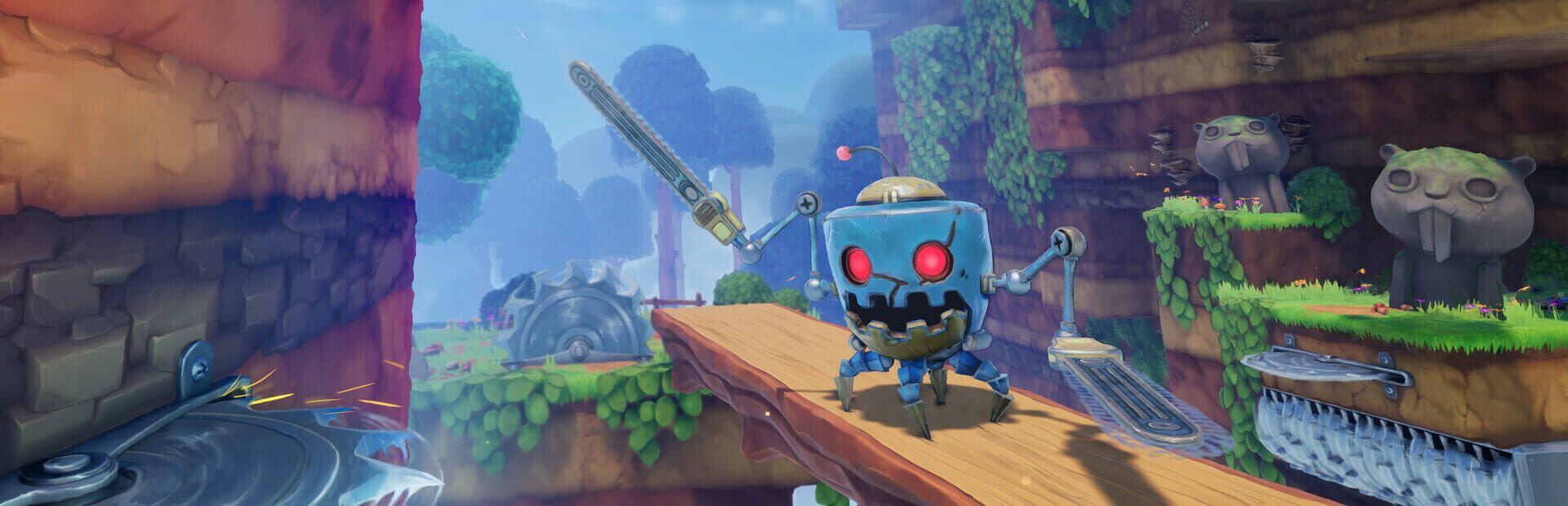

How Super Meat Boy’s twitch-perfect 2D platforming is being rebuilt in 3D for Switch 2, what the lean file size and physical special edition tell us, and why this version matters for Nintendo’s next-gen audience.
Super Meat Boy was built on a simple idea: tiny stages, instant deaths, and restarts so fast you barely had time to swear. On Switch 2, Super Meat Boy 3D is about to test whether that razor‑sharp formula can survive a full dimensional shift.
With the digital version dropping on March 31 and a physical run locked for June 30, the Switch 2 release is quietly shaping up to be the defining console version. Between a surprisingly lean file size and a feature‑packed special edition, you can already see how Team Meat and Sluggerfly are trying to preserve the series’ identity while still justifying a fresh start on new hardware.
From 2D gauntlets to 3D meat grinders
The heart of Super Meat Boy has never been its plot. It is about crossing a screen of saw blades with as few inputs as possible, then shaving those inputs down until the level plays more like a practiced speedrun than a first attempt.
Super Meat Boy 3D keeps that skeleton but rebuilds the body. Levels now play out in fully 3D spaces, yet from early showings and the latest Nintendo Life breakdown the structure is still short, focused challenges built for repetition. You are still sprinting, wall‑jumping and sliding through dense clusters of hazards, only now cameras and depth perception enter the equation.
That is the make‑or‑break point. In 2D, the original game could afford to be absurdly precise because every spike occupied a fixed coordinate on a flat plane. Early gameplay of Super Meat Boy 3D suggests the team is handling this by keeping arenas tight and camera control limited, almost like a 3D obstacle course shooter rather than an open platformer. Platforms are big and readable, hazard silhouettes are bold, and jump arcs are clear even at speed.
In other words, they are using the third dimension to wrap levels around you rather than to send you wandering through them. That approach feels very much in line with Meat Boy’s DNA.
A small file size with focused intent
Nintendo Everything’s latest file size roundup lists Super Meat Boy 3D at 4.6 GB on Switch 2. In an era where many early next‑gen titles are brushing 50 GB, that number is telling.
A sub‑5 GB footprint strongly hints at a tightly scoped game. You can expect stylized visuals over heavy asset streaming, loopable metal tracks instead of orchestral sprawl, and a design that leans on clever level geometry instead of cinematic spectacle. That is exactly what long‑time fans want this series to be.
For Switch 2 owners, it also matters practically. The original Switch audience got very comfortable managing micro‑sized indie downloads around sprawling tentpole releases. Super Meat Boy 3D’s size means it can live on your internal storage as a permanent “just one more run” staple, rather than a game you uninstall every time a 60 GB blockbuster shows up.
It also lines up nicely with the game’s price point, which sits in the mid‑range rather than full retail. A razor‑focused file size for a razor‑focused platformer makes it clear you are not buying a cinematic platform adventure; you are buying a concentrated skill test.
Dark World, bosses, and the return of brutality
So does the 3D shift blunt the famous difficulty? Everything we have seen so far says no.
Nintendo Life’s preview highlights the return of Dark World stages, which have always been the franchise’s unofficial thesis statement. Finish a level, then tackle its sadistic counterpart that cranks up the traps, tightens the timings, and expects you to move from survival to mastery.
Dark World in 3D is an interesting litmus test. It forces the developers to commit to hitboxes and camera rules that feel fair when the game is at its worst. If players can thread needle‑thin jumps from a dynamic camera view and still say “I messed up, not the game,” then Super Meat Boy 3D will have passed its most important exam.
Boss encounters are getting a similar treatment. Instead of simple pattern‑based 2D arenas, early footage shows multi‑layered stages where you are dodging attacks while navigating shifting platforms, all in full 3D. That can easily go sideways, but it also creates the potential for Meat Boy’s first truly memorable boss gauntlets since the original release.
The soundtrack leans into the new scale without abandoning the old edge. Heavy tracks featuring Steve Marois of Despised Icon give the game a harsher tone that fits the violence of the level design. It is still absurd, still cartoonish, but the audio sells the idea that these are no longer single‑screen puzzles. They are 3D arenas built to chew up anyone who is even slightly off rhythm.
Why Switch 2 is the right home
Super Meat Boy has always clicked on handheld Nintendo hardware. The original’s Switch port became a staple for commutes, quick lunch breaks and bedtime “just five minutes” sessions that routinely turned into an hour of corpse‑littered level replays.
Switch 2’s hybrid nature makes it an obvious destination for Super Meat Boy 3D, but there are technical reasons this version matters too. Higher baseline performance should mean faster reloads, snappier input response and more consistent frame pacing. Those are small quality‑of‑life details for most genres, but for precision platformers they decide whether a run feels clean or mushy.
The audience is also primed. The Switch ecosystem has already embraced brutally hard platformers and precision‑driven indies, from Celeste and The End Is Nigh to countless smaller eShop darlings. On Switch 2, Super Meat Boy 3D does not have to educate players on what a tightly tuned death gauntlet is. It just has to prove it belongs at the top of that pile.
Crucially, this is also the first Meat Boy built with Switch hardware in mind from the start. That puts it in a better spot than the original Super Meat Boy port, which was retrofitted for Switch years after its PC and Xbox debut. Expect UI, font sizes and performance targets to be tuned around handheld visibility and quick‑resume style play.
Physical special edition as a statement of intent
Beyond the digital launch, the physical release on June 30 hints at how confident the publishers are in Super Meat Boy 3D’s Switch 2 presence.
Meridiem is handling boxed editions for both Switch 2 and PS5, and the Switch 2 special edition in particular reads like a love letter to the kind of players who will obsess over clear times and death counts. The standard release already includes a sticker set and reversible cover, while the special edition layers on a dedicated sleeve, a postcard, a cloth patch and an artbook.
That artbook is quietly significant. For a series that has historically lived in sparse 2D tilesets, moving to 3D required new character models, environmental motifs and hazard designs that stay readable at speed. A physical booklet that highlights these choices signals that the team sees Super Meat Boy 3D as more than a one‑off experiment. It is a visual reinvention they are proud enough to archive.
The fact that this is all on cartridge is another plus for collectors. Given the confirmed 4.6 GB download size on Switch 2, there is little reason to suspect heavy reliance on post‑purchase downloads, which should ease fears of incomplete physical versions.
Preserving the Meat Boy identity
Underneath the new perspective and packaging, the big question remains: does this feel like Super Meat Boy, or just another 3D platformer borrowing the name?
So far the signs are encouraging. The level design philosophy looks unchanged: short stages, instant retries, escalating brutality and a heavy emphasis on player‑driven speedrunning. Dark World returns as a deliberate badge of honor for the most stubborn players. The soundtrack retains its aggressive edge. Even the small install size reinforces that this is a game about raw mechanics instead of cinematic padding.
The risk is mostly structural. 3D platformers live and die by their cameras and how honestly they communicate depth. If Sluggerfly sticks to constrained viewpoints and clear silhouettes, Super Meat Boy 3D can keep its strict, learnable rules intact. If it leans too far into spectacle or loose camera control, every mistimed jump will feel like the game’s fault instead of yours.
On Switch 2, with its pick‑up‑and‑put‑down play style and player base that already loves hard platformers, Super Meat Boy 3D has as good a shot as any version at threading that needle. The file size says “focused,” the physical editions say “confident,” and the design callbacks say “we know exactly what you came here for.”
If Super Meat Boy 3D can land those pieces, the jump to 3D will not just preserve the franchise’s identity. It might finally give Meat Boy a new generation of speedrunners to chew up.