
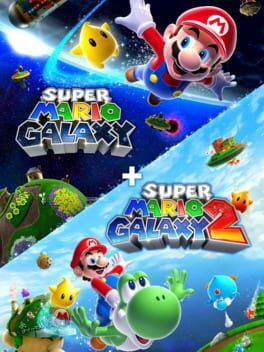
Nintendo’s new Super Mario Galaxy + Super Mario Galaxy 2 bundle for Switch is a dream combo on paper, but its $70 price has reignited the debate over how the company handles Wii‑era reissues, especially compared with other first‑party remasters and collections.
Nintendo has finally brought both Super Mario Galaxy games together on one cartridge for Switch and Switch 2. On paper it sounds like a slam dunk: two of the most acclaimed 3D platformers ever made, modern controls, sharper resolution and a native home on current hardware. In practice, the $69.99 price tag has turned what should have been a celebration into one of Nintendo’s most divisive rereleases in years.
What’s actually in the Super Mario Galaxy Switch bundle?
The new package, simply titled Super Mario Galaxy + Super Mario Galaxy 2, launches October 2, 2025 for Switch and Switch 2. It includes both Wii originals with a suite of quality‑of‑life upgrades but stops well short of a ground‑up remake.
Nintendo’s marketing highlights higher resolutions, cleaner textures and re‑rendered cutscenes, along with fully reworked controls that ditch the Wii Remote pointer. Stardust collection is mapped to a traditional stick and button setup, motion inputs have been minimized or retooled, and both docked and handheld play are supported with standard controllers. Assist options are expanded, making co‑op and younger‑player support a bit more accessible.
For players who missed the Wii era or only ever experienced the first Galaxy through Super Mario 3D All‑Stars, this is the first time both mainline Galaxy adventures can be played on the same modern platform with unified features and a straightforward control scheme.
What you do not get is a remake tier overhaul. Asset work is mostly limited to higher resolution output and selective texture clean‑up, plus adjustments needed to make the games run on Switch hardware. Animations, models and level geometry are largely intact from the Wii versions, and there is no new story content or major additional modes.
The $70 question: why the backlash is so loud
The controversy is not that Nintendo brought Galaxy back. It is how much it wants players to pay for it.
In the US, each game costs $39.99 individually on the eShop, or $69.99 as a bundle. In the UK, they are £33.99 each or £58.99 together. For many players, that pricing crossed a psychological line. Social media threads and Reddit posts quickly filled with complaints that Nintendo is “charging full price for a pair of Wii games” with “bare minimum” upgrades.
The Happy Gamer report on the initial announcement captured that divide. Nostalgic fans reminisced about playing Galaxy demos in stores and called the original “timeless,” but the comments tilted toward frustration once the price was revealed. That same reaction echoed across Nintendo‑focused communities after Nintendo Life, VGC and others confirmed $70 as the list price.
Several themes keep coming up in the backlash:
Players feel they already paid for Galaxy once, or even twice, between the original Wii releases, the Wii U Virtual Console reissue of Galaxy 2 and Super Mario 3D All‑Stars on Switch in 2020. Seeing Galaxy 1 in yet another premium package, this time paired with Galaxy 2 but still at top tier pricing, reads as double dipping.
Many expected Nintendo to match or undercut the Super Mario 3D All‑Stars collection, which bundled Super Mario 64, Sunshine and Galaxy 1 for $59.99. On a raw content comparison, three games for $60 versus two for $70 is a tough sell, especially when one of those games is a repeat.
Players are also increasingly sensitive to $70 as a new standard price for first‑party titles. The Galaxy bundle became a lightning rod in a wider debate around Switch and Switch 2 pricing, sitting alongside reactions to titles like Mario Tennis Fever and other premium releases. Fans in regions like the UK feel particularly squeezed, with regional conversions pushing effective prices even higher than the US.
Finally, visual expectations have risen over the Switch’s life span. Some comparison videos and forum threads argue that, in certain scenes, the new Galaxy releases look no better or even slightly worse than Wii footage and the 3D All‑Stars version. Whether those claims hold up under strict pixel counting, they feed a perception that this is an inexpensive port with an expensive price.
How it stacks up against other Nintendo reissues
On its own, $70 for two lengthy, elite‑tier platformers is not outrageous if you think purely in terms of hours per dollar. The problem is context. The Galaxy bundle is arriving after a string of very different approaches to remasters and re‑releases on Switch.
Super Mario 3D All‑Stars in 2020 set an important precedent. It delivered three games, with relatively light touch upgrades, at $60. Critics reasonably note that even if you treat Galaxy 2 as “new” to Switch owners, the effective math here is charging more money for fewer games and less work. The limited‑time sales window of 3D All‑Stars also leaves a sour aftertaste, since completionist fans who bought that collection now feel penalized for not having Galaxy 2 included back then.
Metroid Prime Remastered is often held up as the counterexample. At $39.99, it delivered substantial visual overhauls, updated controls and extensive new environmental detail that made it feel surprisingly close to a remake. Fans routinely bring that game up in Galaxy price debates to argue that Nintendo clearly understands how to price a high quality remaster more aggressively when it chooses to.
On the other side are ports like The Legend of Zelda: Skyward Sword HD, which launched at $59.99. That project added improved controls and higher resolution visuals but stopped short of full remake territory, similar in spirit to the Galaxy work. Skyward Sword attracted its own criticism for full price on a Wii‑era game, but did not break into the $70 tier.
Meanwhile, collections like Kirby’s Return to Dream Land Deluxe and Pikmin 1+2 have experimented with varied amounts of new content and mixed pricing. Pikmin 1+2 at $49.99 felt easier to swallow for two older GameCube and Wii releases with modest upgrades.
Viewed against that backdrop, the Galaxy bundle lands in a particularly awkward spot: less content than 3D All‑Stars at a higher price, less technical ambition than Metroid Prime Remastered at a higher price, and a significantly bigger ask than Pikmin 1+2 while providing a similar “two enhanced classics” proposition.
Why $70 still works for Nintendo
If the internet conversation is so negative, why does Nintendo keep pushing into the $70 range for reissues and new titles alike? Part of the answer lies in how the company views the value of its catalog.
Former Nintendo PR staff have described the internal mantra as “respect the value.” In practice, that means evergreen first‑party games are treated less like disposable media and more like Disney‑style vault products whose prices rarely fall. The Switch era has proven that strategy out: Mario Kart 8 Deluxe and The Legend of Zelda: Breath of the Wild have clung to near‑launch pricing for years while continuing to sell.
Galaxy sits in a particularly strong position for this philosophy. Both games are widely considered among the best 3D platformers ever made, with critical scores and fan affection to match. Demand to replay them on modern hardware, especially in handheld form, is real and long‑standing. Nintendo clearly believes that the nostalgia factor combined with genuine design excellence will offset any online anger about price.
There is also the cross‑generational factor. The bundle includes a Switch 2 upgrade that supports 4K output, slightly improved performance and cleaner UI scaling on newer hardware. Nintendo is positioning the bundle as a forward‑compatible purchase that will feel “current” on both platforms, which helps justify pricing it like a new release rather than a budget reissue.
Behind the scenes, the company has likely modeled its audience carefully. Enthusiasts may be loud in comment sections, but Nintendo knows that Mario has one of the broadest, most family‑oriented audiences in the industry. For many parents buying a holiday game for children, the nuance of Wii origins and remaster tiers matters far less than seeing Mario on the box. A safe, recognizable brand at a premium price is central to Nintendo’s business.
A pattern in how Nintendo treats the Wii era
The Galaxy bundle is not an isolated case. It fits into a broader, slowly emerging pattern in how Nintendo is curating and monetizing its Wii‑era catalog on Switch hardware.
So far, Wii titles have come over in three main flavors. Some, like Skyward Sword HD, arrive as single full‑price remasters with modernized controls. Others, like the Galaxy games, appear as lightly enhanced ports that lean on nostalgia and convenience rather than exhaustive technical overhauls. A third path is quietly reissuing Wii and Wii U titles at or near full price with only moderate enhancements, like New Super Mario Bros. U Deluxe and Donkey Kong Country: Tropical Freeze.
What ties these together is that Nintendo almost never treats them as budget releases. Where other publishers often slot remasters at $40 or bundle older games aggressively, Nintendo tends to price them within touching distance of brand new products. The company seems more comfortable answering to a smaller, full‑price audience than chasing volume with discounts.
With Galaxy 1 and 2, this crystallizes into a kind of strategy statement. Wii‑era “classics” that sit at the top of Nintendo’s internal canon are being positioned as flagship products for Switch 2’s early years instead of low cost nostalgia pieces. If you want the definitive modern way to play them, the expectation is that you will pay modern flagship prices.
Is the bundle worth it?
From a pure value standpoint, there is a strong argument that $70 for two enormous, meticulously crafted Mario adventures can still be justified. Even without radical graphical upgrades, the artistry of the level design, the orchestral soundtrack and the sheer density of ideas in Galaxy 2 alone rival or surpass many brand new releases.
The problem is not only what the bundle offers, but what it signals. For long‑time fans, it suggests that re‑buying Wii‑era favorites on every new Nintendo platform will always come at, or slightly above, the going rate for current titles, no matter how light the upgrades. For players who bought 3D All‑Stars expecting that to be the definitive 3D Mario package on Switch, the new bundle feels like paying again to complete a set that arguably should have been complete five years ago.
If you have never played the Galaxy games and you enjoy 3D Mario design, the collection is very hard to argue against on quality alone. If you already own one or more previous versions, especially 3D All‑Stars and a Wii copy of Galaxy 2, the calculation becomes far more complicated. Waiting for one of the rare sales or a retailer discount might be the most palatable route.
What the backlash means going forward
The outcry around the Galaxy bundle is unlikely to change Nintendo’s pricing model in the near term. Mario and Zelda titles almost always sell through controversy. But the conversation does matter in two ways.
First, it highlights how closely players are now comparing Nintendo’s different remaster strategies. When Metroid, Pikmin and Mario all receive different levels of care and content at different price points, people start keeping mental score. That can put extra pressure on future projects like potential Xenoblade or Wii Sports reissues to justify their tags.</n
Second, it reinforces how important transparency is. Fans are not just looking for a trailer; they want a clear breakdown of what kind of upgrade they are buying. The more honest Nintendo is about where a project sits on the scale from “quick port” to “full remaster,” the easier it becomes for players to make peace with the price or decide to wait.
Super Mario Galaxy and Galaxy 2 on Switch remain a stellar duo, and in a vacuum, the bundle would be an easy recommendation. Wrapped in the realities of modern pricing and Nintendo’s broader rerelease strategy, they have become something else too: a case study in how far a company can lean on its past without alienating the very fans who made that past so valuable.