
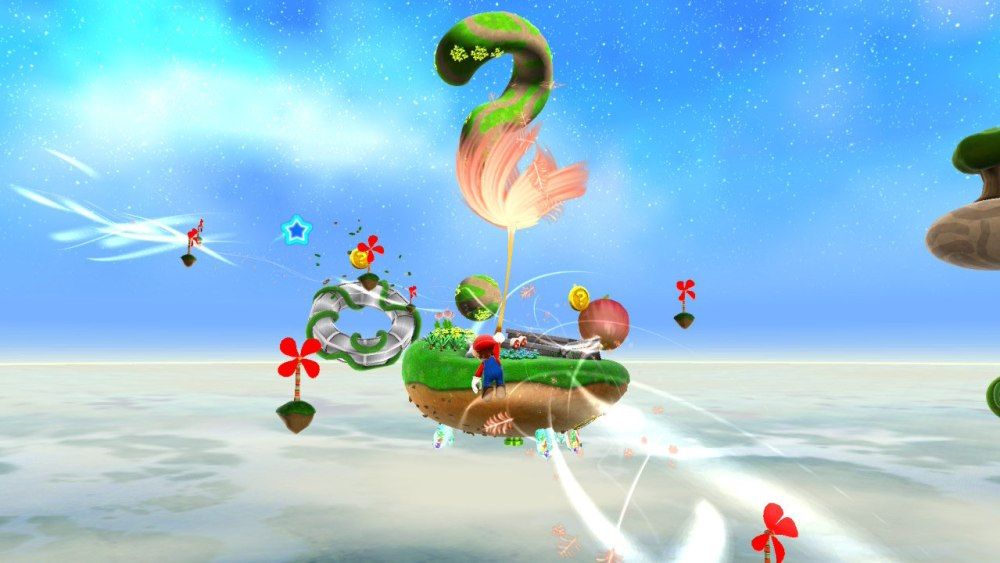
Score arranger Kenny Wood says The Super Mario Galaxy Movie first pass barely used Gusty Garden, revealing the pressure of adapting Mario Galaxy movie music for film.
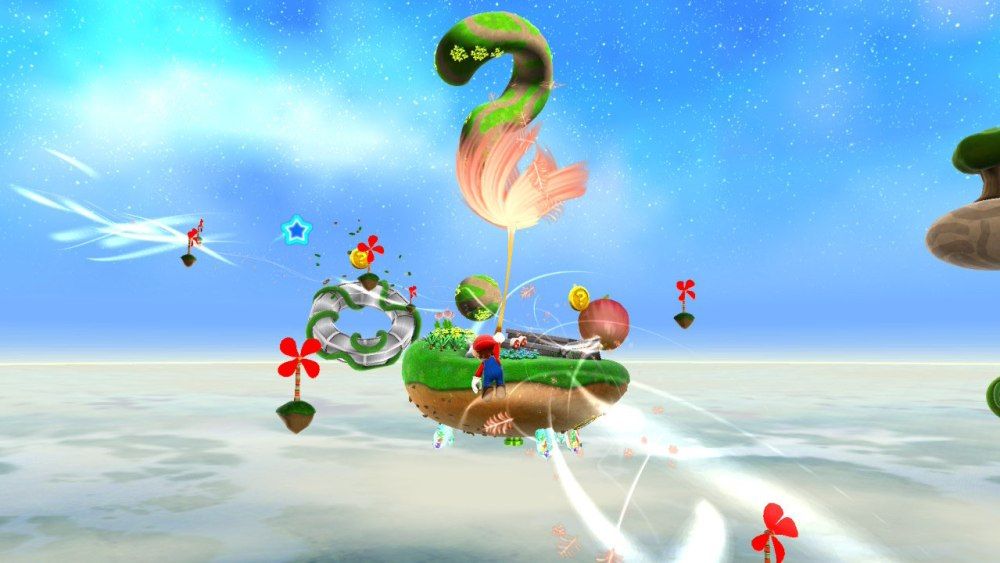
Image: sourcegaming.info
Gusty Garden almost drifted out of the movie
The sharpest new detail about The Super Mario Galaxy Movie soundtrack is also the kind of thing fans would have noticed instantly: score arranger Kenny Wood said the film’s first full music pass barely referenced the Gusty Garden theme at all.
Nintendo Everything reported Wood’s comments from a YouTube discussion, where he said he watched the assembled cues in sequence and realized the famous Super Mario Galaxy music was “barely referenced.” Wood said he flagged it to the music editor because the team needed to get more Gusty Garden into the movie. The tension, by his telling, was not neglect. It was fit. Wood said the theme had not been deliberately left out, but it “wasn’t necessarily the perfect fit” for every scene.
That is the useful part of the story. The Super Mario Galaxy Movie is based on a game remembered partly through movement, space, and music that players carry around in their heads long after the platforming is done. Yet a film score has to serve pacing, dialogue, scene tone, jokes, action beats, and transitions. A cue that feels inevitable to fans can still fight the cut if it is placed where the scene is asking for something else.
Wood’s account also shows how quickly fan-service correction can tip too far the other way. After that first pass, the team apparently overcompensated. He said the next version had “too much Gusty Garden,” forcing the music team to pull back again.
Why the Gusty Garden theme carries so much weight
Gusty Garden is loaded because it is one of the clearest musical identities in Super Mario Galaxy, not because it is merely a popular melody. According to Super Mario Wiki’s entry for the theme, “Gusty Garden Galaxy,” also known as “Wind Garden” or simply “Gusty Garden,” was composed by Mahito Yokota for 2007’s Super Mario Galaxy and plays in the galaxy of the same name. The same entry describes it as a live orchestral musical theme.
That orchestral identity matters. Super Mario Galaxy was one of the moments when Mario’s sound world expanded upward, matching tiny planetoids and playful gravity tricks with a scale that felt airy, bright, and grand. Gusty Garden became a shorthand for that expansion. Super Mario Wiki’s soundtrack liner-note excerpt calls it “the space between the sky, the wind and the stars” and describes its “huge orchestral sound of adventuring action.”
The level context helps explain the attachment. Super Mario Wiki’s Gusty Garden Galaxy page describes a place of grass and plant-themed planetoids, many reached by grabbing Floaty Fluff and spinning to glide on gusts of wind. That is a very specific kind of Mario movement: soft launch, suspended travel, and little bursts of control as the player rides air from one miniature world to the next. The music is tied to that sensation. For many players, the Gusty Garden theme is not background nostalgia. It is the sound of Mario’s gravity-era platforming at its most buoyant.
That is why the Super Mario Galaxy Movie Gusty Garden question is bigger than one cue. If a film invokes Galaxy, fans will listen for the sound that told them, years earlier, that Mario could feel cosmic without losing his bounce.
The unused disco version shows the trap of musical name-checking
Wood’s most revealing example, as reported by Nintendo Everything, was a birthday-party scene early in the film. The team created what he described as a Gusty Garden disco treatment for that sequence. He called it “fun and cute,” but said it did not make the final movie because it became an example of the score using the theme too much.
That anecdote is small, but it gets at a recurring adaptation problem. Game music often functions through repetition, location identity, and player time. A level theme can loop for minutes while a player learns jumps, misses coins, resets a route, and finally clears a challenge. The repetition deepens the bond because the player is actively inside it.
Film repetition is harsher. A recognizable motif can delight once, underline emotion twice, and then start drawing attention away from the scene. A disco Gusty Garden cue may sound irresistible in isolation, especially to anyone who loves clever arrangements. But Wood’s account suggests the film’s final mix needed the theme to feel earned, not omnipresent.
That is the craft call: adaptation is not a scavenger hunt where every famous melody wins by appearing as often as possible. For Mario Galaxy movie music, the better question is where a cue can carry meaning without flattening itself into a wink. Wood said the team made sure Gusty Garden appeared in “key areas,” which implies the final strategy was placement over quantity.
A Mario Galaxy film has less room to hide than the game did
The film’s scale raises the stakes. Public listings supplied for The Super Mario Galaxy Movie describe it as a 2026 animated adventure film, a sequel to 2023’s The Super Mario Bros. Movie, directed by Aaron Horvath and Michael Jelenic and written by Matthew Fogel. The listings also describe Universal Pictures, Illumination, and Nintendo as production companies, with Chris Pratt, Anya Taylor-Joy, Charlie Day, Jack Black, and Keegan-Michael Key returning, and Brie Larson listed among the new cast as Rosalina.
Those listings place the movie in a very different medium from the 2007 game. Super Mario Galaxy could introduce Gusty Garden after players had already absorbed the rules of a strange, toy-like universe. By the time a player reaches Gusty Garden Galaxy, Super Mario Wiki notes that the area is located in the Bedroom and unlocked after getting 24 stars and completing Bowser Jr.’s Airship Armada. In other words, the theme arrives after a meaningful amount of play, when the game has taught the player how to read orbiting platforms, planetoid surfaces, launch stars, and gravity pivots.
A 98-minute animated film, according to the supplied public listing, does not have that luxury. It has to establish character momentum, comedy rhythm, action geography, and emotional stakes on a fixed track. A beloved game cue may be historically important, but the film still has to decide whether that cue belongs under a chase, a reveal, a party, a quiet exchange, or a cosmic travel montage.
That is where Wood’s “barely referenced” discovery becomes instructive. The cue was apparently essential enough that its absence felt wrong when the whole movie played in sequence. But the team still had to find spaces where it supported the scene rather than simply checking off the Nintendo movie soundtrack expectation.
Gusty Garden already had a life beyond one level
Part of the pressure comes from the theme’s long afterlife. Super Mario Wiki’s theme page catalogues multiple later uses and quotations, including connections to “Purple Comet,” the Super Mario Galaxy theme, promotional material for Super Mario Galaxy 2, “Cloudtop Cruise,” and “Level Complete” in The Super Mario Bros. Movie. The same page lists its first appearance as Super Mario Galaxy in 2007 and its latest listed appearance as Mario Tennis Fever version 1.1.0 in 2026.
That history helps explain why fans hear Gusty Garden as a franchise signal rather than a single-stage track. It has already been reused, quoted, and absorbed into Mario’s broader musical language. For Nintendo, Illumination, and the film’s music team, that creates a tricky double expectation. The cue needs to be recognizable enough to satisfy the audience that knows it, but flexible enough to live inside a modern animated feature with its own score architecture.
There is also a difference between a theme returning in a game and a theme returning in a movie. In games, a familiar cue can be tied to mechanics, unlocks, or stage themes. In film, it often becomes a memory trigger. That can be powerful, but it is also fragile. Use the melody too lightly and it feels like the adaptation missed the emotional center of Galaxy. Use it too aggressively and the score risks sounding like it is pointing at the audience instead of carrying the scene.
Wood’s comments make the final version sound like a negotiated balance rather than a preordained victory lap. The team noticed the absence, corrected it, then corrected the correction.
The practical takeaway for fans listening closely
For viewers searching for Super Mario Galaxy Movie Gusty Garden details, the confirmed information is narrow but meaningful. Nintendo Everything’s report, citing Kenny Wood, says the movie’s first full pass had very little Gusty Garden, a later pass had too much, and a Gusty Garden disco arrangement for an early birthday-party scene was created but not used in the finished film. Wood also said the team kept the theme in key areas.
What is not established in the supplied source material is a full cue list, the exact final placement of every Gusty Garden reference, or the decision chain among Nintendo, Illumination, Universal, the directors, and the music department. The sources also do not provide a detailed official soundtrack availability breakdown, pricing, format information, or streaming links, so any buyer guidance on the album would need a separate source.
The useful listening advice is simpler: expect the Gusty Garden theme to be treated as a limited dramatic resource, not wallpaper. If you are revisiting the movie for the Nintendo movie soundtrack craft, pay attention to when the melody appears and what the scene is asking it to do. Is it there for wonder, speed, recognition, comedy, or release? The near-miss described by Wood suggests those placements were fought over in the edit, not dropped in casually.
For a cue as cherished as Gusty Garden, that is probably the healthier outcome. The theme’s power comes from lift, timing, and the feeling of catching the right current. A Mario Galaxy film score has to do the same thing: catch the melody at the moment it can actually carry the scene.