
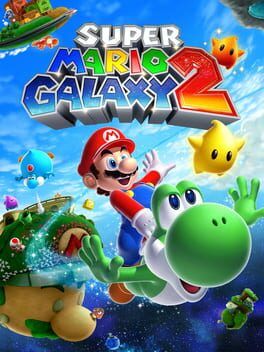
How to unlock Rosalina’s new story in Super Mario Galaxy 2 on Switch and Switch 2, what the 1.4.0 patch actually does, and why Nintendo’s quiet narrative add-on changes the value of replaying a 2010 classic today.
Super Mario Galaxy 2 is not the sort of game you expect to get new lore in 2026. Yet that is exactly what Nintendo has done with the surprise version 1.4.0 patch, which quietly slipped out on Nintendo Switch and Switch 2 with a short set of notes and one huge addition: a brand new story in Rosalina’s storybook.
This is not a balance tweak or a costume drop. It is an unexpected narrative expansion to one of the most beloved 3D Mario games, delivered more than a decade after its original Wii release and years into its Switch life. If you have any affection for Galaxy 2’s melancholy bedtime framing, this update is a signal to dust off your save file.
How to access the new Rosalina story
Nintendo’s patch notes keep it simple, but there are a couple of requirements you need to meet before you can see anything new in the storybook.
First, you must have already unlocked the Final Chapter in Rosalina’s storybook. On Switch and Switch 2, the storybook is accessed from the hub area just like in the original, and unlocking that last chapter still hinges on progressing far enough through the main adventure to see the full set of existing stories.
Once Final Chapter is available, you then need to clear any galaxy and earn a Power Star. It does not have to be a specific late game stage. The update is keyed to the act of claiming a new star after you qualify for the full book, so you can simply jump into a favorite level, grab a Power Star, and when you return to the hub the storybook will have fresh text waiting.
After that, head back to Rosalina’s storybook and open it as usual. The new chapter is folded into the existing sequence rather than split off into a separate menu option, in keeping with how the original short stories were presented. It is treated as a natural continuation of that dreamlike narrative rather than a non canon bonus.
Alongside the text, Nintendo has also added a new background track that plays with the story. The same song has been pushed to the Nintendo Music app as part of the Super Mario Galaxy 2 soundtrack update, so if you want to revisit it outside the game, you can do that there.
What the 1.4.0 patch actually changes
On paper, version 1.4.0 looks modest. Officially, it contains two bullet points: general fixes and adjustments for smoother play on both Switch and Switch 2, and the addition of the new storybook entry.
The general fixes portion is standard housekeeping that you see any time Nintendo touches a legacy title. The company notes unspecified issue fixes and adjustments, with the extra wrinkle that Super Mario Galaxy 2 now has to meet baseline compatibility expectations on Switch 2. As the articles point out, the game must be updated to at least version 1.2.0 to run on the new hardware at all, and 1.4.0 extends that support while shaving off lingering problems.
The meaningful part for players is the storybook addition. Nintendo could have rolled the small technical work into a quiet stability patch, yet instead chose to package it with fresh narrative content and a new track. It is a way of turning what would have been invisible backend maintenance into a reason to reinstall the game.
Why Nintendo is quietly extending catalog support on Switch and Switch 2
So why now, and why Super Mario Galaxy 2 in particular? None of the official patch notes mention broader strategy, but the pattern around this update hints at how Nintendo wants its first party catalog to live across two generations at once.
First, there is the hardware context. Galaxy 2 on Switch 2 requires a minimum version to run, which means Nintendo is already touching the codebase to keep it in line with a new platform’s standards. Rather than treat that as a one and done porting chore, the company has used the opportunity to add a small, targeted piece of new content. That helps reintroduce the game into the conversation at the exact moment a wave of players meets it for the first time on new hardware.
Second, there is transmedia timing. The sites covering the patch all float the same possibility: that this story addition is quietly tied to the recent Super Mario Galaxy movie. Even without direct confirmation, the move fits a familiar Nintendo pattern, where an older game gets some attention right when a different branch of the brand is in the spotlight. New storybook text and a new song are subtle ways of aligning the game’s tone with whatever version of Rosalina and her cosmos audiences are seeing in theaters.
Finally, the update signals that Nintendo is willing to do more than just keep legacy titles technically functional. Adding text, art framing, and music may be small in scope compared to a DLC campaign, but it is still an act of curation. The company is treating its older first party releases as living catalog pieces that can be gently tuned and expanded long after their original run, especially when those games anchor the identity of the platform’s library.
If that approach continues, it could mean more micro updates across the Switch and Switch 2 back catalog. A single extra story, a couple of menu tweaks, and soundtrack updates in Nintendo Music are light lifts that still create the feeling that something is happening with a beloved game.
Does a late story update change the value of replaying Galaxy 2 in 2026?
In raw hours, the 1.4.0 update will not transform Super Mario Galaxy 2 into a fundamentally new game. Your time on planetoids, with Yoshi’s power ups and gravity puzzles, remains the same. Yet the way this patch reframes your return trip through the stars does change the value proposition of revisiting it this year.
For returning players, the storybook has always been the emotional spine of the Galaxy era, even when most of your time is spent chaining long jumps between launch stars. The original stories lent the series a quiet, reflective tone that contrasted against the bright chaos of its level design. Dropping a new story into that space in 2026 gives you something concrete to discover, not just a reason to remember how strong the platforming still feels.
If you have not replayed Galaxy 2 since the Wii, there is now one more mystery waiting at the end of the road. Knowing an unseen story is locked behind the Final Chapter changes how you think about the journey. It nudges you away from treating this playthrough as pure nostalgia and toward seeing it as a slightly altered canon, with a new closing note on Rosalina’s arc.
For new players coming in through Switch 2, that change is even more pronounced. You are no longer stepping into a museum piece preserved from 2010. You are playing a version of Galaxy 2 that has been touched up to coexist with a modern Nintendo ecosystem, complete with integrated music support and a storybook that now reflects how the company currently sees these characters.
There is also the psychological impact of a platform holder returning to a game this old to add narrative content. Fans often read things like this as a soft signal. A fresh story and a cross updated soundtrack suggest Nintendo still cares about the Galaxy side of Mario enough to invest in it, even if only a little. That sentiment alone can push people to reinstall the game, treating their next run as part of a living series rather than a look back at a closed chapter.
If you treat your backlogs as living libraries, updates like 1.4.0 matter. Super Mario Galaxy 2 is already one of the most polished 3D platformers ever made. In 2026, it is now also a slightly different story than the one you first played on Wii. Between the ease of accessing the new chapter, the subtle link to Nintendo’s wider Mario plans, and the reassurance that the game will run cleanly on both Switch and Switch 2, this surprise storybook addition is enough to make a replay feel timely instead of purely nostalgic.