
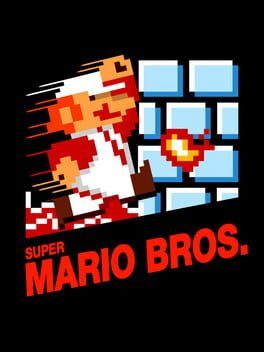

Shigeru Miyamoto says the original Super Mario Bros. avoided a standard Bowser boss fight because the team struggled to build one, turning the ending into a clever 8-bit illusion instead.
Image: IGDB
Miyamoto says the famous Bowser showdown began as a design problem
Shigeru Miyamoto has given Nintendo fans a clearer answer to an old piece of Super Mario Bros Bowser trivia: in the original 1985 game, Mario usually does not defeat Bowser by fighting him in the way later games trained players to expect. He wins by getting past him.
According to reports from Nintendo Everything and My Nintendo News, Miyamoto discussed the ending of Super Mario Bros. during a press conference held after he became the first game developer to receive Japan’s Order of Culture award. Asked for behind-the-scenes stories about the making of Super Mario Bros., he pointed to the final encounter with Bowser and explained that Nintendo had trouble designing a conventional boss battle at the time.
The answer is wonderfully practical. Super Mario Bros. is a game about moving right, reading hazards, timing jumps, and surviving pressure. Miyamoto said he realized that if the game was built around running to the right, the finale could also be decided by reaching the far right. The boss did not need to be beaten down. Mario could jump over Bowser, hit the axe at the end of the bridge, and send him into the lava.
My Nintendo News quotes Miyamoto as saying, “Normally, if there’s a boss at the end, you have to fight him, right?” He then recalled thinking, “Why not just jump over the opponent instead of fighting?” Nintendo Everything similarly reports that after trying the idea during development, Miyamoto found it “surprisingly fun.” That small phrase is the key to the whole story. The original Super Mario Bros ending was not a missing boss fight. It was a boss fight reimagined through movement.
The final room looks like a battle, but plays like a platforming test
The cleverness of the original Bowser encounter is that it borrows the stage language of a boss battle while keeping the player’s actual goal consistent with the rest of the game. Bowser blocks the path. Fire bars spin. Lava waits below. The screen stops feeling like another stretch of level and starts feeling like a throne room.
Mechanically, though, the winning move is still pure Mario. You read Bowser’s jump, commit to your own arc, and reach the axe behind him. Hit it, and the bridge disappears. Bowser falls. The game resolves the encounter through spacing, momentum, and nerve rather than a health bar.
Nintendo Everything notes that players can also defeat Bowser directly if they have Fire Mario, by hitting him with fireballs. That detail matters because it keeps the encounter from being a single-scripted trick. The game allows a direct attack route, but the standard solution is the one Miyamoto described: get past the threat and reach the switch.
That is why the Miyamoto Bowser explanation lands so cleanly decades later. Super Mario Bros. had already taught players that progress comes from forward motion. The finale turns that lesson into a dramatic illusion. You feel like you are facing the villain, but the test is whether you can keep doing what the whole game has been teaching you under maximum pressure.
Limited 8-bit design pushed Nintendo toward a better answer
Nintendo Everything frames Miyamoto’s comments against the limits of early console game development, noting that the NES hardware had significant constraints and that games were still in an early era. The source does not provide a technical breakdown of memory, sprites, or animation budgets, so it would be unfair to invent one here. What is confirmed is simpler and more revealing: Miyamoto said the team was struggling with the idea of a standard Bowser battle, and the solution came from the game’s own rules.
That is a familiar pattern in great platformer design. A limitation becomes productive when the designer stops trying to imitate an expected form and instead asks what the game already does well. Super Mario Bros. was not structured like a modern action game with elaborate boss phases. As Wikipedia’s overview describes it, the game sends Mario or Luigi through side-scrolling stages in the Mushroom Kingdom, avoiding enemies and pits while collecting power-ups such as the Super Mushroom, Fire Flower, and Starman. Its grammar is running, jumping, dodging, and timing.
Seen that way, the bridge axe is not a shortcut around design. It is design discipline. The ending does not suddenly ask the player to learn a new combat system in the final seconds. It takes the basic verbs of the entire adventure and compresses them into one dangerous crossing.
For anyone asking why you do not fight Bowser in Super Mario Bros in the modern sense, Miyamoto’s answer is that Nintendo found a finale that fit the game better than a traditional duel. The team’s difficulty in building a boss battle led to a confrontation that feels inevitable because it uses the same platforming logic as the rest of the journey.
Bowser became an icon before he became a modern boss template
Part of the surprise in Miyamoto’s comment comes from how large Bowser has become in the Nintendo imagination. Super Mario Wiki identifies Bowser, also known as King Koopa and the King of the Koopas, as the main antagonist of the Super Mario franchise. Its Bowser history page places his role across decades of games and other media. In later Mario games, fans are used to bigger confrontations, clearer spectacle, and versions of Bowser built around the expectations of their hardware and era.
The first Super Mario Bros. is different. Wikipedia lists Super Mario Bros. as a 1985 platform game developed and published by Nintendo for the NES, directed and produced by Miyamoto. It identifies the adventure as a rescue mission through the Mushroom Kingdom, with Princess Toadstool held by King Koopa, the character later known broadly as Bowser.
That historical gap is useful. Bowser did not debut with every feature players now associate with him. The original game establishes his function with remarkable economy: he is the obstacle at the end of the castle, the figure guarding the path forward, the final pressure point in a game about reaching the right side of the screen.
Modern Bowser can be a set-piece villain. Original Bowser is closer to a moving wall with personality. The brilliance is that the illusion still works. The player remembers a showdown because the room, the danger, and the timing sell it as one, even if the optimal solution is escape and activation rather than sustained combat.
The axe is the real finishing move
The bridge axe is one of the cleanest pieces of early Nintendo communication. You do not need a tutorial window to understand it. Bowser is between Mario and the object at the far right. The bridge is beneath Bowser. The lava is below the bridge. Touch the axe, and the geometry explains the victory.
That fits Miyamoto’s comparison, reported by Nintendo Everything, to games whose rules could be understood at a glance. In the quoted remarks, he pointed to Pac-Man as a game where eating all the dots makes the win condition visible, and Tetris as a game where completing lines makes pieces disappear in a way players can immediately grasp. He contrasted that with the challenge of making Donkey Kong easily understandable, then connected the discussion to Super Mario’s game system.
The Super Mario Bros ending follows that same readable philosophy. It does not ask the player to interpret statistics or damage values. It stages a miniature cause-and-effect machine. Jump past Bowser. Touch axe. Drop bridge. Bowser falls.
That is also why the finale has aged so well for players discovering the NES game through re-releases, collections, or Nintendo Switch Online availability. Even if the jump timing feels harsher than modern Mario, the objective remains legible. The room tells you what to do, and then dares you to do it cleanly.
A tiny finale that still teaches modern platformers
Miyamoto’s new comments are not a revelation that players have been “wrong” about Bowser for forty years. Mario does confront him, and Fire Mario can defeat him with fireballs. The point is more precise: the original Super Mario Bros. was built so that the most common path to victory is not a brawl. It is a platforming solution disguised as a boss battle.
That distinction is useful for Nintendo fans because it explains a lot about the series’ early craft. Super Mario Bros. did not become foundational through size or complexity. It became foundational because its parts reinforce one another. The final encounter pays off the game’s side-scrolling movement rather than pausing it for a separate mode of play.
It also shows why constraints can produce elegant answers. According to the reports of Miyamoto’s comments, Nintendo struggled with a standard boss battle, then found a finale that was “surprisingly fun” once tested. That is the kind of design discovery platformers still chase: a rule so simple that players understand it instantly, with enough pressure that executing it feels heroic.
So the plain answer to the Nintendo Bowser trivia is this: you usually do not fight Bowser in Super Mario Bros. because Miyamoto and the team turned the end of the game into a race past him. The axe, the bridge, and the lava create the spectacle. Mario’s jump creates the victory.