
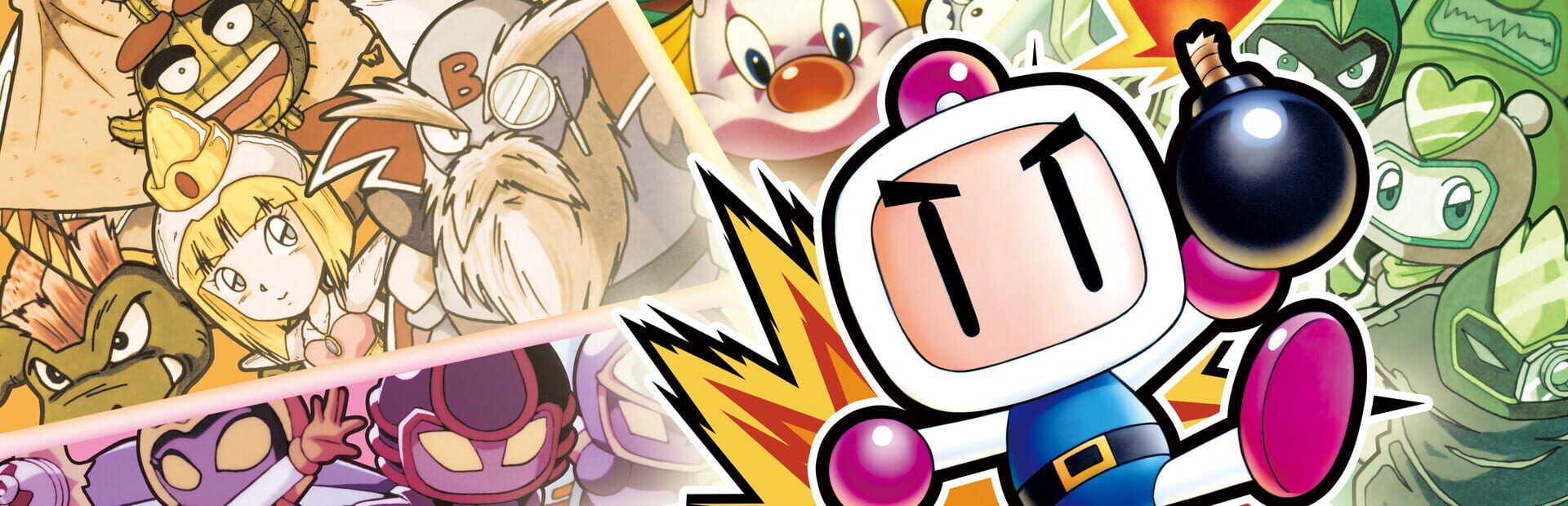

Breaking down every version in Super Bomberman Collection, how Boss Rush and GameShare actually work, and why this surprise launch might be Konami’s most meaningful preservation effort in years.
Super Bomberman Collection did not arrive with the kind of hype-laden countdown you expect from a major Konami release. It simply dropped, right after the latest Nintendo Direct Partner Showcase, quietly appearing on digital storefronts for Switch, Switch 2, PlayStation 5, Xbox Series X|S and PC.
For a series that defined couch chaos in the 16-bit era, that sort of understatement feels oddly appropriate. Under the hood, though, this is one of the most carefully assembled retro packages Konami has shipped in years, especially if you care about preservation.
Every version in the collection, properly untangled
Konami is selling Super Bomberman Collection as “seven titles with twelve versions,” which sounds like marketing math until you break it down.
On the cartridge and download you get the complete 8 and 16 bit console lineage that paved the way for modern Bomberman:
You start with Bomberman on Famicom / NES, the 1985 console classic that locked in the grid-based arenas, power-up-driven escalation and that strange tension between careful planning and instant disaster. The follow-up, Bomberman II, rounds out the 8-bit side with more elaborate stages and competitive options that pointed directly at the Super era.
From there the compilation shifts to the Super Nintendo line with Super Bomberman, Super Bomberman 2, Super Bomberman 3, Super Bomberman 4 and Super Bomberman 5. These are not just ROM drops. Where different regional versions existed, Konami has included them. That twelve-version tagline comes from packing in Japan, North America and European variants where they meaningfully differ in content or presentation.
The big headline for long-time fans is that Super Bomberman 4 and 5 are finally officially playable in English. Both games were originally locked to Japan on Super Famicom, so most western players only ever touched them via import carts or fan translations. Here they sit in the same menu as their predecessors with full localisation, alongside their Japanese counterparts.
That sort of completeness might sound like table stakes in 2026, but collecting all five Super entries plus both Famicom originals in one place, across three regional variants, is not something that has ever existed in an official package before.
Boss Rush brings structure to Bomberman’s chaos
Outside of their famously frantic battle modes, the Super Bomberman games have always had boss encounters tucked into their story campaigns. In the original releases those fights acted as capstones for each world then disappeared until you replayed the entire stage chain.
Super Bomberman Collection pulls those encounters out into a dedicated Boss Rush mode that spans every game in the package. You select the title you want to tackle, then run a sequence of bosses back to back, with your performance tracked via clear times.
In practice that gives these old games a structure that lines up better with modern expectations. Instead of committing to a full story run every time you want to revisit a favorite fight, you can jump straight to a gauntlet of highlights and chase better times or cleaner clears. It also works as a surprisingly effective tour mode. If you have younger players or friends who have never touched the series, Boss Rush is a punchy way to show them how bizarre and inventive Bomberman’s big bads get across the 8 and 16 bit generations.
Konami has layered the new support features over Boss Rush too. Save states and rewind are available, which means you can practice specific attack patterns or recover from an instant KO without restarting the entire chain. Purists can simply ignore these aids, but for anyone coming in from more forgiving modern action games it lowers the barrier to actually seeing what these bosses can do.
GameShare makes the Switch versions the party pick
Bomberman has always been a social game, and on Switch 2 in particular Super Bomberman Collection leans into that with GameShare support.
GameShare allows one owner of the game to host a multiplayer session and invite up to three other players on separate Switch-family consoles who do not own the game. Those guests download a small client and can then jump into local wireless matches alongside the host.
Crucially, this is not a stripped-down demo. Within the supported modes, everyone plays the full-fat multiplayer experience with the same arenas, items and frantic rules as if they had their own copy. For households with multiple systems or for friend groups who meet up locally, it turns the collection into a kind of modern “one-cart” Bomberman setup without forcing everyone to commit up front.
Taken together with the inherent portability of both Switch generations, GameShare quietly makes the Nintendo versions the definitive way to experience this package in a party setting, even though the games themselves run identically on PlayStation, Xbox and PC.
The retro-forward touches that matter
Beyond Boss Rush and GameShare, this package layers on the kind of extras that separate a throwaway ROM dump from a release that feels curated.
There is a full music player dubbed BOMB Radio, covering tracks from all five Super Bomberman games. Each soundtrack is presented as its own album, and you can build custom playlists if you want, for example, an endless loop of Super Bomberman 2’s title theme or a mix focused on boss tracks. For a series with such distinctively bright chiptune energy, having an in-game jukebox is both a nostalgia hit and a genuine preservation win.
A gallery mode covers more than two hundred pieces of art and development materials pulled from across the included games. Character sheets, promotional illustrations and concept sketches are all browsable from a clean menu, giving the compilation a museum-like layer that contextualises what you are playing instead of just letting it float as disembodied nostalgia.
On the usability front, Konami has added save-anywhere functionality and a rewind system to every title. These are not intrusively telegraphed, but they fundamentally change how approachable the older entries feel. The original Bomberman in particular was tuned around a much harsher, arcade-adjacent difficulty curve. The ability to rewind a mistimed bomb or save before a tricky section makes it far easier to recommend to new players without caveats.
Input has been quietly modernised as well. The timings still feel era-appropriate, but there is a consistency and responsiveness here that you only get when a studio is willing to re-test classic code against current controllers and displays.
Preservation first, profit second
Super Bomberman Collection is launching digitally now, with a full physical release following in August via Konami and partners like Red Art Games for boxed editions in North America and Europe. That staggered rollout is clearly planned for commercial reasons, but it has a side effect that matters for preservation.
By shadow-dropping the digital version across all current platforms, Konami has effectively taken the entire console lineage of classic Bomberman and pinned it to a set of ecosystems that will be viable and backwards-compatible for years. The August cartridge and disc releases will then give collectors and archivists a tangible anchor, something that can sit on a shelf long after storefronts change.
It also helps that this is not a compromised physical promise. Current information from Konami and retailers indicates the full set of games ships on the cart and disc, rather than the frustrating “download required” model that has dogged some modern compilations. If that holds true through release, it makes Super Bomberman Collection one of the more robust archival packages in Konami’s recent history.
The inclusion of both Famicom originals and the complete Super line, coupled with international and Japanese variants and first-time English versions of Super Bomberman 4 and 5, gives the set real historical weight. Combine that with the concept art library and soundtrack player and you have something that serves fans, critics and historians almost as much as it serves party nights.
How good is the package, really?
As a value proposition, it is hard to argue with seven full games and twelve total versions for a mid-range digital price. On a purely mechanical level the grid-based blast-and-dash design of Bomberman has aged surprisingly well, and the quality-of-life additions remove most of the friction that would otherwise send newcomers running.
In a year where compilations are often barebones or fragmented across DLC, Super Bomberman Collection feels refreshingly complete. The new Boss Rush mode gives veterans something to push against, GameShare lowers the bar for spontaneous multiplayer, and the archival features are robust enough to double as a pocket Bomberman museum.
As a preservation effort ahead of the full physical launch, this surprise drop hits the right notes. It rescues key entries that never left Japan, it treats regional differences as material worth keeping, and it wraps everything in a layer of context and support that respects how people actually play games in 2026.
If you grew up on multitap sessions around a chunky CRT, this collection is a sharp, clean way to capture that energy without sanding off the chaos. If you never touched classic Bomberman at all, it might be the most welcoming doorway the series has ever had.