

How Sumikkogurashi Create a Wonderful Sumikko Island turns island life into an ultra‑low‑pressure decorating sandbox, why it clicks for cozy game fans, and what’s different in the new English release.
Sumikkogurashi: Create a Wonderful Sumikko Island is a laid‑back island sim that wears its priorities on its pastel sleeves. It is not a checklist machine, a hardcore life sim, or even a traditional Animal Crossing‑style town game. It is a decorating sandbox built around San‑X’s chronically shy mascots, and the new English release on Nintendo Switch finally makes that slow life loop easily approachable for players outside Asia.
A decorating loop that asks almost nothing of you
If you come in expecting the full Animal Crossing routine of chatting up neighbors, designing interiors, juggling turnips, and running errands, Sumikkogurashi Island can feel strangely bare. That is intentional. You are less a resident and more a benevolent, invisible island planner who exists to make the Sumikko comfortable.
Each in‑game day, you check a modest list of requests from the various Sumikko: place a certain kind of bench, grow a crop, set up a themed corner, or snap a photo of a specific interaction. Fulfilling requests fills each character’s Joy Meter and slowly upgrades the island, unlocking new spaces and decorative sets. You never have to race a clock or worry about missing a festival forever. Days tick by quickly, and you are free to nudge progress at your own pace.
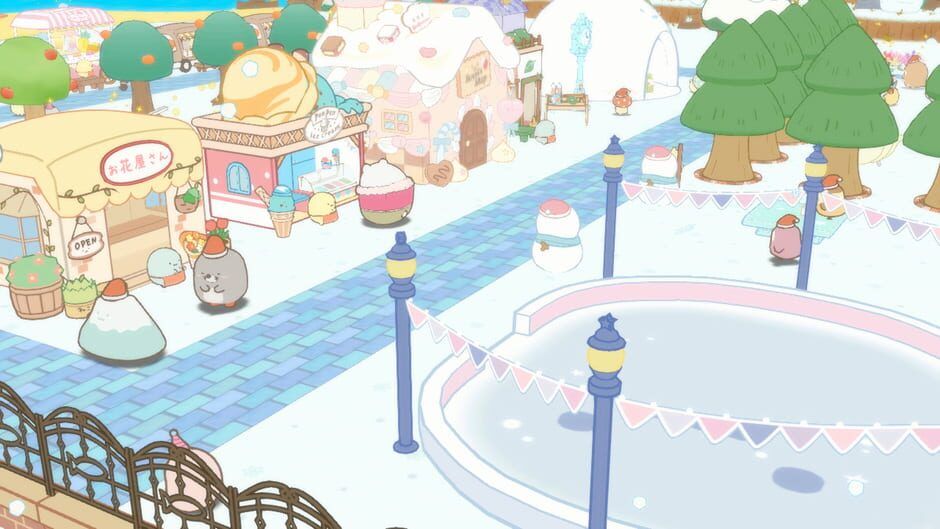
The real loop is simple. You gather a few materials with help from Shirokuma, Penguin?, Tonkatsu, Neko, and Tokage, pop into the shop for new furniture or props, then drop those items wherever you like on the island’s buildable grid. Once you place something, you step back and watch. Sumikko wander around, discover what you set down, sit on cushions, poke at toys, or doze off under trees. The appeal is in quietly observing their routines and then gently tweaking the layout so the next day brings slightly different vignettes.
Watching, not micromanaging
The Siliconera review correctly points out that this is less a life sim than it is an interactive diorama. You do not hold long conversations or build up complex relationships. You do not go inside houses to obsess over wallpaper and flooring. Instead, the game leans into being background comfort. It is something you can play in short sessions, rearrange a shoreline, place a new seasonal stand, and then simply let your Switch screen fill with tiny mascot drama while you sip a drink.
That observational focus is reinforced by the photo system. The game tracks over ninety snapshot challenges that ask you to capture specific moments: a character using a toy, a group relaxing by a certain landmark, or seasonal scenes tied to decorations and outfits. Chasing these shots gives you soft goals without turning the island into a grind. You are encouraged to swap in new items and outfits because they lead to fresh interactions, not because you are chasing a bigger house or fancier mortgage tier.
It is not all frictionless. Resource gathering is intentionally hands‑off, which can feel clumsy. Only the five main Sumikko can harvest material spots, and you cannot directly command them to work. You pick one up, drop them near a tree or rock, and hope they take the hint. When they do, you play a tiny timing minigame to increase your haul. It is cute, but when you just want a specific resource to complete a set, the lack of direct control and the random nature of the in‑game shop can get in the way. The brevity of each in‑game season also means you may find yourself repeatedly tearing down and rebuilding layouts if you want to chase every seasonal item bonus.
Even with that mild awkwardness, the game remains low‑pressure. Failing to wring maximum materials out of a day never locks you out of anything long‑term, and the island’s small scale keeps redecorating from feeling overwhelming.
Why Animal Crossing fans might feel at home
Animal Crossing: New Horizons pushed decorating to the front of the series. Terraforming, outdoor furniture, and elaborate custom codes let players turn their islands into curated mood boards. Sumikkogurashi Island feels like someone took that decorating impulse, stripped away almost everything else, and shrank the space down to a cozy model set.
The overlap is clear. You are still dressing up a natural space with themed furniture, arranging paths and stalls, and loosely role‑playing about who would hang out where. Both games use seasonal cycles to nudge you toward rotating decor, and both reward careful placement with emergent little scenes of characters interacting. If the appeal of Animal Crossing for you was arranging a fall market row or a café strip more than running errands, Sumikkogurashi Island taps straight into that.
The difference is in intensity. New Horizons layers in real‑time pressure, FOMO events, and social expectations around visiting friends’ islands and min‑maxing rare items. Sumikkogurashi trades all of that for a smaller, self‑contained space where there is no online economy, no penalties for skipping days, and no expectation you will play forever. It is designed to be dabbled in rather than lived inside.
For cozy game fans, that gentler scope is a strength. It feels approachable if you like the idea of Animal Crossing but bounce off the sense that there is always something else you should be doing. Here, you decorate because the mascots look happy in a new corner, or because a photo prompt nudged you toward a different layout, not because you are chasing an invisible checklist of ideal island ratings.
Seasons, structure, and the rhythm of play
Instead of mirroring your real calendar like Animal Crossing, Sumikkogurashi Island breaks time into short seven‑day seasons that loop internally. Spring, summer, fall, and winter come around quickly, each bringing new color palettes, music shifts, and seasonal catalog entries. The Nintendo store listing also notes Season Points, a light scoring layer that increases as you place items suited to the current season. Match the season well and you unlock more seasonal events and themed objects.
This faster turnover keeps the game from stalling out. In an hour or two of play you might see an entire season cycle, which makes it easy to unlock multiple seasonal sets in a weekend. The tradeoff is that your most elaborately curated layout might only fully align with the season for a short stretch before the game encourages you to pivot again. If you enjoy the act of redesigning, that is ideal. If you prefer long‑term, stable town planning, this can feel a bit ephemeral.
Structurally, the game is meant to be dropped into rather than maintained. There is no punishment for ignoring your Switch for a month. The Sumikko will not guilt‑trip you, weeds will not choke the island, and your favorite mascots will not move away. You can return, tidy up a few corners, lay out a new seasonal set, and sink back into the same quiet rhythm.
Localization and regional differences
Sumikkogurashi Create a Wonderful Sumikko Island first released in Japan and other Asian territories before making its way to the West. The new English release that Siliconera reviewed is the first time the game has been officially playable in American English, and it arrives with full language support for Japanese, Korean, Simplified Chinese, Traditional Chinese, and American English on the same build.
Mechanically, the versions are functionally identical. The core island‑decorating loop, seasonal systems, and request structures are shared across regions. There are no major content cuts or exclusive modes in the English release based on current information. Features like the Season Points system, the Joy Meter for each character, and the photo challenges appear intact.
Where the localization matters is tone. Sumikkogurashi humor leans heavily on wordplay, understatement, and each character’s oddly specific anxieties. The English script softens some of that into simple, kid‑friendly language, but it preserves the basic personalities: Shirokuma’s shyness, Neko’s love of corners, Penguin?’s identity crisis, and so on. Menu text and request descriptions are short and clear, which suits the relaxed design. You will not sift through walls of dialogue to understand what to do, and younger players can follow along without assistance.
From a feature standpoint, the Nintendo Switch listing confirms parity across supported territories. The game supports handheld, tabletop, and TV modes, uses a small amount of storage, and offers cloud save support for Nintendo Switch Online members. There is no online multiplayer, island visiting, or region‑locked downloadable content on the store page at this time, which reinforces the sense that this is a self‑contained, offline cozy project rather than a service game.
If you imported an earlier Asian copy, the main difference you will notice in the new English release is comfort. You no longer need to rely on guides or guesswork for requests and photo prompts, and casual players can better appreciate the low‑key jokes in item descriptions and loading screen tips. Content and systems, however, remain the same gentle loop.
A tiny island for very specific moods
Sumikkogurashi Create a Wonderful Sumikko Island is not trying to be your next hundred‑hour obsession. It is a small, deliberate space built for short bursts of decorating and quiet mascot‑watching. For fans of the brand, the appeal is obvious. For Animal Crossing players who love the act of arranging and observing but want something with even less pressure and far fewer demands on their time, it can feel like a welcome palate cleanser.
If you want complex villager routines, deep conversation systems, or long‑term progression, you will not find them here. If what you want is to tuck into a digital corner with a handful of anxious mascots, lay down a seasonal picnic set, and watch them slowly warm up to their new island home, Sumikkogurashi’s latest outing quietly excels at exactly that.