
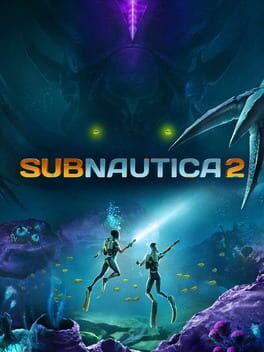
Unknown Worlds responds to backlash over Subnautica 2’s non‑lethal creature encounters, how it plans to fix “unfair” predators without adding guns, and what the debate says about modern survival game expectations.
Since Subnautica 2 launched into early access, one complaint has dominated the discussion around its chilly alien oceans: players feel helpless. Predators bite hard, defensive tools feel unreliable, and escape options can seem inconsistent or unclear. The loudest request has been simple: just let us fight back.
Unknown Worlds’ answer has been just as blunt: Subnautica is not going to become a combat game.
Instead of adding lethal weapons or letting players slaughter the local wildlife, the studio is reworking how creature encounters function so they feel fair, readable, and tense without demanding firepower. The clash between those two positions has turned Subnautica 2 into a fascinating case study for how expectations around survival games are changing.
“It’s not you, it’s us”: what Unknown Worlds is actually apologizing for
Following a wave of negative feedback, Unknown Worlds published a detailed response that had two clear messages. First, the team acknowledged that a lot of the frustration players are feeling is justified. Second, they emphasized that lethal combat is still off the table.
The core of their admission is that early access balance is off. Predator aggression values, aggro ranges, and behavior patterns often create situations that feel more chaotic than thrilling. Players can be grabbed or swarmed in ways that do not feel telegraphed, and the tools available to escape do not yet sell the fantasy of outsmarting or outmaneuvering a dangerous ecosystem.
In other words, the problem is not that you cannot kill the fish. It is that the current encounters are not consistently readable or escapable within the rules the game is trying to establish.
That is an important distinction. Unknown Worlds is not rejecting combat because they do not want players to have power. They are rejecting it because they believe the fantasy of Subnautica works best when power is expressed through preparedness, knowledge, and clever use of non‑lethal tools rather than through violence.
No guns, but more control: how Subnautica 2 is tuning tension
The studio’s outlined fixes target the experience of an encounter rather than its outcome. You still are not going to harpoon a leviathan, but the road from first sighting to escape (or death) should feel more controlled.
Creature aggression and detection ranges are being adjusted so that patrols make more sense and ambushes feel less arbitrary. This should give players more opportunities to spot danger early, plan routes around predators, and learn patterns instead of simply crossing their fingers.
Defensive tools like flares, distraction devices, and other non‑lethal gear are getting buffs and usability tweaks. The intent is that when a predator locks on to you, you have options that feel reliable: throw something, deploy something, change course, and know that the tools you brought matter.
Unknown Worlds talks repeatedly about encounters needing to be fair and readable. Fair does not mean safe. It means you can understand what you did wrong and how you might avoid it next time. Readable means the creatures broadcast enough information in their audio, animation, and movement that you can parse what is happening without a design document in front of you.
If the studio succeeds, Subnautica 2’s ocean will still be terrifying, but it will be a terror you can gradually learn to manage instead of an opaque wall of jump scares and sudden deaths.
Why the team will not budge on lethal combat
The refusal to add kill‑focused weapons is not a stubborn early access stance. It is a continuation of a philosophy that has defined the series.
From the first Subnautica onward, Unknown Worlds has framed its oceans as living ecosystems, not target galleries. Creatures are hazards, obstacles, and sometimes mysteries, but they are not intended to be a list of enemies that you clear on your way to mastery.
That decision is tied to the emotional arc the games chase. Subnautica is built around vulnerability, curiosity, and gradual competence. You start as prey, learn the rules, manipulate the environment, and eventually move through zones that once terrified you with confident caution. The game wants you to feel small even by the time you are winning.
Introduce lethal weaponry and that arc breaks. The moment you can reliably remove threats, the psychological center of the experience shifts from survival among nature to dominance over it. Fear gives way to hunting, and a fragile ecosystem becomes a resource mine.
By keeping combat non‑lethal, Unknown Worlds preserves the sense that you are surviving alongside the planet rather than conquering it. That choice does put more pressure on the design of tools and AI, because if players cannot erase their problems, then their means of escaping those problems must feel consistently good.
The friction with modern survival expectations
Player frustration with Subnautica 2 is not happening in a vacuum. Over the last decade, the survival genre has drifted toward power fantasy.
In many contemporary survival games, the early hours are harsh, but the long‑term pitch is empowerment. You begin by starving in the dirt, only to end up in fortified bases with precision weapons, automated defenses, and entire biomes reduced to farms for your crafting loop. Combat is not just allowed. It is often the primary way you interact with the world.
Within that context, Subnautica 2’s non‑lethal stance reads as a restriction. Players arrive with expectations built by other series: if something threatens you, you will eventually craft the tool that lets you destroy it. When that arc is denied, some feel as if part of the genre contract has been broken.
What Unknown Worlds is really challenging is the assumption that survival games must culminate in dominance. Their approach suggests a different endpoint: competence without control. You become excellent at reading the world, but the world never fully bends to your will.
That is a harder sell in an era where progression systems and power spikes have become the main reward loop. It explains why so many early access reviewers jump straight from frustration with specific encounters to asking for guns, even when the developers insist the underlying fantasy is meant to be different.
Early access, communication, and the cost of sticking to a vision
The studio’s messaging has been as much a part of the story as its design decisions. Some early comments from team members were read as dismissive of criticism, which made players feel like their feedback did not matter. In a genre where early access is often treated as a collaborative design phase, that perception can snowball quickly.
Unknown Worlds has since apologized and reframed its position. They have emphasized that while they are not going to implement every suggestion, including lethal combat, they are treating reports about unfair encounters, tool weakness, and progression pacing as vital data. That distinction is crucial: listening to feedback does not mean agreeing with the requested solution.
Subnautica 2 shows how difficult it is to run an early access project around a strong creative line. The more specific your vision, the more often you will need to say no. Doing that without making the community feel ignored requires careful language and consistent, visible improvements.
If upcoming patches deliver on the promise of more readable AI, stronger non‑lethal tools, and encounters that feel scary without feeling cheap, the studio’s stance will be much easier to accept. Players are often willing to embrace constraints when they are clearly part of a coherent fantasy and when the surrounding systems feel polished.
What this debate says about the future of survival games
The argument around Subnautica 2 is not just about one game’s predator AI. It highlights an inflection point for survival design in general.
On one side is a model where survival is a temporary state on the way to control, and lethal combat is the main language for interacting with the world. On the other is a model where survival remains the point even after dozens of hours, and where your progress is measured in understanding rather than firepower.
Unknown Worlds is betting that there is still room for a big budget survival game that does not pivot into a shooter once you are established. Whether that bet pays off will depend less on Twitter arguments over guns and more on how well Subnautica 2 can make vulnerability feel rewarding instead of frustrating.
The studio’s response to criticism shows they understand the stakes. They are not dismissing players who are unhappy, but they are also not willing to abandon what makes Subnautica distinct. If they can thread that needle, Subnautica 2 may end up as a landmark example of how to build tension and agency in survival games without defaulting to lethality, and a reminder that fear and freedom do not always have to end with pulling a trigger.