
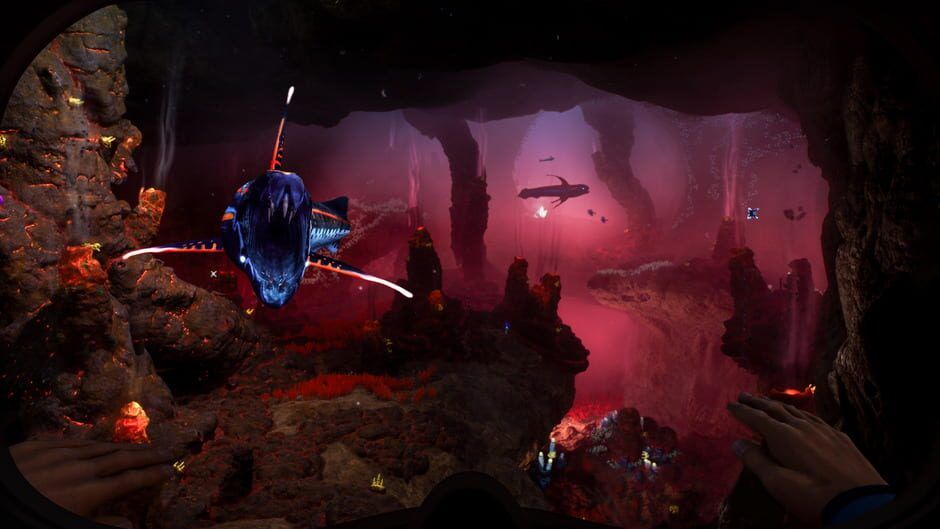

Krafton no longer appears as Subnautica 2’s publisher on Steam and Xbox. Here is what is actually changed on the storefronts, what remains unknown, and how the move fits into the broader business uncertainty around Unknown Worlds and the sequel’s road to launch.
In early April, industry watchers noticed a subtle but significant change on Subnautica 2’s Steam and Xbox pages. Krafton, which acquired Unknown Worlds in 2021 and has been the public-facing publisher for the sequel, no longer appears as the listed publisher. Instead, Unknown Worlds is now shown as both developer and publisher on those storefronts.
For a project already under a legal and strategic spotlight, the update raised immediate questions about who is actually steering Subnautica 2 toward launch. Yet the storefront data points are limited, and there is a risk of reading more into the change than the current facts support.
This article breaks down what is concretely observable, what remains speculative, and how this small line change fits into the larger business uncertainty around Unknown Worlds, Krafton, and the sequel’s path to early access.
What has actually changed on Steam and Xbox
On both Steam and the Xbox store, the publisher field for Subnautica 2 now lists Unknown Worlds Entertainment. Earlier, these pages identified Krafton as the publisher, with Unknown Worlds credited solely as developer. PCGamesN, Polygon and TechRaptor all independently verified this storefront shift by comparing current listings to archived or previously captured versions.
As of the latest snapshots referenced in those reports, the following are observable facts:
Steam’s Subnautica 2 page lists Unknown Worlds as developer and publisher, with no mention of Krafton in the publisher field.
The Xbox store page similarly credits Unknown Worlds as both developer and publisher, with Krafton no longer present as publisher in the public metadata.
The game remains live on both stores with the same title, branding and high-level product description, and it is still positioned as an upcoming early access release for PC and Xbox Series X|S. No public delisting, rebrand, or platform change is reflected in the storefronts at this stage.
There have been no public statements from Krafton or Unknown Worlds that formally announce or explain this specific publisher field change. All current reporting is based on direct observation of the store pages and background context from the ongoing legal dispute between the companies.
What the storefront change does and does not confirm
Storefront metadata is sometimes a lagging or imperfect reflection of underlying contractual realities, but it is also often the clearest public hint at who is handling publishing duties. With that in mind, there are a few cautious takeaways the industry can draw from the current situation.
First, the removal of Krafton from the publisher line strongly indicates that Unknown Worlds is at least presenting itself as the public-facing publisher on Steam and Xbox. That may affect who appears on marketing materials or who developers and platform holders interact with on day-to-day product operations.
Second, the change suggests that Krafton no longer wishes to be publicly represented as the game’s storefront publisher on those platforms. Whether that reflects a shift in responsibilities, a response to ongoing litigation, a planned strategic separation, or a more limited branding decision remains unconfirmed.
Third, this update alone does not prove that Krafton has fully exited the project in a legal or financial sense. Back-end funding arrangements, IP ownership, revenue sharing and other publishing functions are governed by private contracts that are not visible from a store page. None of the referenced reporting presents documentation that Krafton has relinquished ownership stakes or all publishing rights.
The most responsible reading is that Krafton’s visible storefront role on Steam and Xbox has been reduced or removed, but the exact scope of any underlying business change cannot be determined solely from what appears on those pages.
The legal backdrop shaping interpretation
The context that makes a simple metadata tweak newsworthy is the ongoing legal dispute involving Krafton and Unknown Worlds’ original co-founders. Court filings and prior rulings, as summarized by PCGamesN, Polygon and TechRaptor, describe a disagreement over how Krafton has managed the studio and Subnautica 2’s development timeline.
The lawsuit, brought by co-founders including former CEO Ted Gill, alleges that Krafton sought to push Subnautica 2’s launch beyond 2025. According to those filings, such a delay would have reduced or prevented certain bonus payouts tied to hitting revenue targets within a set timeframe. The plaintiffs argue that this constituted a breach of obligations to staff and leadership.
A judge previously ordered that Ted Gill be reinstated as CEO, which was widely interpreted as a significant setback for Krafton’s preferred management structure. That ruling effectively reasserted the influence of the original leadership at Unknown Worlds and complicated Krafton’s position as the parent company.
Against that backdrop, any indication that Unknown Worlds is assuming a more direct publishing role is being read by commentators as a potential sign of shifting leverage or strategy. However, the legal proceedings are ongoing, and none of the publicly available reporting connects the storefront publisher change to a specific court order or settlement term.
Early access timing and messaging uncertainty
Subnautica 2’s development timeline has itself become part of the legal and business story. Krafton publicly pointed to a May early access window, positioning the game as a 2025 revenue driver, while co-founders and internal leadership have pushed back on aspects of that messaging.
TechRaptor and other outlets note that the plaintiffs in the lawsuit cite Krafton’s control over scheduling as a core issue, arguing that the parent company’s decisions about when to enter early access or full release have direct financial implications for Unknown Worlds staff. That tension makes every official date or window announcement unusually sensitive.
At the time of the most recent reports, the storefronts still align with a May early access target on PC and Xbox Series X|S. There has been no formal delay announcement on the store pages themselves. Yet, given the ongoing dispute about who ultimately controls the release calendar, the degree of certainty around that date is limited.
For platform partners, the key takeaway is that scheduling signals for Subnautica 2 are currently complicated by internal governance questions. Until there is a clearer, jointly endorsed statement from both Krafton and Unknown Worlds, any public timing should be treated as subject to change.
How the move fits into broader business uncertainty
Viewing the storefront change in isolation risks missing the broader pattern of uncertainty around Unknown Worlds and its parent. The acquisition by Krafton was initially framed as a supportive, hands-off partnership that would provide resources while allowing Unknown Worlds to continue operating with a high degree of autonomy.
The lawsuit alleges that, over time, Krafton’s influence on financial targets and scheduling increased, contributing to friction with the founding leadership. The court’s decision to reinstate the original CEO hinted at a judicial preference for honoring prior autonomy and governance terms. Within that environment, Unknown Worlds taking a more visible publishing role on key storefronts aligns with a narrative of the studio attempting to reassert operational control.
Still, the actual long-term business structure remains opaque. None of the reporting confirms that Unknown Worlds has spun out of Krafton, regained full independence, or restructured ownership of the Subnautica IP. The absence of Krafton’s name on the Steam and Xbox pages does not necessarily mean that cash flows, risk exposure, or ultimate decision-making authority have fully shifted away from the parent company.
From an industry perspective, the Subnautica 2 situation illustrates how acquisitions of highly autonomous studios can run into friction once milestone-linked compensation and franchise-level scheduling come under pressure. It also highlights how even relatively small public-facing changes, such as a line on a store page, can become proxies for larger, less visible power struggles inside corporate structures.
What stakeholders should and should not infer
For developers and publishers watching this case, there are several restrained lessons to be drawn.
One, storefront metadata can be an early indicator of shifts in public-facing responsibility, but it is not a definitive map of contractual realities. Not every removal of a publisher credit means a full exit, and not every addition signals full control.
Two, communication gaps fuel speculation. With no joint statement clarifying who is responsible for what on Subnautica 2, observers are left to connect dots between legal filings, court orders and small public updates. That uncertainty can affect perception among players, potential partners and even employees.
Three, aligning incentive structures around launch timing is crucial in any acquisition of a live or sequel-bound franchise. The legal dispute around Subnautica 2 underscores how misaligned expectations on revenue timing and bonuses can spill into governance, branding and release strategy.
For now, the most precise characterization of the situation is that Unknown Worlds is currently credited as both developer and publisher of Subnautica 2 on Steam and Xbox, with Krafton no longer appearing in those public publisher slots, and that this is occurring against a backdrop of unresolved legal and strategic disagreements between the two parties.
Until courts, companies or both provide more explicit guidance, any deeper interpretation remains speculative. Industry stakeholders should watch for formal announcements, updated court filings, or changes to ownership disclosures rather than treating a single storefront line item as conclusive evidence of a full publishing realignment.