
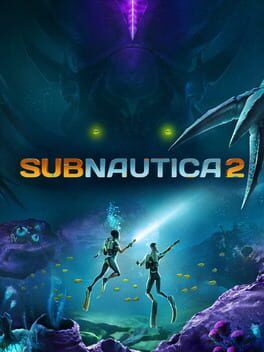

Unknown Worlds has locked in a May 14 early access launch for Subnautica 2. Here’s why the date matters after a turbulent year, what to realistically expect from this survival sequel at launch, and the key questions that still need answers around scope, co-op, and the roadmap.
Subnautica 2 finally has a firm early access release date: May 14. After months of public turbulence between developer Unknown Worlds and publisher Krafton, having a specific day on the calendar is more than a marketing beat. It is a concrete signal of where the project is, what the studio is willing to show, and how soon players can start stress‑testing this new ocean.
For anyone who has been watching the back and forth over delays and internal power struggles, it is tempting to read May 14 as a verdict on who was “right.” In practical terms for players, it is more useful to see it as the start of a long live development cycle rather than a final statement. Early access for a survival sequel like Subnautica 2 is the beginning of the game’s real design feedback loop, not the end of development.
The most important expectation to set is that May 14 is about getting a playable slice into the wild. The original Subnautica spent years in early access and grew from a thin framework into a landmark survival game almost entirely in public. Subnautica: Below Zero followed a similar pattern, eventually layering in story, biome variety, and late‑game systems. Subnautica 2 is likely to repeat that approach: a solid core loop at launch, followed by waves of content and rebalancing.
Players should expect a version geared toward testing fundamentals like building, resource progression, vehicle handling, and basic creature behavior. It is reasonable to anticipate a limited story presence, some locked regions, and placeholder systems in areas like late‑game technology or narrative payoff. The sequel also has to prove out its new directions, such as expanded cooperative play, over time instead of trying to resolve everything on day one.
That is where this specific date matters. Committing to May 14 tells players a few concrete things. First, the game is far enough along that Unknown Worlds is confident it can be played repeatedly without collapsing under bugs or progression dead ends. Second, the studio has apparently decided that hands‑on feedback from the community is more valuable now than another long period of closed iteration. After an extended period of uncertainty, this is the point where players regain visibility into how the project is actually evolving.
At the same time, it is important not to load May 14 with expectations it cannot meet. An early access survival game, especially one trying to follow a much loved predecessor, will always look sparse or unpolished compared to what people imagine from trailers and wishlists. Performance quirks, missing biomes, incomplete creature AI, and imbalanced resource distribution are standard at this stage. What matters more is how quickly Unknown Worlds responds to feedback and how clearly it communicates which systems are placeholders versus near‑final.
The sequel’s shift from strictly solo to also supporting co‑op is one of the biggest unknowns going into early access. The core tension of Subnautica has always come from isolation, slow progress, and careful risk management. Co‑op introduces questions about how progression will be shared, how base building scales across multiple players, and how the game keeps a sense of threat when you are not alone in the water. On May 14, players will get their first real look at whether the team is treating co‑op as a secondary option layered on top of the classic loop, or designing encounters and systems with group play in mind from the start.
Scope is the other major open question. The studio has described Subnautica 2 as a fully fledged sequel rather than a smaller spin‑off, but that can mean a lot of different things in early access. On launch day, it is realistic to expect a smaller set of explorable regions and a stronger focus on replaying and mastering those spaces rather than attempting a full campaign in one run. Progression paths, higher‑tier vehicles, and deep story arcs are more likely to arrive gradually, and players should treat the early access period as a time to stress‑test what already exists rather than hunt for a complete narrative.
A clear public roadmap will matter almost as much as the build itself. Early access works best when players know what the team is aiming for over the next six to twelve months. For Subnautica 2, that means concrete targets for things like major biome additions, mid‑ and late‑game vehicles, narrative milestones, and co‑op specific improvements. Even if timelines slip, laying out a sequence of priorities gives the community a framework for feedback. Going into May 14, one of the biggest outstanding questions is how detailed and realistic that roadmap will be, and how often Unknown Worlds plans to revise it based on player data.
Trust is the final piece of the puzzle. The series built its reputation on steady, transparent early access development and strong communication between the studio and its community. The recent turbulence around leadership changes and shifting release windows understandably put that trust under strain. Players do not need every internal detail, but they do need confidence that the team shipping updates is stable, has clear decision‑making authority, and can commit to a cadence of patches.
On the player side, managing expectations is just as important. Treating May 14 as the start of a long‑term relationship with the game rather than a finished sequel will lead to a better experience. If you enjoyed watching the first Subnautica grow, providing feedback during balance passes, and testing new biomes as they arrive, this early access period is likely to feel familiar. If you are hoping for a fully polished, story‑complete follow up on day one, it may be worth waiting to see how fast the roadmap progresses after launch.
In the end, the newly confirmed early access date is significant because it returns control of the conversation to the actual state of the game. In a few short weeks, players will be able to judge the health and direction of Subnautica 2 by swimming its oceans rather than reading statements. The core questions about scope, co‑op implementation, roadmap clarity, and long‑term support will not be answered instantly on May 14, but that is the day the community can start collecting real evidence and deciding how much faith to place in this next dive into the deep.