
Capcom veterans turn a trash-tier zombie into a stylish action hero. We break down Stupid Never Dies’ punk horror tone, 3D combat, DMC and Dragon’s Dogma DNA, and what sets it apart from the crowded 2026 action RPG slate.
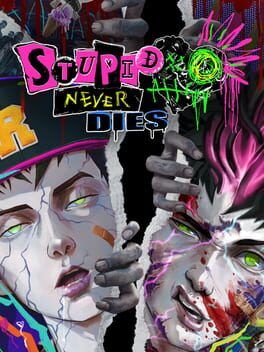
Stupid Never Dies does not look like a safe debut for a new studio. It looks like a band flyer that grew fangs, stole a sword, and ran off into a cursed city.
From Osaka-based GPTRACK50, a NetEase studio led by longtime Capcom producer Hiroyuki Kobayashi, Stupid Never Dies is a 3D action RPG targeting 2026 with a team that has Devil May Cry, Dragon’s Dogma, and Resident Evil in its bloodstream. The reveal trailer barely bothers to explain itself, because it is too busy screaming, shredding, and throwing its zombie lead through walls.
That attitude is the point. Stupid Never Dies is trying to carve out a space in the 2026 calendar as the loud, fast, character-action RPG where being a screwup is your entire superpower.
Punk horror with a broken heart
The first thing that hits you is the tone. The Game Awards trailer plays like a music video more than a traditional game reveal. A pop-punk track blares over quick cuts of monster beatdowns, neon spell effects, and the offbeat duo at the center of it all.
Davy is your protagonist, a bottom-rung zombie loser who is about as far from a legendary chosen one as it gets. Julia is the human woman he loved, currently frozen and lost in a lethal dungeon he is determined to survive. The pitch is simple and immediately readable: a dirtbag undead nobody goes on a dungeon run for love.
The world itself leans into a punk horror aesthetic rather than straight gothic. Colors are loud, monsters are theatrical, and the violence is played with a sense of messy showmanship. The art direction gives the sense that this is a place where undead, werewolves, lizardmen, and skeleton warriors have their own twisted hierarchy, and Davy is scraping along the bottom of it.
What keeps it from feeling like pure parody is the emotional hook. The trailer sprinkles in flashes of sincerity between the jokes and guitar riffs. Davy is ridiculous, but his goal is painfully earnest. That tension between trashy horror spectacle and genuine feeling could give the story more bite than its goofy title suggests.
Character-action fundamentals in full 3D
The combat, even from a brief reveal, is built on familiar Capcom-style 3D action pillars. Camera framing, enemy spacing, and the way hit effects linger all signal that GPTRACK50 is chasing that fluid, input-driven feel rather than animation-locked brawling.
Davy moves with the exaggerated responsiveness you expect from the Devil May Cry lineage. Swings are quick, cancels look generous, and enemies are spaced so you can flow from one to the next without waiting around for cooldowns. The team calls this a “Blazing Fast Growth” action RPG, and that phrase does double duty for both progression and pacing. Fights snap forward. There is very little visual downtime between attacks, dodges, and finishers.
That matters because 2026 is packed with big-budget action RPGs that skew slower and more tactical. Stupid Never Dies is going for something closer to arena-style character action, only stretched across RPG progression and a monster-infested world. Think encounters as short, sharp riffs rather than elongated endurance tests.
Devil May Cry DNA: style, expression, and momentum
The Devil May Cry influence is not subtle. The key overlap is in how the game wants you to express yourself. Even with limited footage, you can pick up on a few important threads.
Combos are about momentum and crowd control. Davy is constantly repositioning, weaving strikes that pop enemies into the air, carry him through groups, and snap him back onto the next target. Where some action RPGs are satisfied with light and heavy chains, this looks closer to the freeform juggling of a classic character-action system.
Presentation sells that fantasy. Hits exaggerate impact with clear flashes and generous hitstop, the camera nudges in to frame your finishers, and enemies react dramatically. It is the kind of theatrical feedback loop that makes you want to push for cleaner, flashier strings even when you are just grinding.
It is also telling that the reveal leans more on mood and motion than UI or stats. That is a DMC move. You lead with how it feels to swing a weapon and only explain the numbers later. GPTRACK50 is banking on the idea that people who grew up on style meters and S-rank runs will recognize the intent instantly.
Dragon’s Dogma influence: RPG structure and monster hierarchy
If Devil May Cry whispers to the combo structure, Dragon’s Dogma peers through the cracks of the broader design. Stupid Never Dies is explicitly pitched as an action RPG, and that matters, because Dragon’s Dogma is one of the clearest examples of how Capcom spins RPG scaffolding around expressive combat.
The alternate world Davy dives into is thick with classic fantasy monsters. Werewolves, lizardmen, and skeletal knights are not just cannon fodder. Their silhouettes, weapons, and likely behaviors look built to force different responses from your kit. You get the sense of enemy families rather than a random bestiary, the way Dragon’s Dogma organized threats into recognizable archetypes that taught you to read a fight before it began.
The RPG framing also raises expectations around builds. Even without a full systems breakdown, a term like “Blazing Fast Growth” implies a progression curve where you are unlocking, mutating, and supercharging abilities at a quicker pace than typical loot-driven action RPGs. Dragon’s Dogma loved letting you respec vocations and mash together playstyles. Stupid Never Dies feels poised to chase that same fantasy of reinventing your approach as you climb deeper into the dungeon for Julia.
Blazing Fast Growth: what that might actually mean
GPTRACK50 is not ready to peel the lid off its progression system, but the phrase they keep pushing is specific. Blazing Fast Growth suggests that the game will not make you wait dozens of hours to feel powerful and that it will lean into visible, mechanical evolution during short bursts of play.
Imagine early fights where Davy has a modest kit of slashes and dodges, then sessions where new moves, modifiers, or passive traits arrive at a quick clip. Every couple of encounters could alter how you route through your combos. That pace could help the game avoid early stagnation, a common issue in action RPGs that save their most fun toys for the back half.
Because this team cut its teeth on systems that reward mastery, it is reasonable to expect growth that is about more than just bigger numbers. New cancels, additional air options, altered hit properties, and synergy with allies would fit the bill. The hope is that Blazing Fast Growth turns leveling into a series of mechanical unlocks that keep the combat sandbox expanding instead of just inflating stats.
A duo at the center of the chaos
While most of the spotlight is on Davy’s elastic animations and zombie swagger, Julia’s presence is crucial. The trailer frames her as more than a damsel. She is a co-lead whose relationship with Davy forms the emotional backbone of the story.
The music video treatment spends time on their chemistry and shared attitude, not just the rescue objective. Stupid Never Dies wants you to care about this pair the way you care about a band’s front line, flaws and all. That gives the punk horror vibe more dimension than pure snark. It is not afraid to be earnest about love and loss, even as it cracks jokes about being a trash-tier undead.
As GPTRACK50 reveals more, the big question will be how much Julia participates in the actual combat and exploration. The trailer hints at allies beyond the main duo as well, suggesting a rotating cast that might support Davy’s zombie rampage in different ways.
What sets it apart from other 2026 action RPGs
The 2026 slate is shaping up to be crowded with dark fantasy action RPGs, often slow, moody, and preoccupied with weighty realism. Stupid Never Dies cuts across that field with a handful of clear differentiators.
The first is tone. Punk horror with a pop-punk soundtrack, a loser zombie lead, and a title that sounds like a mixtape track makes this feel immediately distinct from the usual grim epics. It is closer in spirit to a supernatural garage band road movie than a traditional hero’s journey.
Second is speed. So many modern action RPGs prize measured swings, long windups, and careful stamina management. Stupid Never Dies looks committed to snappy, expressive, combo-heavy combat where you chase flow rather than avoid overextending. The Dragon’s Dogma and DMC bloodline matters here. The people who made those games know how to build systems that are deep without being sluggish.
Third is identity. A lot of new IPs bury themselves under lore dumps and self-serious cutscenes. GPTRACK50 came out of the gate with a music video, a screaming hook, and a protagonist who is unapologetically uncool in the coolest possible way. That clarity of character is rare and valuable.
If GPTRACK50 can sustain that identity across a full action RPG, balancing fast progression with meaningful depth, Stupid Never Dies could be one of the more exciting character-action hybrids of 2026.
The road to release
Right now, Stupid Never Dies is still more promise than breakdown. The Steam page is live, the 2026 release window is set for PC and PlayStation 5, and the team is carefully name-dropping its Capcom history without spelling out every mechanic.
Even so, there is enough in the reveal to mark this as one to watch. A studio packed with Devil May Cry, Dragon’s Dogma, and Resident Evil veterans is throwing its weight behind a punk horror action RPG where a trash-tier zombie fights for love inside a shifting monster world. That is not a safe pitch. It is a loud one, a specific one, and it might be exactly the sort of offbeat character-action project 2026 needs.
If nothing else, Stupid Never Dies already looks like the game you put on when you want your action RPGs to feel like a gig night: messy, heartfelt, and loud enough to wake the dead.