
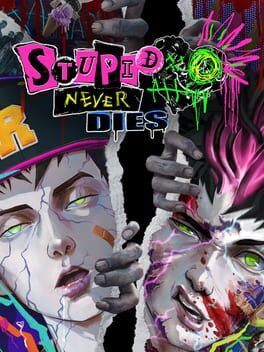
Hands-on style preview of Stupid Never Dies, the outrageous action RPG from ex-Capcom veterans, digging into its style-switching combat, enemy design, and whether its loud pop‑punk presentation hides a potential cult classic or a breakout hit.
If you only saw the Game Awards trailer for Stupid Never Dies, you could be forgiven for thinking it was all noise and no nuance. Pop‑punk blares, colors scream off the screen, and a wide‑eyed zombie in a baseball cap sprints past werewolves and lizardmen to save a girl he found in a supermarket freezer. It looks like a joke.
The more extended previews and gameplay breakdowns roll out, though, the clearer it becomes why this action RPG is getting so much attention: under the meme‑ready presentation there is a very deliberate combat toybox that feels like ex‑Capcom veterans cutting loose with every wild idea they could not ship before.
A run‑based dungeon crawler with character action priorities
Stupid Never Dies is built as a run‑based action RPG. Each dive into its monster dungeon is a self‑contained run where you level up, chase new builds, and push deeper before you eventually get bodied, cash out, and start over with new permanent tweaks.
Structurally it sounds closer to a roguelite than a classic Devil May Cry campaign, but the priorities are pure character action: responsiveness, generous cancels, and a focus on how stylishly you dismantle a room rather than how slowly you slog through it.
You play as Davy, a timid “bottom‑rung” zombie in a world where monsters have already won and humans are basically extinct. Davy sets out to revive Julia, a dead human girl he finds frozen solid. That premise is absurd on paper yet gives the game something previews keep calling out: a surprisingly earnest heart for a story about a guy who eats werewolves for power‑ups.
Style Eat: Devil May Cry DNA, roguelite twist
The hook driving all the buzz is Style Eat. Instead of picking a class at the start, you steal them from the things you kill.
Elite monsters carry cores tied to their specific combat style. First you have to pull off what the devs jokingly call a “Stupid Parry,” a high‑risk counter that cracks an enemy open and exposes its core. Finish the job and Davy can literally eat that core to unlock a new Style, instantly changing both his move set and his silhouette.
Previews talk about eleven Styles in the current builds, everything from a lanky skeleton summoner to a bruiser golem form that looks like it wandered in from a different game. Each Style brings its own attacks, movement quirks, and specials, but what stands out is how cap‑wearing Davy is still visible in every form. The ex‑Capcom team clearly understands that identity matters even when your hero is constantly shapeshifting.
What keeps this from feeling like a simple stance system is how runs are structured. You can only carry a limited number of Styles at once, and which ones appear depends on which elites spawn and which cores you manage to secure. There is no guarantee you will see your favorites in a given run, so you are nudged to experiment, improvise, and mash up builds instead of locking into a single meta.
The more you lean into that improvisation, the more it starts to resemble a Devil May Cry sandbox remixed through a roguelite lens. The ex‑Capcom pedigree shows in the details: animation priority that keeps moves snappy, generous air control, and previews consistently highlighting how quick the team is to talk about “feel” and “expression” rather than only damage numbers.
Combat style switching in practice
On paper, Style Eat sounds like a simple “steal powers from enemies” gimmick, something games have tried for decades. In motion, it pulls double duty as both a power curve and a rhythm changer.
Early runs have you scraping by with basic zombie swings and a stray skeleton Style. Land a clutch parry on a miniboss and suddenly you are juggling mobs with a werewolf’s lunging claws or locking a lane down with a lizardman sniper‑style kit. Some previews liken the feel of a good Style chain to Hi‑Fi Rush or Bayonetta in the way encounters become about weaving tools together rather than spamming one strong move.
On top of the Styles sit “Body Hacks,” permanent or semi‑permanent mutations that bolt weird perks onto Davy’s corpse. One run might turn you into a glass cannon where parries restore huge chunks of health. Another leans into summons, filling the screen with skeleton mobs while you stay mobile in a lithe form.
What matters is how easy it is to swap gears. Style switching is mapped cleanly and animations are short enough that you can snap between a tanky brawler and a nimble caster mid‑combo. When everything clicks, Davy stops feeling like a clumsy zombie and starts feeling like a one‑man tag team of monster archetypes.
The risk is complexity overload. With eleven Styles, Body Hacks, and different enemy types demanding different tools, Stupid Never Dies could have drowned itself in systems. So far, though, impressions suggest a sensible ramp. Early dungeons leave you with just a couple of simple Styles, and the UI telegraphs what each new form is for rather than burying you in numbers.
Enemy design that feeds the system
Because Styles are literally ripped from enemies, the roster has to do more than simply fill an elemental chart. The monsters in Stupid Never Dies are exaggerated silhouettes built around the behavior and power they grant you.
Werewolves are gap‑closing aggressors whose form hands Davy feral mobility and slashing combos. Lizardmen lean toward ranged harassment, so nabbing their core gives you tools to control space. Skeletons split into both cannon fodder mobs and a summoner archetype, making the battlefield feel packed when that Style is in play.
That design loop starts to feel self‑reinforcing. You read a room not just to see “what do I kill first” but also “whose powers do I want from this pack” and “which enemy is safest to set up a Stupid Parry on.” It adds a quiet layer of target‑priority puzzling on top of what could have been pure crowd‑control chaos.
Visually, enemies are loud and borderline ridiculous, but the silhouettes are readable. Exaggerated limbs, bold color blocking, and clear animation tells all feel like the work of people who cut their teeth on games where you have half a second to recognize what an animation means before you get launched.
Ex‑Capcom roots: Devil May Cry swagger, Dragon’s Dogma weirdness
A big reason people are paying attention is who is making this. GPTRACK50 is led by longtime Capcom producer Hiroyuki Kobayashi, with veterans who worked across Devil May Cry, Dragon’s Dogma and Resident Evil.
That heritage shows up everywhere.
The Devil May Cry influence is obvious in the emphasis on style expression, animation‑driven combat, and the way Davy poses, quips, and flips through enemies even when he is literally falling apart. Dragon’s Dogma’s DNA peeks through in the weirder build ideas and the willingness to let the game get messy, spawning chaotic enemy packs and encouraging janky emergent situations rather than polishing everything into a sterile combo room.
Even Resident Evil’s lineage is present, if only in the creature design sensibility. Under the neon lighting and goofy faces, you can see the same love of grotesque anatomy and mutated silhouettes that made Capcom’s horror monsters pop. Stupid Never Dies pushes those instincts into gleefully absurd territory, but the craftsmanship underneath is serious.
The result feels like a team deliberately swerving away from prestige horror and self‑serious epics to make something trashy in the best sense: fast, loud, and unembarrassed about its own nonsense.
The pop‑punk problem: style vs substance
The thing that has players arguing in comment sections is not the combat, it is the tone. Stupid Never Dies opens with a pop‑punk music video of a trailer, slathered in neon text, meme‑y slogans like “BLAZING FAST GROWTH,” and a hero who looks like he should be on a 2003 Hot Topic poster.
For some, that is the hook. It immediately plants a flag as a game that is not afraid to be silly and nostalgic for early‑2000s youth culture. For others, it looks like a try‑hard joke that risks making the game feel disposable before anyone touches a controller.
The hands‑on and extended previews paint a more balanced picture. Under the loud editing there is a relatively sincere story about a zombie who just wants to bring a girl back to life because he thinks she is pretty. It is absurd, but it is not entirely ironic. Davy is not an edgy anti‑hero, he is a nervous goofball punching way above his weight in a monster society that barely notices he exists.
That sincerity might be what keeps the presentation from smothering the mechanics. The jokes are there, the pop‑punk tracks blast over boss fights, but the game does not seem to constantly wink at the camera. When you are in a hard encounter, the combat is the point. The music and visual noise decorate it instead of replacing it.
The risk is that a large chunk of the potential audience will bounce off the trailer before they ever see a clean HUD and understand how the Style system works. The marketing is intentionally divisive, clearly aiming for people who want something aggressively stylized rather than safe.
Cult classic in the making, or something bigger?
All of this raises the big question: is Stupid Never Dies lining up to be a cult favorite, or could it break wider?
There are clear signs of a future cult hit. It has a specific aesthetic that will absolutely not be for everyone. The humor leans grotesque and juvenile, the protagonist is literally rotting, and the whole thing is framed around an almost parodic romance. Everything about it shrieks “if you know, you know” rather than mainstream comfort food.
At the same time, the ex‑Capcom DNA and mechanical clarity give it a shot at crossing that line. Slick style switching, highly readable enemies, and a run‑based structure that serves up constant new toys are the sort of systems that can win over players who arrive for the meme and stay for the depth. If GPTRACK50 can keep the difficulty curve fair and the progression loop rewarding, there is no reason this could not find the same kind of “small but loud” audience that boosted games like Hi‑Fi Rush.
The biggest swing factor will be how well the final game onboards players into its complexity without losing the sense of wild spontaneity that makes it look special in previews. If the first few hours feel like a coherent ramp that sells the joy of landing a Stupid Parry, scarfing down a core, and instantly flipping your playstyle, word of mouth will take care of the rest.
Right now, Stupid Never Dies looks like controlled chaos from a team that knows exactly what it is doing. If the outrageous presentation does not scare you off, there is plenty of reason to believe this goofy zombie action RPG might be one of the more interesting combat sandboxes on the horizon.