
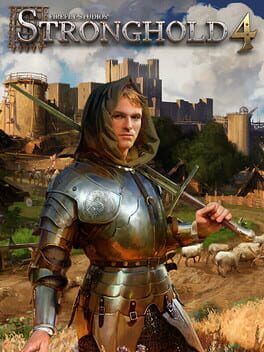

We go hands-on with the new Stronghold 4 Steam demo to see how Firefly’s next-generation castle-building RTS evolves the classic formula without losing its scrappy medieval charm.
The first Stronghold 4 demo has finally landed on Steam, and within minutes it is clear that Firefly Studios understands exactly what fans want to poke at before launch. This slice of the game focuses on the core loop that made the series a cult classic: building a believable medieval settlement, juggling a fragile economy, and then pointing a wall full of angry archers at anything that moves.
The big question is whether Stronghold 4 actually feels like a new generation of castle sim, or just a prettier retread of Stronghold HD’s glory days. After several runs through the economic and military missions included in the demo, the answer sits somewhere in the middle, but in a promising way.
A return to green and mud
Stronghold 4 pitches itself as a narrative prequel to the original game, and that nostalgia is baked into the demo from the first frame. Visually, it pushes harder than any previous entry, with dense forests, marshy lowlands and castle stonework that reads clearly even when the camera is zoomed way out. It is still unmistakably Stronghold though, more painterly than realistic, and crowded with villagers going about their day.
The new engine is doing real work in the background. Weather is not just set dressing. When heavy rain rolls across the map, archers on your parapets lose effective range, making it much harder to pick off approaching raiders before they hit the walls. Snow cuts into crop yields and slows your food economy, forcing you to diversify or stockpile long before winter truly bites.
None of this is complex on its own, but in combination with classic Stronghold systems it creates a sense that the landscape is finally pushing back. In older games it was usually just your own mismanagement that toppled a kingdom. In the Stronghold 4 demo, the environment is an active, if subtle, opponent.
Economy first, arrows later
The economic mission in the demo is the best showcase of how Firefly has layered new mechanics onto the classic formula without drowning it. You begin with a modest keep, a handful of peasants, and the usual priority list that could have been lifted straight out of a 2001 strategy guide. Get lumber, get food, get stone, get tax revenue flowing, and try not to annoy the peasants in the process.
On the surface, the food chain works like it always has. You place apple orchards, dairy farms and wheat fields, then hook those into bakeries and other processing buildings that fill your granary. What changes the feel here is how terrain and weather interact with your layout decisions. Orchards really do prefer clear, non-boggy ground. Wheat thrives on flatter, more fertile tiles. Place them poorly and you will see the output difference over time, especially when the first snow hits.
Stronghold’s trademark popularity system also returns, and the demo is not shy about making you ride its razor edge. Taxes, rations and religion all feed into your peasants’ happiness, and they will quietly walk out if you lean too hard on any single lever. The twist in Stronghold 4 is how many more subtle modifiers creep into that equation. Festival buildings, cosmetics for your keep, and even how cramped your living quarters feel can push popularity a few points one way or the other.
It never turns into Anno-level economic minutiae, but there is more to consider on each square of land than there used to be. That extra density is what makes Stronghold 4 feel forward-looking rather than simply nostalgic.
Walls that matter again
The military mission hits a different note, and it is here that the “next generation castle defense” marketing line starts to earn its keep. Stronghold has always lived and died by how good it feels to build a wall, man it with archers, then watch it hold against waves of attackers. The demo leans into that fantasy by giving you a more granular castle designer and more ways to make your fortifications nasty.
Castle pieces now snap more cleanly than in Stronghold 3, letting you carve out angled bastions, rounded corners and layered curtain walls without the old fiddliness. Gatehouses fit logically into walls rather than feeling like special cases. Moats can be dug with more precision, tracing natural contours in the terrain so that your defenses sit convincingly inside the landscape instead of on top of it.
Traps and murder zones are where the new tech is most obvious. You can place rockfall traps in narrow canyons, boiling oil cauldrons above choke points, and hidden spike pits in the approaches to your main gate. These are not just passive damage numbers. They combine with the new physics simulation in entertaining ways. A triggered rockfall will splinter enemy formations and send units ragdolling down slopes, where a waiting line of spearmen can clean up the survivors.
Ranged combat benefits from the weather system in a more visceral way than the economy does. A sunny day turns your walls into machine gun nests, with archers reaching deep into the fields. When rain closes in, their effective range and accuracy drop, and you suddenly feel exposed. The demo uses a well-timed storm during one of its set piece sieges to force you into more dynamic defense, repositioning troops and leaning harder on traps and melee units.
Stronghold pacing, for better and worse
If you have played any Stronghold in the last twenty years, the pacing of the demo will feel instantly familiar. The opening minutes of each mission are about scrambling to build essential structures while your population creeps upward. Only after your food and wood income stabilize do you meaningfully think about stone keeps, towers and more exotic military structures.
The new complexity means this early scramble is busier than ever. You are thinking about orchard placement in relation to potential wall lines later, about how close quarries are to where you might eventually build a gatehouse, and about where to stash your first barracks so that it is protected but still central. For long-time fans, that density is satisfying. For newcomers, the demo can feel overwhelming.
Firefly helps with a more talkative tutorial system. Advisors now chime in with more specific, contextual guidance, nudging you toward better building layouts when you are clearly about to do something silly, like stacking food producers in a flood-prone valley. Tooltips dig into the why of each structure more than the what, explaining how a building interacts with terrain, weather and popularity.
Even so, the military mission exposes how quickly things can get away from you. Fail to fortify a particular approach, mis-time a trap or underestimate a wave, and you can find sections of your wall collapsing beneath ladders and siege towers. The chaos has the scruffy charm of classic Stronghold, but it can clash with the cleaner UI and more polished visuals, creating a sense that the underlying AI and unit control have not evolved quite as much as the presentation.
A prequel that understands the assignment
One of Stronghold 4’s smartest decisions, and something the demo communicates immediately, is to lean heavily on the tone of the original games. This is not a hyper-serious historical sim. The voice work is theatrical, the mission briefings are sprinkled with dry British humour, and peasants still bark the sort of lines that get stuck in your head hours after you quit to desktop.
That lighter tone makes the increased difficulty and complexity easier to swallow. When a blizzard wrecks your carefully tuned food chain, or a rainstorm spoils a perfect arrow kill-zone, it feels less like a punishing miscalculation and more like the world ribbing you for your arrogance.
Narratively, the demo only hints at the larger campaign structure, but the framing suggests a tighter, more character-driven story than earlier entries. The focus is firmly on the rise of your fledgling lord and their place in a messy patchwork of rival barons, outlaws and opportunistic invaders. How deep that goes remains to be seen, yet there is enough flavor in the demo cutscenes and mission objectives to suggest that Firefly wants the prequel label to mean more than just a chronological excuse.
Performance, platforms and Linux
On the technical side, the demo runs respectably on mid-range hardware. Zooming from a birds-eye view of the whole valley down to street level, where you can watch individual peasants shuffle between work and home, feels smooth on a reasonably modern PC. The physics-driven sieges have occasional hitches when many traps go off at once, but nothing so severe that it breaks the flow of play.
For Linux players, the demo is available on Steam and, according to early community reports, behaves well through Proton with only minor graphics settings tweaks needed to iron out occasional shader stutter. That mirrors Firefly’s recent pattern of ensuring their niche but passionate Linux audience is not left entirely behind, even if a native version is not part of the initial rollout.
The UI scales cleanly for ultrawide and higher resolutions, and Stronghold 4’s art direction does a lot of heavy lifting at 4K. Castle silhouettes are readable, resource nodes are legible, and weather effects are distinct enough that you can tell at a glance whether a passing cloud is just cosmetic or a real tactical concern.
Early verdict: rough edges on a very promising castle
So where does that leave Stronghold 4 after a few evenings with the demo? As a next-generation castle-building RTS, it clears the first and most important hurdle: building and defending a fortress still feels great. The new environmental systems and expanded economic considerations deepen that loop without losing the scrappy identity that made Stronghold matter in the first place.
At the same time, the demo exposes a few worries. The onboarding curve is steep for newcomers, the interface can feel busy once your town sprawls across half the valley, and unit AI occasionally struggles with pathfinding around more elaborate fortifications. These are the exact kinds of issues that early access, and a long demo period, are meant to iron out.
What is clear is that players are interested. Firefly has already racked up hundreds of thousands of wishlists on Steam off the back of this demo and its announcement campaign, and the community is flooding forums and social media with castle blueprints, siege stories and wishlists of their own.
If Firefly can keep tightening the screws on AI, performance and tutorial clarity, Stronghold 4 is positioned to be the series’ first true leap forward in years rather than just a very polished throwback. The demo does not answer every question, but it proves one crucial point: in 2026, there is still nothing quite like watching a well-planned medieval fortress shrug off a siege while your peasants cheer from the safety of the walls.