
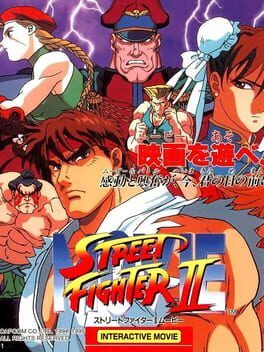

The Street Fighter movie box office opened above $50 million worldwide, giving Capcom a win on the chart while leaving profitability, sequel plans, and the brand’s crossmedia future unresolved.
Image: IGDB
A $51.1 million start wins the weekend, but not the round yet
The new live-action Street Fighter movie opened to an estimated $51.1 million worldwide, enough to take first place at the global box office in its debut weekend, according to IGN and Push Square citing industry reporting. The same figure is broken out by IGN as about $31 million domestically and $20.1 million internationally, while Screen Rant, citing Variety, lists a slightly different split of $30 million domestic and $21.1 million international. The key point holds across the reports: Street Fighter crossed the $50 million mark in three days and led the weekend.
That is the clean hit. The block string is messier. Deadline, as relayed by Push Square and Tbreak, reports an $82 million production budget for the film, which was distributed by Paramount and co-funded by Legendary and Capcom. Tbreak also notes Deadline’s reporting that a $70 million worldwide opening had been hoped for. So the Street Fighter opening weekend is strong enough to beat the field, but short of the higher-end target and still a long way from any simple theatrical break-even reading once marketing and exhibitor cuts are considered.
For Capcom, that tension is the story. Street Fighter did not whiff at the box office. It also did not land the kind of opening that instantly locks in the next phase of a movie universe. In fighting game terms, this is plus enough to keep pressure, not enough to declare checkmate.
Capcom’s fighting game brand finally gets a bigger theatrical opening
Street Fighter’s $51.1 million worldwide opening is especially meaningful because the film franchise has historically been uneven on screen. Screen Rant reports that the 2026 movie’s projected $31 million domestic debut is the best domestic opening in the history of the Street Fighter film series, beating the previous live-action films combined. The outlet lists the 1994 Street Fighter at a $6.8 million domestic debut and Street Fighter: The Legend of Chun-Li at $4.7 million.
Those older numbers need context. Screen Rant notes that the 1994 film ultimately reached $99.4 million worldwide against a reported $35 million budget, while The Legend of Chun-Li finished at $12.8 million worldwide against a reported $50 million budget. That history explains why this new opening matters for the brand even before profitability is settled. Street Fighter has been one of Capcom’s most recognizable game series for decades, but its live-action film record has not matched the brand’s weight in games.
The 2026 film’s debut changes that conversation. A No. 1 global opening gives Capcom a stronger media proof point around Street Fighter than the series has had in live-action cinema for years. It tells licensors, studios, and internal decision-makers that there is still a theatrical audience for Ryu, Ken, Chun-Li, M. Bison, and the rest of the roster when the package is visible enough. It does not prove that the movie model is solved. It proves the IP can still pull an opening crowd.
The audience is warmer than the critics, which creates a sequel problem and an opportunity
The split between critics and viewers is one of the most important numbers behind the Street Fighter movie box office. Push Square reports that the film held a 42% critics score and a 79% audience score on Rotten Tomatoes at the time of its coverage. IGN similarly cites a 41% Rotten Tomatoes critics score, a 44 critics score on IMDb, and 79% audience positivity on Rotten Tomatoes, while giving the movie a 6/10 in its own review.
That gap matters because theatrical legs often depend on whether the opening crowd can sell the film to everyone else. Push Square’s own review described the movie as garish, juvenile, and still fun, saying it captured the “wide-eyed, kaleidoscope craziness” of Street Fighter. IGN reports that fans have responded positively to elements such as animation and fight sequences, with “dumb fun” emerging as a common audience verdict.
For a fighting game adaptation, that is a familiar risk profile. The core crowd may reward character recognition, exaggerated style, and readable combat. Casual viewers may need stronger reviews, cleaner storytelling, or broader word of mouth before paying theatrical prices. If the film holds well, Capcom and Legendary can argue that Street Fighter’s tone found its crowd. If it drops hard, the opening becomes a front-loaded fan turnout rather than evidence of durable mainstream demand.
The video game movie field is crowded, and Street Fighter is not the top seed
Street Fighter’s debut looks better or worse depending on the matchup. IGN reports that Mortal Kombat 2 opened earlier this year to $63 million globally, giving Warner’s fighting game rival the edge over Street Fighter’s $51.1 million worldwide launch. Polygon, citing Deadline, says Street Fighter grossed $31 million in its opening weekend domestically and opened lower than Resident Evil, which made $60 million in its first weekend and was still charting about a month later.
Screen Rant places Street Fighter in the broader 2026 video game movie field. According to its worldwide ranking, The Super Mario Galaxy Movie sits at $1.013 billion, Resident Evil at $361.1 million, Mortal Kombat II at $129.6 million, and Street Fighter at $51.1 million after its first weekend. Screen Rant also notes that Street Fighter passed the full worldwide totals of Exit 8, Iron Lung, and Return to Silent Hill in a single weekend.
That comparison is useful because it keeps the result honest. Street Fighter is not a failure out of the gate. It is also not performing like the year’s dominant game-to-film breakout. Polygon argues that Resident Evil and Street Fighter took different adaptation routes, with Street Fighter leaning on known characters, fan service, and the IP’s wackiness, while Resident Evil used the franchise’s themes for an original story. That is Polygon’s interpretation, but the box office contrast is real in the cited figures. Game adaptations are no longer graded on a curve where survival is enough. They now compete against other game adaptations with very different budgets, tones, and audience strategies.
Profitability is the next life bar
The reported $82 million production budget is the pressure point. Push Square says the movie still has a long road to profitability, especially with marketing costs included, but suggests it could “just about eke out a win” if ticket sales do not collapse. Screen Rant is more cautious, noting that blockbuster films can often need to earn roughly two and a half times their budgets theatrically to turn a profit, which would put a possible break-even point as high as $205 million for Street Fighter under that rule of thumb.
Those are not identical conclusions, and they should not be flattened into one. Push Square emphasizes the possibility of an eventual win if the hold is decent and ancillary revenue helps. Screen Rant stresses that the theatrical math could be difficult, especially if Street Fighter tracks below Mortal Kombat II, which opened higher globally. Tbreak, citing Deadline, says people with knowledge of the situation believe the $82 million production will be fine in the end once ancillary revenue is counted.
For readers, the practical read is simple: the Street Fighter movie $50 million headline is a strong opener, not a final verdict. The next two or three weekends will be more important for sequel odds than the No. 1 debut alone. A sharp second-weekend fall would make the opening look like a loyalist rush. A steady hold would show that the audience score is doing real work.
How this could shape Street Fighter beyond theaters
The biggest brand question is whether this result encourages Capcom to treat Street Fighter as a broader screen property again. The confirmed business setup already gives Capcom skin in the game: Push Square reports that Legendary and Capcom co-funded the movie, with Paramount distributing. That is different from a passive licensing posture. If the film finds a profitable path through theaters and later revenue, Capcom has a stronger incentive to keep Street Fighter active in film or related media.
Tbreak reports that a sequel is being written, with a green light depending on how this first film performs. That should be treated as a conditional signal, not an announcement that another movie is locked. IGN also notes that people around both Street Fighter and Mortal Kombat have floated crossover ideas, but the same report frames Street Fighter’s sequel prospects as dependent on the weeks ahead. At this stage, the only confirmed result is the opening weekend. Future crossovers, sequels, and expanded plans remain contingent.
For the games audience, the most likely near-term impact is brand heat rather than a direct gameplay change. A successful movie run can keep Street Fighter characters in wider pop culture, make cross-promotion easier, and give Capcom more leverage when pitching animation, merchandise, events, or another film. A softer run would probably push the company toward caution, especially with the 2026 movie carrying the largest reported budget in the film franchise. Either way, Capcom now has fresh data instead of old scars from 1994 and The Legend of Chun-Li.
There is one practical availability note too. The sources confirm a theatrical release and Paramount distribution, but they do not provide a streaming date or a Paramount+ launch window. If you are waiting to watch at home, no sourced timing is available from the material here. If you are deciding whether to buy a ticket now, the reported consensus is clearer: critics are lukewarm, audiences are warmer, and the box office opening says enough fans showed up to keep Capcom’s film plan alive for another round.