
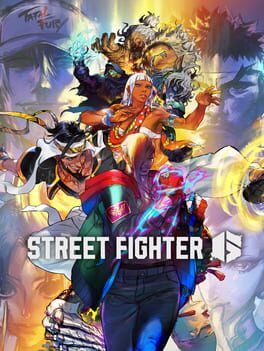

Ingrid steps into Street Fighter 6 as the final Year 3 DLC fighter, bringing cosmic magical-girl energy, zoning tools, and a surprising signal that Capcom might be ready to dig deeper into its character vault.
Ingrid’s arrival as the final Year 3 DLC character in Street Fighter 6 might be the most surprising roster move Capcom has made so far. Sagat, C. Viper and Alex were safe bets on some level, all fan-favorite regulars or cult icons with clear through-lines into SF6’s systems. Ingrid, by contrast, is a true deep cut, a character whose history lives mostly in spin-offs, handheld ports and message-board debates rather than mainline Street Fighter canon.
Yet she is exactly the sort of wildcard SF6 is built to absorb. With her release on May 28, Ingrid brings magical-girl theatrics, orbiting projectiles and cosmic laser beams into a game that has already proven unusually friendly to expressive, system-heavy designs. She is fan service, mechanical experiment and statement of intent all at once.
Why Ingrid Is Such A Deep Pull From Capcom’s Catalog
Ingrid’s origin story is messy in the way only mid-2000s Capcom can be. She first appeared in Capcom Fighting Evolution, a crossover curiosity that mashed together characters from different Capcom fighters. She later showed up in Street Fighter Alpha 3 Max on PSP, where her presence stirred up canon debates that never really went away. Outside of that and a few cameos, she has largely existed on the margins of the franchise.
That background puts her in a very different category from most of SF6’s DLC. Sagat and Alex are pillars of the brand, and even C. Viper, though not as omnipresent, is a major Street Fighter 4 representative. Ingrid, by contrast, has more in common with the obscure corners of Capcom’s archives, a name people bring up in the same breath as characters like R. Mika before SFV or the Rival Schools cast.
Bringing her into SF6 does more than just add a fun oddball. It reaches back into a time when Capcom experimented aggressively with tone and archetype, where a celestial schoolgirl with reality-bending power could stand beside Ryu and Bison without batting an eye. SF6 already leans heavily into style and personality, from World Tour’s custom avatars to the graffiti-streaked stage intros, so Ingrid’s magical-girl aesthetic feels less like an outlier and more like the missing extreme on a spectrum the game already explores.
Visually, SF6 leans into that identity. Ingrid glides more than she walks, with a ballet-like grace that sits somewhere between Manon’s dancer’s poise and a classic anime heroine’s transformation sequence. Her default outfit leans harder into ornate headgear and cosmic motifs than her earlier appearances, while her classic costume is unlockable through her World Tour questline for players who prefer the original look. Between those options, Capcom is acknowledging both the character’s obscure legacy and the modern SF6 visual identity.
How Ingrid’s Kit Fits The Current SF6 Roster And Meta
Within the SF6 ecosystem, Ingrid reads as a hybrid between zoner, trickster and screen-control specialist. Footage from the Year 3 trailer shows her summoning bouncing orbs that ricochet around the stage, firing narrow but potent laser blasts and seemingly blinking or warping around in ways that could complicate anti-air timing and pressure.
The core SF6 meta, across both ranked play and tournaments, is built on a few pillars. Fast, straightforward pressure characters like Ken, Luke and Cammy translate beautifully into Drive Rush, which rewards forward momentum and whiff punishing. On the other end, menacing midrange presences like JP and Guile weaponize screen control and Drive Impact punishes. Ingrid’s toolkit appears designed to poke at both ends of that spectrum.
Her orbs are the standout. They do not simply travel in conventional fireball paths but bounce and linger, suggesting layered set-play similar to JP’s thorns or A.K.I.’s puddles, but with a more visibly telegraphed rhythm. The SJ-style energy here is less about pure lockdown and more about forcing the opponent to respect future space, creating small pockets of time where Ingrid can either safely back off, Drive Rush in or threaten a high-low or throw.
Laser attacks give her a long-range punish tool that looks precise rather than purely oppressive. Where Guile’s Sonic booms or JP’s projectiles sculpt wide lanes of control, Ingrid’s beams seem more like surgical answers to whiffed specials or reckless Drive Rushes. That should align well with SF6’s risk-reward systems, rewarding players who can quickly confirm an opponent’s mistake into a full punish while remaining manageable for those who play patient and grounded.
There are hints that she will be unusually equipped to handle fireball wars. The trailer suggests some sort of projectile-interaction or negation, which, if it behaves anything like similar tools in SF6, will give her strong matchups into classic shotos and linear zoners but leave her more vulnerable to rushdown that does not rely on standard projectiles. That kind of specialist matchup spread is a good fit for a DLC character who is not meant to be everybody’s secondary but instead a main for players who enjoy sculpting the whole screen.
Her movement also appears tuned toward mind games rather than raw mobility. The way she glides and teleports suggests that her approach options will be committal but ambiguous, rewarding creative routing and Drive canceling. SF6’s Drive system thrives when characters can spend meter to convert weird hits into real damage, and a character with stray orbs, multi-hit beams and surprise cross-ups is exactly the type that can turn a single read into corner carry and oki.
For specialists of characters like JP, Dhalsim or A.K.I., Ingrid looks like a fresh twist on a familiar philosophy. For players used to straight-line pressure with Ken or Jamie, she may become one of those matchups that demands lab time to understand how, when and where you are actually allowed to move.
SF6’s Identity And Ingrid’s Place Within It
Street Fighter 6 has been defined by its willingness to expand what a Street Fighter character can look like. Kimberly blends classic ninja tools with spray-paint aesthetics, A.K.I. is pure poison horror, and JP is a gentlemanly war criminal masquerading as a zoner. Ingrid occupies a new corner of that design map, leaning fully into magical-girl and cosmic imagery that would have felt out of place in earlier numbered entries.
Mechanically, she also slots into the “lab monster bait” archetype SF6 has cultivated. Characters like Manon, A.K.I. and JP all reward extensive matchup knowledge and set-play rehearsal. Ingrid’s bouncy orbs and lasers look tailor-made for tech clips, optimized corner traps and Drive Rush combos that only get more menacing the longer the game lives.
Critically, her inclusion arrives at a point where SF6’s roster feels stable and mature. With Season 3 bringing three returning veterans before her, the foundation of familiar archetypes is solid. That gives Capcom room to introduce a more polarizing, unorthodox design without destabilizing the meta. If Ingrid lands as a mid tier with strong specialist matchups, she can diversify tournament lineups without repeating the early dominance JP had at launch.
From a casual perspective, Ingrid is also a natural fit for World Tour and Battle Hub culture. Her flamboyant animations and magical effects play well in a mode where your custom avatar can cosplay, learn moves from mentors and roam a stylized Metro City. Unlocking her classic costume via World Tour gives lapsed fans a reason to drop back into single player content while giving new players historical context for why this character’s appearance is such a big deal to an older niche of the fanbase.
Does Ingrid Signal A Broader Revival Of Obscure Capcom Characters?
The more interesting question is what Ingrid’s arrival says about Capcom’s roadmap. Up to now, SF6’s DLC strategy has leaned mostly on safe options and clear fan requests. Adding Ingrid at the tail end of Year 3 feels like a deliberate pivot, a way of testing how far into the vault Capcom can dig while still keeping the wider audience on board.
Ingrid is not a new crossover guest or a mainstream icon. She is a character best known to people who played specific ports or followed Capcom’s more experimental crossover era. If she sells well as a DLC pick and finds a dedicated player base, that becomes strong evidence that the SF6 audience is willing to support more adventurous choices.
Capcom has a long list of deep cuts that fans bring up: Rival Schools staples, Warzard/Red Earth fighters, even more obscure versions of Street Fighter characters that only ever appeared in spin-offs. Ingrid’s inclusion subtly links SF6’s mainline continuity with that messier extended universe, and it would not be surprising to see at least one or two more left-field picks in future seasons if she lands well.
There is also an optics angle. After anchoring early DLC with heavy hitters like Rashid, Ed and Akuma, Capcom has now proven it can both satisfy legacy demands and venture into riskier territory. Ingrid functions as a proof of concept that the roster can sustain characters who are not just legacy staples, not just crossover headliners, but genuine curios repurposed for the modern competitive structure.
If Season 4 continues that trajectory, we may see a roster philosophy where every batch of DLC pairs one or two big-name returns with a more daring throwback or cult favorite. That balance is healthy for a live-service fighter. It keeps long-time fans guessing, gives tournament play new wrinkles to solve and prevents the game from ossifying around the same archetypes that have dominated Street Fighter since the 90s.
What Ingrid Means For SF6 Going Forward
On a practical level, Ingrid’s presence means more matchup prep. Tournament players will need to learn where her orbs can be challenged, what is safe to Drive Impact through and where her anti-zoning tools break down. Lab enthusiasts will immediately start exploring orb routes, beam confirms and teleport gimmicks.
On a larger scale, her addition is a quiet but important milestone. SF6 is not merely retelling the greatest hits of Street Fighter; it is willing to reopen half-forgotten chapters and reinterpret them in the context of Drive Rush, modern netcode and a global competitive scene.
Ingrid brings magical-girl flash and strange screen control to a game already rich with personality. More importantly, she suggests that future seasons may dig deeper into Capcom’s back catalog instead of coasting on sure-thing legacy picks. For a live-service fighter still in its early years, that is a promising sign that Street Fighter 6’s roster will only get weirder, riskier and more interesting over time.