
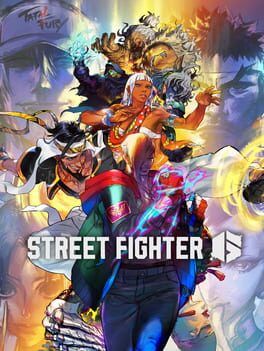

Capcom’s next Street Fighter 6 update doubles down on avatars with Random Avatar Matches and Avatar Arcade, showing why the game’s social systems matter just as much as its competitive depth.
Capcom is not done experimenting with what a modern fighting game community can look like. Street Fighter 6 launched with a bold social hub in the Battle Hub, custom avatars, and the sprawling World Tour RPG mode, and its next big update continues to bet heavily on that side of the game. With Random Avatar Matches and Avatar Arcade arriving on May 28, 2026 alongside Ingrid, Capcom is making it clear that the avatar ecosystem is not just a side attraction. It is one of the pillars that keeps players logging in between major balance patches and character drops.
From novelty to identity: how avatars grew up
At launch, Street Fighter 6’s avatar system felt like a fun experiment. World Tour let you sculpt a slightly unhinged fighter, stitch together moves from different masters, and then parade that creation through the Battle Hub. The appeal was obvious: a fighting game where your identity was not just your main, but the bizarre, personalized character you built yourself.
Over time, that concept has quietly matured. Capcom kept feeding the ecosystem with new costume options, emotes, titles, and World Tour updates that folded each DLC character into the single player story. The Battle Hub evolved into a social lobby where tournaments, casual sets, and special event cabinets all revolved around these avatars. What started as comic relief turned into a genuine expression of style and status.
The problem that emerged was friction. The most creative builds often required serious time investment to level up in World Tour, farm gear, and unlock key moves. Meanwhile, online Avatar Battles could feel wildly unbalanced, especially when veteran players showed up with min-maxed monstrosities swinging high damage specials that newcomers had never seen. The fantasy of equal footing did not always match the reality.
Random Avatar Matches: leveling the field without killing the chaos
Random Avatar Matches are Capcom’s solution to the gap between wild creativity and fair competition. Instead of asking players to grind or optimize, the mode flattens the playing field with Level Sync. Everyone enters with standardized levels and base stats, and all master styles, special moves, and Super Arts are unlocked from the start.
That single decision shifts the focus from progression to expression. You still bring your avatar, your look, and your sense of style, but the power fantasy is not locked behind a hundred hours of World Tour. New players can jump straight into the crazy mix-and-match sandbox that made avatars iconic, without feeling like they are target dummies for fully optimized veterans.
To keep the mode sticky, Capcom layers in Avatar Points rankings tracked daily, weekly, monthly, and lifetime. It is a familiar fighting game rhythm: log in, play a few sets, climb a ladder. The difference here is that the reward loop is tuned around avatars rather than your main roster rank. Wins feed into exclusive unlocks, including alternate colors for Fighting Ground characters, so the time you spend in this casual-friendly mode still reverberates across the rest of the game.
Crucially, the design does not strip away personality. Everyone gets a default Breakneck Brawler Outfit as a starting point, but you are encouraged to keep customizing through the broader ecosystem. Your look is still yours, even if the numbers behind the scenes are equalized. Instead of being punished for not grinding, you can treat Random Avatar Matches as a fast queue into the heart of Street Fighter 6’s social chaos.
Avatar Arcade: a faster gear train for the World Tour crowd
Where Random Avatar Matches are about fair online chaos, Avatar Arcade is a progression engine aimed at players who love building and tinkering. It pulls the RPG flavor of World Tour into a more concentrated format built around CPU battles and repeatable challenges.
Spar with a Master lets you bounce off the most important pillar of Street Fighter 6’s design. Each master is essentially a moveset tutorial, lore delivery system, and progression node all rolled into one. In World Tour, that relationship unfolds slowly as you wander cities and complete errands. In Avatar Arcade, it is compressed into quick rematches where higher difficulties pay out better rewards and accelerate how fast you learn styles and moves.
Battle Tour sits on top of that idea as a gauntlet. You fight strings of masters and World Tour NPCs for gear, items, and cosmetic unlocks, with New Challengers occasionally crashing the party as tougher surprise opponents carrying rarer loot. The inclusion of classic Street Fighter endings as rewards is a smart touch. It ties this very modern, avatar driven structure back into the series’ history, giving lore minded players a reason to grind just one more run.
The most important system here is the Acquisition Gauge. Repeatedly beating a master fills the gauge, and maxing it out unlocks that character’s Outfit 2. Those outfits can also be earned in World Tour or bought outright, but Avatar Arcade provides a clear, combat centric path that feels more in line with the core of the game. It turns costume collecting into a mini metagame and gives players who enjoy labbing matchups against CPU versions of characters a long term goal.
Why Capcom keeps feeding the social layer
Looking at the broader lifecycle of Street Fighter 6, this update fits a pattern. Every major patch has brought balance changes and competitive tweaks, but the headline additions are often about how people meet, hang out, and express themselves. The Battle Hub’s spectator stands, in game tournaments, arcade cabinets, rhythm inspired events, and even silly interactions like photo corners have been given as much attention as frame data.
There are practical reasons for that focus. Competitive ranked players generate highlight reels and tournament prestige, yet they represent only a slice of the audience. World Tour and avatar play act as a bridge for everyone else. If you are nervous about jumping straight into Ranked, you can send your avatar into Battle Hub, Roleplay with friends, or grind Avatar Arcade without worrying about your LP.
From a retention standpoint, avatars are a clever glue between modes. The same character you build in World Tour can strut around the hub, enter Random Avatar Matches, and now take on structured CPU challenges in Avatar Arcade. Cosmetics earned in one mode show up in another. Outfit 2 unlocks won through the Acquisition Gauge influence how your favorite characters look in Fighting Ground. That sense that everything is connected nudges players to sample parts of the game they might otherwise ignore.
There is also a community health angle. Purely competitive environments can become intimidating or toxic. Social systems built around avatars, shared hubs, and cooperative or low stakes play help diffuse that tension. By investing in modes where the stakes are lower and the tone is more playful, Capcom makes it easier for new players to stick around long enough to care about the deeper mechanics.
Balancing casual chaos and serious play
The interesting thing about Random Avatar Matches and Avatar Arcade is that neither is truly isolated from the competitive scene. Randomized, level synced builds create unconventional matchup scenarios that can teach adaptability in ways ranked mirrors cannot. Learning how to respond to unexpected move combinations is a useful skill, even if the environment is casual.
Similarly, Avatar Arcade’s Spar with a Master and Battle Tour are essentially structured lab sessions wrapped in progression. Repeatedly fighting CPU versions of characters, especially on higher difficulties, is a good way to internalize ranges, punish windows, and defensive habits before taking those lessons into proper matches.
Capcom is not replacing the traditional competitive backbone of Street Fighter 6. It is surrounding that backbone with an ecosystem that keeps lapsed players coming back, gives nervous players places to warm up, and rewards everyone with a steady flow of cosmetic and progression carrots.
A preview of where Street Fighter 6 is heading
Taken together, Random Avatar Matches and Avatar Arcade point toward a future where Street Fighter 6’s identity is inseparable from its social layer. The game already has a robust Fighting Ground for tournament diehards. What Capcom is building around it is a kind of always evolving digital arcade where avatars are the stars.
If Capcom continues on this path, future updates are likely to push even harder on shared spaces, collaborative events, and cross mode rewards. The success of World Tour and the Battle Hub showed that players want more than a menu of versus options. They want a place to exist as fans of Street Fighter, even when they are not in the mood to grind ranked sets.
The May 28 update looks like another strong step in that direction. By smoothing the on ramp into avatar battles and offering a more efficient way to grow and gear your creations, Capcom is reinforcing the idea that Street Fighter 6 is not just a great fighting game. It is a long term social platform where competition, creativity, and community all feed into each other.