
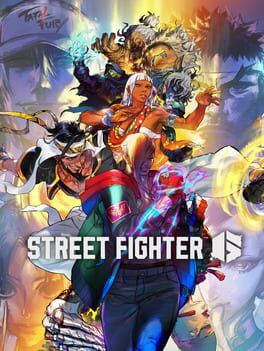

A full character-launch breakdown of Alex in Street Fighter 6, covering his Dark Devil redesign, how his moveset compares to prior Street Fighter entries, and what his grappler-leaning, AEW-flavored toolkit could mean for ranked and pro play once balance data and frame numbers are final.
Alex’s Dark Devil Reinvention
Alex finally steps into Street Fighter 6 on March 17, 2026 as the marquee Year 3 grappler. Instead of a simple port of his Street Fighter III or Street Fighter V incarnations, Capcom is pitching him as a full reinvention built for SF6’s Drive ecosystem and modern neutral.
The hook is his new Dark Devil persona. Outfit 1 leans hard into the “big‑match heel” vibe. The classic New York brawler has swapped the SFIII suspenders-and-jeans look for a more theatrical wrestling presentation: darker gear, more elaborate entrance flourishes, and an aura that fits right into the game’s stylized Battle Hub culture. Several outlets describe him as the “Dark Devil of the ring,” with Capcom positioning him as a fan-favorite monster heel rather than the underdog protagonist he started as.
Outfit 2, by contrast, is essentially a cleaned-up homage to his Street Fighter III appearance. For long-time fans who want the old-school Alex silhouette, this alt gives you the familiar feel while letting the new animation quality and lighting sell the upgrade.
Kenny Omega’s involvement as Alex’s motion capture performer brings the whole package together. The trailer is full of AEW-flavored flourishes: rope‑running style movement, big bump sell animations, and finishing poses that read like pay-per-view main event spots. The Dark Devil branding is not just cosmetic, it shapes how his grappler identity is communicated visually and thematically.
Toolkit Overview In Street Fighter 6
Early footage and previews show that Alex in SF6 keeps the core of his identity as a strike‑plus‑command‑grab hybrid, but his kit is retooled to sit cleanly inside SF6’s Drive system.
Key returning specials include Flash Chop, Power Bomb and Aerial Knee Smash, with several new tools layered on top:
Flash Axe appears as a fast, forward‑moving strike with both light and medium versions. In past games Alex often struggled to force respect in midrange without committing to risky options. Flash Axe in SF6 looks tuned to function as a way to check opponents walking back or fishing with long buttons. Counter‑hit properties and Drive Rush cancel potential will be a huge part of how strong this move ends up.
Flash Chop remains a heavy, ground‑based strike that defines a lot of Alex’s offense. The new trailer shows that on hit it can route into Power Bomb or Oblique Stomp, suggesting a clear strike‑throw flowchart. Depending on frame advantage, SF6 Flash Chop could replicate SFV’s infamous situation where opponents were forced into brutal guessing games on wake‑up.
Aerial Knee Smash returns as his anti‑air grab. In Street Fighter III it was a key answer to jump‑happy players and helped Alex establish air dominance. The SF6 variant looks more explosive and may be tuned to beat Drive Rush jump callouts and aggressive jump‑in offense from characters like Ken and Juri. The exact startup and invincibility will determine whether it is a niche hard read or a reliable anti‑air.
Power Bomb is still the heart of Alex’s grappler soul. The trailer confirms light, medium and heavy versions, which usually represent different ranges and damage profiles in modern SF design. In SFIII and SFV, Power Bomb’s risk‑reward ratio was often tied directly to Alex’s tier placement. In SF6, the move appears faster and more cinematically framed, which hints at Capcom wanting players to lean into it as a real threat, not just a gimmick.
The new Prowler Stance serves as a defining addition. It looks like a stance that branches into multiple follow‑ups such as Raging Spear and Sledgecross Hammer. Stance characters in SF6 tend to be strong when they can threaten both frame traps and command grabs while also covering Drive‑related interactions. If Prowler Stance can be accessed off Drive Rush or from key normals, Alex may gain layered pressure sequences that feel more SF6-native than his older, simpler flowcharts.
Finally, The Final Prison and Omega Wing Buster headline his super kit. Both have a clear AEW influence in presentation, with multi‑stage, high‑impact sequences that look like wrestling finishers. One appears to be a cinematic command grab, while the other functions more like a high‑flying, combo‑ender super. How invincible these moves are on startup, and whether one is a level 2 or level 3 with armor or Drive interactions, will define when Alex spends meter in neutral versus in combos.
Comparison To Past Street Fighter Versions
Alex’s history across Street Fighter titles has been defined by potential and inconsistency. In Street Fighter III he was a midrange bruiser with big damage, but his slower walkspeed and awkward normals made top‑level play demanding. In Street Fighter V he suffered from unreliable pressure and situational tools for long stretches of the game’s life, only feeling more complete after late balance patches.
The SF6 version appears designed from the ground up to avoid those pitfalls. While older Alex rotations leaned heavily on raw reads, SF6 Alex seems more structurally sound. Prowler Stance and its branches are exactly the type of system‑specific mechanic SF5 Alex lacked. Similarly, early footage suggests that charge inputs have been reduced or reworked to better fit the game’s input leniency and Drive Rush pressure. That should lower the execution barrier and push Alex closer to characters like Marisa and Zangief who can threaten huge damage without fighting their own command scheme.
His visual language is also cleaner. Street Fighter III Alex could be clunky to read in fast scramble situations. In SF6, cleaner hit effects and stronger camera work around Power Bomb and his AEW-inspired supers make it easier to understand what he is doing in real time. That clarity matters a lot for tournament play and for spectators.
Grappler‑Leaning Identity In SF6’s System
SF6’s design has not been particularly kind to slow, traditional grapplers. Zangief has had to work hard in neutral. Lily has fought to justify committed approach tools. Manon is an exception thanks to strong buttons and medal snowballing. Alex slots into that ecosystem as a hybrid: strong command grabs, but with more honest midrange tools and better mobility than the pure grapplers.
His ability to threaten from multiple ranges could solve one of the archetype’s biggest problems. Where Zangief often has to gamble with Drive Rush or raw lariat to close, Alex can potentially walk, poke with safe normals, cancel into Flash Axe to check movement, and then layer in command grabs once he is close. If Prowler Stance follow‑ups are plus on block or safe when spaced, he may get pseudo‑strike‑string pressure that is rare for a grappler-oriented character.
The strong AEW flavor on his supers is not just fan service. Wrestling‑inspired, high‑flying sequences usually imply extended corner carry and high damage. In a game where Drive Gauge dictates snowball potential, any character who can send you corner to corner in a single confirm and then threaten a lethal command grab mix on Drive‑depleted opponents instantly gains meta relevance.
Ranked Meta Implications
In ranked play, Alex looks primed to fit into the same “bully but beatable” category where characters like Marisa and Blanka live. His fundamentals seem straightforward: use midrange buttons and Flash Axe to check movement, build fear of Power Bomb, then loop strike‑throw with Flash Chop and Oblique Stomp.
For mid‑rank players, that gameplan is extremely threatening. Command grab characters punish blocking too much and jumping too early, which are both common defensive habits in online play. If Alex’s basic combos are simple and his Drive Rush extensions mirror existing SF6 routing, he will likely be one of the most popular Year 3 characters across the Gold to Master range.
At high ranks, the questions are more precise. How punishable are his core tools on block. How vulnerable is his anti‑air game to jump Drive Rush and cross‑ups. How expensive are his true vortex sequences in terms of Drive and meter. If his best pressure requires spending large Drive chunks, he may mirror Zangief’s early life problems, where every approach felt like a major resource investment.
On the other hand, if Power Bomb and Prowler Stance can be enforced without massive resource cost, Alex could become the kind of rank‑climbing monster that forces matchup knowledge checks. Players will need rehearsed answers to Flash Axe spacing, plus awareness of when to challenge stance transitions and how to escape post‑Flash Chop offense.
Pro Play And Tournament Viability
From a competitive standpoint, Alex has several things going for him. He bears a recognizable legacy, he is visually loud in a way that works well on stage, and his moveset appears to offer both explosive highlights and stable neutral. Tournament organizers and commentators love characters who produce big cinematic moments without devolving into coin‑flip gameplay every interaction.
For pro players, the calculus will come down to how Alex handles the established top tiers. Characters like Luke, Ken, Juri and Dee Jay define how safe midrange control and Drive management work in SF6’s current meta. To earn a permanent slot in tournament lineups, Alex must either go even or better into at least a couple of those, or serve as a reliable counterpick against a specific cluster of bad matchups.
If his standing medium buttons are competitive in speed and reach, and if Flash Axe can check Drive Rush in a way that forces respect, he may become a strong backup character for players who prefer grapplers but need someone with better neutral than Zangief. Also, the AEW-inflected super kit might slightly increase his popularity among wrestling‑fan pros and content creators, which indirectly pressures the meta by putting more Alex footage in circulation.
Where Capcom chooses to slot his frame data will be decisive. Slightly plus frame advantage after key normals into Prowler Stance or Flash Chop could turn him into a pressure monster, while slightly negative frames across the board will keep him honest and more matchup dependent. Similarly, if his anti‑air and reversal options are too weak, rushdown specialists will test him heavily in early seasonal majors.
On Quotes And Frame Data
At the time of writing, Capcom has not yet published the final detailed patch notes and frame data for Alex’s March 17 launch build, and official move frame charts are not available. Because of that, precise startup, advantage and recovery values cannot be reliably quoted, and direct quotations from the still‑unreleased notes are not possible.
Once Capcom releases the final patch notes and official frame data, this breakdown should be revisited with concrete values for moves such as Flash Axe, Flash Chop, Power Bomb and Prowler Stance transitions. Those numbers will clarify whether Alex is a true top‑tier threat or a more measured, matchup‑specific specialist, and they will also let us reference developer comments directly when discussing intended design goals for the Dark Devil.
For now, the available trailers and press previews paint a clear picture: Alex is entering Street Fighter 6 as a grappler‑leaning brawler built to thrive in SF6’s faster meta, bringing AEW‑style spectacle and a much more contemporary kit than any of his previous versions. Whether that will be enough to rewrite his historical reputation as an undercooked contender will be one of the big questions of the Year 3 competitive season.