
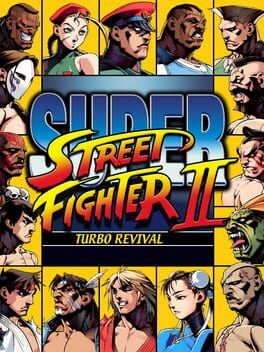

Akira Nishitani says he would like a shot at rebalancing Super Street Fighter II Turbo. Here is what is confirmed, what is not, and which changes veteran players would scrutinize first.
Image: IGDB
Nishitani’s question lands on sacred ground
Akira Nishitani, one of the original designers of Street Fighter 2 and Final Fight, publicly floated the idea of rebalancing Super Street Fighter II Turbo more than 30 years after its arcade release. IGN reported that Nishitani posted on X in September 2026 asking whether it would be acceptable to tweak Super Street Fighter II Turbo again, adding that he was not heavily involved with that version but would like to try if possible. EventHubs translated the post similarly and noted his closing joke: “Sorry if it turns into a nerf fest.”
That is the concrete news. The tension is that Super Turbo is not a dormant prototype waiting for a balance pass. Capcom’s 1994 fighter, released in Japan as Super Street Fighter II X: Grand Master Challenge, remains a tournament game with decades of matchup theory, execution habits, character-specific tech, and community memory attached to it. A Street Fighter 2 Super Turbo rebalance would touch one of the few competitive games where old imbalance has become part of the skill test.
Nishitani’s wording matters. He did not announce a product, a Capcom project, a patch, a platform, or a release window. He expressed interest. The difference is large, especially because IGN notes that Nishitani no longer works at Capcom and founded Arika in 1995. The most practical reading is that a major Street Fighter designer has put a design question into public view, not that a Street Fighter 2 update is on the schedule.
What is confirmed, and what remains unannounced
Confirmed by the available reports: Nishitani posted about wanting to try rebalancing Super Street Fighter II Turbo, EventHubs translated the post, and IGN identified him as one of the original designers behind Street Fighter 2 and Final Fight. EventHubs adds useful context that Nishitani directed the original Street Fighter 2 and Street Fighter 2: Turbo revision, while saying he had little involvement in Super Street Fighter II Turbo itself.
Also confirmed by the sources: Capcom has revisited Super Turbo before through new releases and remixes. IGN points to Super Street Fighter II Turbo HD Remix in 2008 and Ultra Street Fighter II in 2017 for Nintendo Switch as prior examples of Capcom building new spins on the material. Those examples show that the company has been willing to repackage or reinterpret this era of Street Fighter, but they do not confirm another revision.
Unannounced: whether Capcom has any role in Nishitani’s idea, whether Arika would be involved, whether any rebalance would target arcade-perfect Super Turbo, a new standalone release, a collection update, an experimental mode, or nothing at all. No source material provides price, platforms, rollback netcode details, arcade ROM handling, tournament support, physical release plans, or timing. Anyone treating this as an incoming patch is ahead of the evidence.
Super Turbo’s balance problem is also its identity
EventHubs frames the core design issue plainly: older fighting games were generally released into the world without the modern expectation of ongoing patches, and revisions were expensive because they often required new cartridges, discs, or arcade updates. Modern fighting games can adjust bugs, character power, and system interactions after launch. Super Turbo came from a different competitive ecosystem, where rough edges hardened into canon.
That history changes how players judge fighting game balance. In a new game, a dominant option can feel like a problem to be corrected. In Super Street Fighter II Turbo, a dominant option may also be a piece of matchup literacy that players have trained against for years. If a rebalance lowers a top character’s reward without understanding the counterplay that already exists, it risks flattening a game whose volatility is part of its draw.
The game’s importance is not only sentimental. Wikipedia’s entry for Super Street Fighter II Turbo notes that it introduced super combos and air combos, and introduced Akuma as a secret character who later became recurring in Street Fighter and other Capcom fighting games. Those system and roster changes sit at the root of how later fighting games talk about comeback resources, explosive offense, and boss-character mythology. Adjusting Super Turbo now would not rewrite history, but it would create a new argument about which version best represents competitive Street Fighter 2.
Stored moves are the first fault line
The sharpest community reaction cited by IGN comes from longtime commentator and FGC historian James Chen, who warned that changes could be dangerous because many players love Super Turbo as it exists. His examples are exactly the kind of mechanics serious players would watch first: Chun-Li’s stored Super and E. Honda’s stored Oicho Throw.
Chen argued that removing Chun’s ability to store her Super would make her less interesting, while removing Honda’s stored Oicho Throw would make him more interesting to fight. That split is the heart of a serious Super Street Fighter II Turbo rebalance. Two stored techniques can both be logically questionable, yet carry different competitive value. One may create tension, routing decisions, and character identity. Another may overcompress neutral and defense around a threat that many opponents experience as oppressive.
For players, this is where a “nerf fest” could become a design failure. A clean spreadsheet approach would identify outliers and trim them. Super Turbo is not clean. Charge partitioning expectations, reversal difficulty, proximity normals, throw loops, super storage, and matchup-specific ranges all affect whether an option is degenerate or simply strong. The community would likely judge any rebalance less by the number of nerfs and more by whether it understands why old tech survived tournament pressure.
The changes veterans would inspect frame by frame
Based on the reactions reported by IGN and EventHubs, longtime players would start with character cliffs rather than cosmetic tweaks. EventHubs says Super Turbo has large gaps between certain characters, while another player quoted by IGN warned that the game remains loved and active despite its unbalanced elements, so any balance effort should be careful. That means the first serious question is not “who gets nerfed,” but whether weaker characters receive tools that preserve matchup texture without making the game feel like a modern patch laid over an old engine.
Top-end reductions would draw the loudest scrutiny. If stored Super, stored Oicho, or other legacy power points were altered, players would immediately test whether matchups lost their defining decision points. Does a character still threaten the same space? Does meter still change walk speed decisions and fireball timing? Are classic punish windows intact? A change can be numerically fair and competitively dull if it removes the reason a matchup was worth studying.
Low-end buffs would be just as sensitive. A three-decade-old game has a player base that understands bad matchups as practical problems, not abstract tier-list trivia. Improving a weaker character’s anti-air, reversal reliability, damage, walk speed, or special move recovery could change tournament brackets faster than a headline nerf. If a Street Fighter designer ever got an official chance to tune the game, the strongest version of the project would probably treat buffs as matchup surgery, not charity.
A new balance pass would need a clear lane
Capcom’s past remixes show the problem a hypothetical rebalance would need to solve. IGN cites HD Remix and Ultra Street Fighter II as previous new spins on Super Turbo. Those projects existed as distinct releases, which matters because legacy competitors can keep playing the old game while curious players try the revision. A balance update that overwrote a preferred competitive version would face far more resistance than a clearly labeled alternative.
That separation would be especially important for tournaments. Super Turbo’s competitive value comes from stability. Players can travel, practice, and argue matchups knowing the target does not move under them every season. A rebalance could be exciting as an exhibition game, a side bracket, or a new official mode. It would be much harder to accept as a replacement unless Capcom, tournament organizers, and the existing player base aligned around it. None of the sources say that alignment exists.
There is also a preservation issue. A rebalanced Super Turbo would be judged against an arcade game whose flaws are documented and playable. If the revision smooths out too much, it risks becoming a curiosity for players who wanted historical friction. If it changes too little, it may fail to justify itself. The narrow target is a version that respects old timings, old damage psychology, and old matchup identities while making the worst cliffs less brutal.
How players should treat the Street Fighter 2 update talk
For now, treat Nishitani’s post as a serious design signal, not buying advice. There is no announced Street Fighter 2 Super Turbo rebalance, no confirmed platform, no price, no release date, and no statement in the provided sources from Capcom committing to development. If you want to play Super Street Fighter II Turbo today, make decisions based on existing releases and your local or online community, not on the expectation of a future patch.
The conversation is still valuable because it exposes a rare question in fighting game history: when does balance improve a classic, and when does it erase the competitive language that made the classic endure? Nishitani’s credibility makes the question worth hearing. The community caution reported by IGN and EventHubs makes it impossible to answer with nostalgia alone.
If this ever becomes real, the first patch notes to read would be the ones touching stored moves, top-tier reward, low-tier defensive options, and system behavior that affects reversal timing, meter threat, and throw pressure. Super Turbo players will not be impressed by balance as a slogan. They will test the ranges, count the frames, run the matchups, and decide whether the new version still feels like Super Turbo after the nerfs land.