
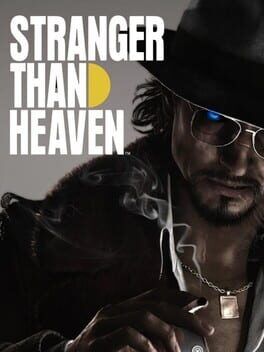

Sega and Ryu Ga Gotoku Studio’s Stranger Than Heaven finally steps back into the spotlight at Xbox Partner Preview. Here’s what this reveal needs to nail on gameplay, tone, platforms, release timing, and RGG’s post–Like a Dragon future.
Stranger Than Heaven has spent the last year living in players’ heads more than on their screens. Ryu Ga Gotoku Studio announced it as Project Century at The Game Awards 2024, then resurfaced it at Summer Game Fest 2025 with a new title, a jazz-soaked trailer, and a teasing glimpse of real-time brawling in a rain-slick 1910s city. Since then, details have been scattered across interviews, summits, and fan dissections rather than a single, definitive showing.
That is what makes its Xbox Partner Preview spotlight so important. This is the first time Stranger Than Heaven will anchor a platform-holder event. For Sega, it is the rare new IP from a studio that has lived inside the Yakuza / Like a Dragon universe for nearly two decades. For Xbox, it is a chance to lean on third‑party prestige to thicken a thin first‑party slate.
To justify that headline slot, the new showing cannot just be another tease. It needs to answer the basic questions that have trailed the project since day one: what exactly you do minute to minute, what kind of crime story RGG is telling, where you will be able to play it, and when. Just as crucial is how it signals the studio’s future now that the Like a Dragon saga has shifted into a new phase.
Nailing the genre question
Right now Stranger Than Heaven lives in a fog of genre shorthand. Officially it is an action game, often described as an action‑adventure with detective and survival touches. The Summer Game Fest trailer showed shoulder‑camera brawling that looked closer to Judgment’s street fighting than Like a Dragon’s turn‑based systems, with UI elements hinting at modern RGG real‑time combat.
That is enough to fuel speculation, not enough to set expectations. At the Partner Preview, RGG needs to show an uninterrupted chunk of gameplay that clarifies how the pieces fit together. Is this fundamentally a story‑driven brawler where investigations are light connective tissue, or a detective adventure where combat is reserved and brutal? Does the game lean on semi‑open city exploration in the RGG mold or smaller, denser hubs that better suit a historical noir?
The answer matters more here than in a numbered Like a Dragon, where fans already trust the template. Stranger Than Heaven is trying to sell players on an entirely new fantasy. A clean slice of UI, navigation, combat, and side activity in one continuous sequence would do more than any cinematic trailer to explain where it sits on the spectrum between Yakuza, Judgment, and something genuinely new.
Defining a new RGG tone
RGG’s calling card has always been tonal whiplash. The studio moves from operatic crime melodrama to slapstick side quests and karaoke without blinking. Early Stranger Than Heaven trailers, by contrast, have leaned heavily into smoky jazz, rain, and tension around a mixed‑race protagonist in early‑20th‑century Japan. The implication is a more grounded, serious story that digs into social prejudice and political anxiety around the World Wars.
The Partner Preview needs to decide whether that impression holds. If Stranger Than Heaven is RGG’s attempt at a sustained noir, the footage should highlight uneasy conversations, slow‑burn investigation, and the weight of its period detail, not just stylized punches in a back alley. If there is still room for levity, now is the time to show how it manifests without undermining the core mood.
That tonal clarity is not just an artistic concern. It defines the audience. A straighter crime drama with limited absurdity could invite players who bounced off Like a Dragon’s goofier excesses, while still keeping long‑time fans interested. Conversely, a re‑skin of the usual mix in a trench coat might excite the faithful but make Stranger Than Heaven look like a sidestep instead of a statement.
Platforms: from educated guesses to real commitments
Despite multiple trailers and event cameos, Sega still has not stamped a definitive platform list on Stranger Than Heaven. Most reporting and database listings point toward Xbox Series X|S, PlayStation 5, and PC as the obvious trio, but there has been no on‑screen confirmation.
Headlining an Xbox Partner Preview practically guarantees one thing: there will be an Xbox logo attached to the new trailer, and likely some Game Pass or marketing language to go with it. The unanswered question is whether this is a standard multi‑platform launch, a timed‑content arrangement, or something closer to the early days of Yakuza on Xbox where ports followed after PlayStation.
For RGG, clarity here is strategic. The studio has spent the last console generation expanding from PlayStation exclusive to day‑and‑date multi‑platform releases, including PC and Xbox. Stranger Than Heaven carrying that torch makes it easier to position as the next big tentpole for the whole fanbase, not a side project you wait to hit your platform of choice.
For Xbox, a line like “launching day one with Game Pass” would instantly turn Stranger Than Heaven from an interesting trailer into a potential system‑usage driver, especially in regions where RGG’s work has struggled to break out. Even a simple confirmation of full parity with other platforms would be a meaningful signal that the relationship Sega and Xbox built around Like a Dragon is not a one‑off.
Reading the release‑window tea leaves
The one thing everyone agrees on is that Stranger Than Heaven is not imminent. RGG itself has called it a long way off, and various business briefings and fan‑compiled timelines point to Sega’s fiscal year ending March 2027 or later as the realistic target. That puts it on the far edge of the current slate, beyond the recent Like a Dragon entries and whatever comes next for Judgment.
The Partner Preview is unlikely to drop a firm date, but it can quietly recalibrate expectations. A broad window such as “2027” or even “coming in Sega’s next fiscal year” would be enough to tell fans how patient they need to be. Conversely, if the trailer keeps things at a vague “in development” with no year attached, that suggests Stranger Than Heaven is still in the heavy‑production phase rather than content lock.
Footage itself will be a clue. A build that showcases polished UI, varied combat encounters, and multiple time periods suggests a project entering the long road to optimization. A trailer that stays tightly framed around a single district or relies on cinematic slices over raw play implies systems and content are not ready to be toured in public.
For RGG’s broader schedule, that timing matters. The studio has to juggle ongoing Like a Dragon support, potential Judgment follow‑ups, and now a historically grounded noir. If Stranger Than Heaven plants its flag late in the decade, fans can infer that the middle years will likely belong to shorter projects or more familiar series entries while the new IP quietly matures.
Where it fits in RGG’s post–Like a Dragon era
Stranger Than Heaven is not just another checkbox on Sega’s release calendar. It represents RGG Studio’s first major swing at a completely separate universe since Judgment, and it arrives after a period of reinvention. Like a Dragon has transitioned from Kazuma Kiryu’s saga to Ichiban Kasuga’s, shifted from brawler combat to turn‑based RPG systems, and made its peace with being a global, multi‑platform brand.
That evolution created a new problem: how do you stretch creatively without snapping what people love? Stranger Than Heaven is the answer RGG is putting forward. It takes familiar building blocks real‑time melee, city exploration, character‑driven crime plotting and drops them into a historical, jazz‑soaked Japan that lets the team explore class, race, and politics far removed from their usual contemporary playground.
A strong Partner Preview segment needs to make that creative throughline obvious. Showing how its protagonist moves, fights, and interacts with the world will tell fans whether this is a spiritual sibling to Kiryu’s formative PS2 adventures, a cousin to Judgment’s legal thrillers, or the start of something that can stand entirely apart.
If RGG can convincingly frame Stranger Than Heaven as the pillar that lets Like a Dragon stay comfortably weird and RPG‑focused while a separate line scratches the brawler and noir itch, the studio’s post‑Like a Dragon identity starts to look much healthier. It becomes less about endlessly iterating one series and more about a constellation of crime stories that share DNA without sharing timelines.
Why this showing matters
Because Stranger Than Heaven has only appeared in short, carefully edited trailers, there is a risk that it becomes an abstract idea rather than a real project. The Xbox Partner Preview is the moment to convert curiosity into anticipation.
If RGG delivers a clear look at genre, tone, platforms, and timing, Stranger Than Heaven stops being “that jazzy historical teaser” and starts to look like the next major crime epic on the calendar, one that just happens to be wearing an Xbox logo on the night. For a studio trying to prove it can thrive beyond Kamurocho’s neon, and a platform holder eager to showcase distinctive third‑party stories, this particular reveal has more riding on it than a standard mid‑week showcase slot.
It is the first real test of whether Stranger Than Heaven can carry the weight Sega and Xbox are placing on its shoulders, and whether RGG’s future is defined by a single series or an expanding universe of crime dramas that feel, in the best way, stranger than what came before.