
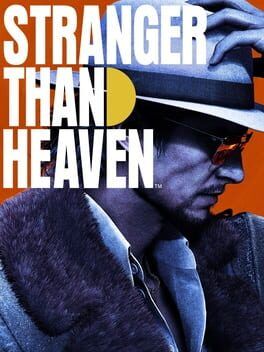
RGG Studio is throwing out classic Yakuza brawling for Stranger Than Heaven, building a brutal dual-hand combat system that might chart a new future for the studio’s action games.
A Clean Break From Dragon Engine Brawling
For nearly two decades, RGG Studio’s action has been defined by a particular rhythm. Whether you were cracking skulls in Kamurocho as Kazuma Kiryu or juggling thugs with Ichiban’s bat, the basic feel rarely changed: one face button for combos, one for heavy finishers, a dodge, a block, and contextual Heat moves doing the heavy lifting. The brawlers evolved visually and mechanically, but the foundation stayed familiar.
Stranger Than Heaven is where that foundation finally gets torn up. Instead of polishing the Dragon Engine brawler formula yet again, RGG has thrown it out in favor of a system that treats your character’s body like a pair of independently controlled weapons. After multiple Summer Game Fest previews, one thing is clear. This game does not play like Yakuza or Like a Dragon, and that is very much the point.
Both Hands On Deck: How Dual-Side Combat Works
The core idea behind Stranger Than Heaven’s combat is simple to describe and tricky to master. Your controller is split down the middle, just like your character’s body. The left bumper and trigger handle left-side light and heavy strikes. The right bumper and trigger do the same for the right side. Instead of thinking in terms of a preset combo string, you think in terms of which arm you are throwing and when.
In practice, that means punch sequences are no longer baked into a single button press. A jab-cross might be left bumper into right bumper. A heavy right hook can be buffered with the right trigger and framed by quick left jabs to keep an enemy staggered. Holding inputs charges up heavier blows, and pressing both triggers together can launch a full-body tackle or mount attack once someone is on the ground.
This layout forces you to stay engaged in a way the old system did not. You cannot just hammer Square or X and let Kiryu’s standard combo carry you. You have to actively choose which hand is free, where the opening is, and whether you want to commit your heavy strikes or keep a side ready to parry.
From Flowchart Combos To Real-Time Improvisation
Yakuza’s classic combat was built around flowcharts. Each style or move list encouraged you to discover and repeat strong routes. Stranger Than Heaven moves closer to a fighting game mentality. Because you directly pair each limb to a specific button, your “combos” become improvised sequences rather than canned strings.
A typical exchange might start with a left feint to bait a swing, a quick right parry input, then alternating left-right body shots to capitalize on the stagger. If an enemy tries to clinch, spamming the free-side bumper lets you pummel them until they break off. Knock someone down and you can hit both triggers to dive onto them and start a brutal ground-and-pound sequence, then back off manually with a dodge instead of being snapped back to neutral by an animation.
The shift is subtle but important. You are still playing a third-person beat ’em up with chunky hit-stop and RGG’s signature camera work, but the game is now asking what you did with each hand, not which combo in the list you selected. The feel is heavier, more deliberate, and less about visual flourish than about where you place each hit.
Deliberate Violence Instead Of Crowd Control Spectacle
If the old Yakuza brawlers were about crowd control and spectacle, Stranger Than Heaven is about pain and survival. Enemies do not politely wait their turn, but they also do not evaporate under a flood of Heat moves and traffic cones. You are constantly trading space and tempo for safety.
RGG’s previews describe a combat loop where managing one opponent rarely guarantees safety from the others. You might grab a thug in front of you, only to eat a haymaker from someone off screen. The solution is not to rely on an invincible throw animation. It is to use your unoccupied hand while grabbed, hammering the free-side bumper so Makoto Daitō can beat the attacker off him, then switching focus to the new threat.
The result feels closer to a cinematic brawl. Fights are scrappy, full of stumbles, clinches, and ugly finishing blows. You do not juggle enemies into elaborate aerials. You crush them with knees, elbows, and weapons that hit with sickening weight. It is still stylized, but the tone leans more toward period crime drama than the often absurd power fantasy of Like a Dragon.
Weapons As Extensions Of Limbs, Not Setpiece Props
Weapons have always been part of RGG’s identity, but often as joke objects or short-lived power spikes. Stranger Than Heaven reframes them as extensions of the dual-side system. A knife, crowbar, or other tool effectively lives in one of your hands, inheriting that side’s inputs.
In hands-on reports, a simple knife becomes a way to control range, slashing with right-side inputs while your left hand keeps enemies in check with jabs and parries. A heavy crowbar transforms your right trigger into a huge commitment swing that you need to protect with quick, disruptive left-side punches. Because both hands are mapped separately, mixing bare-knuckle strikes and weapon hits feels natural, not like swapping between two modes.
RGG also emphasizes variety. Stranger Than Heaven features a broad weapon roster rather than a handful of gimmicks. Combined with the body-part input scheme, that variety suggests a deeper sandbox of attack patterns than prior games. The interesting part is not just that you can pick up a weapon, but how you learn to choreograph each hand around its weight and speed.
How It Differs From Yakuza And Like a Dragon
On paper, Stranger Than Heaven is RGG Studio doing what it always does. It is a story-driven crime saga, drenched in melodrama, taking place across multiple Japanese eras with a cast full of recognizable faces. The big departure is that the combat no longer sits on the continuum between Dragon Engine brawler and Like a Dragon’s turn-based systems.
There is no face-button combo stringing. There are no style switches or Heat gauge supers in the familiar sense. Defense is not a binary block, but a tool that exists in tension with your hands, because committing both sides to offense leaves you open. Even crowd encounters are framed differently. Instead of wiping big groups with radial Heat attacks, you prioritize targets and angles, using tackles, mounts, and weapon reach to thin the herd.
If Lost Judgment was a refinement of the traditional formula, Stranger Than Heaven is a conscious uncoupling from it. It is the first RGG action game where the studio seems more interested in systemic depth than in preserving the “feel” fans expect from a Yakuza bar fight.
A New Skill Ceiling For RGG Combat
The immediate benefit of the dual-hand system is a higher skill ceiling. Because each limb is mapped one-to-one, there is much more room for players to develop unique play styles. Some will favor rhythm, alternating left and right strikes to manage stamina and positioning. Others will treat one side as a dedicated guard-break or parry tool, using the other to cash out damage.
This extra complexity also opens the door for mechanical expression that old Yakuza combat only flirted with. Positioning, timing, and limb choice can change how safe or risky a sequence is. A cautious player might poke with single-handed jabs, ready to cancel into a dodge. A confident one might weave in double-trigger tackles and brutal mount attacks, gambling that they can read the crowd and avoid punishment.
RGG has always been good at making its combat look cool. Stranger Than Heaven feels like a chance to make it play as smart as it looks.
Can This Redefine RGG’s Action-Game Identity?
Stepping away from the classic brawler carries risk. There is a generation of players who associate RGG with the exact feel Stranger Than Heaven discards. But in the long term, this might be the most important move the studio has made for its action lineage.
First, it gives RGG a second combat pillar alongside Like a Dragon’s turn-based role-playing. Instead of trying to twist the old brawler into something that can coexist with Ichiban’s command-based battles, Stranger Than Heaven plants a flag in a different territory: gritty, body-driven, high-commitment fistfighting.
Second, the dual-hand concept is modular. You can imagine it being tuned for stealthier games, weapon-heavy action, or even more grounded crime stories that do not need the heightened theatrics of Kamurocho. If Stranger Than Heaven lands, RGG suddenly has a flexible system it can adapt across new IP without inheriting 20 years of Yakuza baggage.
Finally, it shows the studio is willing to let mechanics reflect theme. Stranger Than Heaven is a saga of men with nowhere to go, scraping for survival across five tumultuous decades. The combat is not about dominating a city. It is about scraping through each encounter, hand over hand, one strike at a time. That alignment between story and systems is a promising sign for whatever comes next.
RGG Studio built its reputation on spectacular street brawls. With Stranger Than Heaven, it is betting that its future lies in something rougher, riskier, and more tightly wound around the player’s own two hands. If the full game can sustain the tension and texture of these early previews, this dual-side system will not just distinguish Stranger Than Heaven from Yakuza. It could mark the start of a new era for RGG’s action games.