
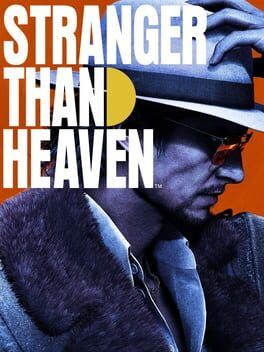
How RGG Studio is reinventing itself with Stranger Than Heaven, a 50–year crime saga that trades Kamurocho comfort for a prestige, globally minded action‑adventure built for Game Pass and beyond.
A new identity for the studio that built Like a Dragon
For nearly two decades, Ryu Ga Gotoku Studio has made games that orbit the same gravitational center: modern Japanese nightlife districts, aging but unbreakable tough guys, and melodrama infused with slapstick. From Yakuza 0 to Like a Dragon: Infinite Wealth, you always knew roughly what an RGG game felt like.
Stranger Than Heaven is where that certainty ends.
Unveiled during an Xbox Presents showcase and now targeting a Winter 2026 launch on Xbox Series X|S, PS5 and PC, Stranger Than Heaven is not just another branch of the Like a Dragon tree. It looks like a whole new species. Spanning fifty years of Japanese history, traversing five different cities, and powered by a wildly experimental combat system, it is Sega’s attempt to position RGG as a maker of prestige, globally resonant action adventures rather than “just” cult-favorite crime dramas.
From its multi-decade story structure to a day‑one Game Pass strategy that screams worldwide reach, Stranger Than Heaven is being built as the studio’s biggest departure yet.
A 50–year crime saga instead of one city and one decade
RGG games have always been about time and place, but usually in a narrow, almost stage‑play way. You get one city, a few adjacent districts, and a story bound to a relatively short slice of years. Stranger Than Heaven shatters that template.
The new game follows Makoto Daito, a half‑Japanese, half‑American protagonist whose life threads through five eras: 1915, 1929, 1943, 1951 and 1965. Instead of watching a character arc unfold over a couple of turbulent years in Kamurocho, you watch a man age, compromise and harden across half a century of Japanese history. Every time the story jumps forward, both Makoto and the country around him are different.
Sega and RGG are leaning into that historical sweep. The setting moves across five primary Japanese cities, each grounded in period‑accurate fashion, architecture and social tensions. Where Like a Dragon anchored itself in fictional analogues of Tokyo or Osaka nightlife, Stranger Than Heaven treats Japan as a whole, from pre‑war alleys to post‑occupation neon. The Xbox showcase footage and subsequent breakdowns emphasize how each era is visually and mechanically distinct, with shifts in technology, politics and underworld power structures reframing Makoto’s role.
That structure is perhaps the most dramatic thing RGG has done to its own formula. Like a Dragon’s serialized storytelling already felt television‑inspired. Stranger Than Heaven edges closer to long‑form prestige drama, closer to something you would binge over multiple seasons than a single contained film. The team is trading the comfort of a familiar city for a narrative that shows characters growing old, losing relevance, and making choices that echo decades later.
Growing older changes everything: characters, stakes and tone
Telling a story over fifty years lets RGG examine a kind of character arc it has rarely touched. Kazuma Kiryu was iconic partly because he seemed immovable, a moral constant in a changing Japan. Makoto Daito is being presented as the opposite: a character whose body, fighting style, relationships and even worldview evolve as he survives wars, criminal empires and shifting cultural norms.
Early‑era Makoto is shown as a scrappy, hungry fighter navigating 1910s and 1920s underclass life, pulled between his American heritage and Japanese expectations. By the 1940s and 50s, the same man is dealing with the scars of war, the rise of new kinds of organized crime and the widening gulf between generations. By the time the story reaches the 1965 segments, we are effectively watching an elder statesman of violence whose reputation precedes him.
For RGG, that opens the door to more grounded, sometimes bleak storytelling. Reports from the reveal stress a heavier emphasis on personal tragedy, systemic injustice and the compromises required to survive. The studio’s trademark humor is still present, but Sega’s messaging repeatedly highlights themes like legacy, regret and the cost of living by the fist over half a century. It is as if the team wants to prove it can carry the emotional weight of a prestige crime epic on the same level as its loudest Western peers.
Combat that mirrors a life lived through violence
The most radical shift from Like a Dragon might not be the time jumps but how Stranger Than Heaven handles combat. After experimenting with turn‑based systems in Like a Dragon and returning to brawler action in Gaiden and Infinite Wealth’s side content, RGG is pushing toward something stranger and more technical here.
At the heart of Stranger Than Heaven’s fighting system is the idea of controlling the left and right sides of Makoto’s body independently. Instead of a single button for “light attack” and another for “heavy,” inputs are split so that each side of his body can block, strike, grapple or interact with weapons on its own. In motion, it looks closer to a character‑action game with a hint of fighting game complexity than traditional Yakuza brawling.
Eurogamer’s combat deep dive frames this as “the true star” of the game. RGG is building multilayered routines where you weave together left‑hand parries and right‑hand counters, switch stances that prioritize speed, grapples or weapon use, and chain contextual environmental attacks that feel much more deliberate than the old heat‑action prompts. The system is also described as evolving across the decades: Makoto’s fighting style bulks up, slows down or becomes more ruthless as he ages and as warfare and criminal tactics change around him.
That progression is crucial to why this feels like a break from Like a Dragon rather than an iteration. Earlier games typically gave you a set of styles that remained viable from prologue to finale. Here, RGG is hinting at a combat language that grows and frays with the protagonist, almost like a physical biography. If they pull it off, fights will not just be about crowd‑control spectacle but about reading an old man’s body the way you read his dialogue.
It is also a bold bet on player skill. Where turn‑based Like a Dragon battles opened the door for more casual fans and RPG grinders, Stranger Than Heaven’s system sounds unapologetically technical. Sega seems comfortable with that, positioning the game as a flagship action experience meant to sit alongside Western prestige titles rather than simply servicing the existing Like a Dragon fanbase.
From side streets to world stage: how Sega is selling Stranger Than Heaven
Underneath the creative changes sits a clear business move. Sega is not treating Stranger Than Heaven as a quirky spin‑off for series diehards. It is packaging the game as a marquee, globally relevant release.
The first sign is the platform and partnership strategy. Stranger Than Heaven is launching on Xbox Series X|S, PS5 and PC, with day‑one availability on Xbox Game Pass and support for cloud streaming. That means tens of millions of subscribers can sample a dense, historically rooted Japanese crime drama at no additional cost, which dramatically lowers the barrier to entry for players who might find Yakuza’s long history intimidating.
The Xbox Presents showcase dedicated entirely to the game underlines how important that relationship is. Microsoft gets a cinematic, narrative‑heavy exclusive for its marketing beats, while Sega gets a worldwide megaphone and a funnel straight into Western living rooms. For a studio whose breakout success has traditionally skewed toward Japan and a tight knit overseas fanbase, that is a major repositioning.
Sega’s broader messaging backs this up. Press materials and interviews stress Stranger Than Heaven as a premium action‑adventure designed to stand shoulder to shoulder with the biggest story‑driven games on the market. The emphasis on 50 years of historical Japan, a fully voiced cast with recognizable film and TV talent, and a bespoke theme song collaboration all signal that this is a prestige package being aimed far beyond the existing Like a Dragon audience.
In practical terms, day‑one Game Pass also gives RGG the freedom to be weirder and more demanding. When you are not asking every potential player to commit to a full‑price purchase sight unseen, you can design deeper combat systems, slower‑burn story arcs and denser side content that might have scared off newcomers in a purely retail model. Stranger Than Heaven’s multi decade gamble is easier to justify when friction to trying it is so low.
Leaving Kamurocho behind while keeping the soul
Despite all these departures, Sega is careful to reassure fans that Stranger Than Heaven is not abandoning what made Like a Dragon resonate. The new game still leans heavily on the studio’s core strengths: tangled relationships between criminals and civilians, melodramatic plot twists, and pockets of levity within otherwise grim subject matter.
Side stories are returning, this time reframed around the cultural shifts of each era. A 1920s jazz club subplot plays very differently from a 1960s television studio scandal, even if both scratch that familiar RGG itch of wandering off the main road to live someone else’s drama for an hour. Minigames and diversions, long a signature of the studio, are also evolving with the decades, from early street performances and gambling dens to post‑war nightlife and burgeoning music scenes.
What is different is the framing. Instead of being “the new Yakuza,” Stranger Than Heaven is being introduced as its own creative statement, a way for RGG to prove it can step outside the safe orbit of Kamurocho and its existing protagonists. Where Judgment gently shifted the camera to lawyers and detectives while keeping the city, Stranger Than Heaven breaks the axis of time itself.
Why this might be RGG’s most important game yet
Stranger Than Heaven arrives at a moment when Sega is clearly thinking about what RGG looks like in ten years. The Like a Dragon brand is stronger than ever globally, but it is also dense with lore and expectations. To keep growing, the studio needs a new entry point, one that can speak to players who have never touched a Yakuza game while still rewarding the faithful.
A fifty‑year saga about a man whose life mirrors the rise and transformation of modern Japan is a powerful answer. So is a combat system that refuses to play it safe and a launch plan that puts the game in front of as many eyes as possible on day one.
If it works, Stranger Than Heaven could redefine RGG in the same way Yakuza 0 once did, not as a final word on a beloved formula but as a statement that this team can reinvent itself without losing its heart. And if Sega’s prestige framing and Game Pass push succeed, Makoto Daito might become the first RGG protagonist that an entire new global audience meets not in the smoky bars of Kamurocho but in a Japan that changes as radically as he does.