
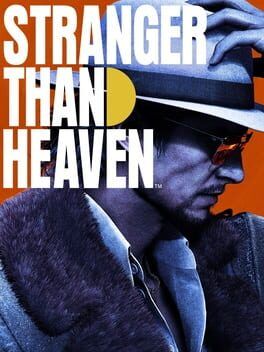
The latest Stranger Than Heaven hands-on previews point to a stylish, brutal, music-driven RGG Studio swing, with stronger combat confidence and real questions about pacing across eras.
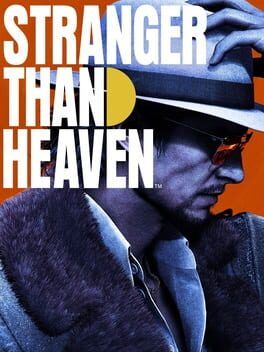
Image: IGDB
Store links: Stranger Than Heaven on Steam
RGG Studio’s next swing is coming into focus
SEGA has put Stranger Than Heaven back in front of press for extended hands-on sessions, and the clearest development is that this is no longer being judged only as a strange combat experiment. Across recent Stranger Than Heaven preview coverage from Push Square, Eurogamer, PCGamesN, RPGFan, DualShockers, MonsterVine, The Outerhaven, and GameRant, the same picture keeps forming: RGG Studio’s new game is stylish, violent, music-led, and more confident in motion than earlier short demos suggested.
The tension is that confidence does not erase the risk. Several outlets played roughly three hours of pre-selected material, often across different chapters or eras, rather than a continuous campaign stretch. Push Square said its demo was split across several segments spanning four chapters. RPGFan said SEGA and RGG Studio’s New York event covered five major sections across the first three eras, including 1915 Kokura, 1929 Kure, and 1943 Minami, while DualShockers also described hands-on sections set in 1915 San Francisco and Kokura, 1929 Kure, and 1943 Minami. That structure gave press a broad look at Stranger Than Heaven gameplay, but it also leaves the biggest pacing question unresolved: how smoothly will a decades-spanning crime drama move when players are no longer being escorted from highlight to highlight?
Push Square reported that SEGA invited the outlet to London for what it called one final hands-on before the game’s 15 January 2027 launch. The event presentation itself appears to have been unusually theatrical. Push Square described a Brixton pub transformed into a period jazz bar with a live band performing music from the game, while The Outerhaven similarly said attendees entered a small London bar with a live band playing songs from the game and were greeted by director Mikinobu Abe. RPGFan and DualShockers covered a New York event where Abe and Makoto Daito actor Yu Shirota appeared. Those details matter because the previews are not talking about style as surface decoration. They are describing a game whose era, music, performance, and violence are being sold as one continuous mood.
The previews agree that style is the hook, not the garnish
Every Stranger Than Heaven hands on report supplied here lands on some version of the same observation: the game has a stronger authorial stamp than a familiar “RGG Studio new game” label might suggest. PCGamesN wrote that, after three hours, it came away most impressed by the game’s overall feel and called the opening strong. Eurogamer described it as one of the most exciting projects the studio has worked on in a while, while MonsterVine said a longer second look changed its tone from uncertainty to major anticipation. RPGFan went further, saying the game had the potential to be among RGG Studio’s best, though that remains the outlet’s preview judgment rather than a confirmed outcome.
The setting gives the style its backbone. Eurogamer says Stranger Than Heaven follows Makoto Daito, a man of half American and Japanese lineage, as he tries to make a home in Japan across numerous decades while the country changes. PCGamesN says the story is set over 50 years, between 1915 and 1965. RPGFan and DualShockers both describe the prologue as beginning in 1915 San Francisco, where Makoto is fleeing police after being falsely accused of murder. RPGFan’s account frames the police pursuit through the racial hostility Makoto faces as a Japanese American man in early 20th-century America, while DualShockers similarly describes him escaping discriminatory life in the United States before seeking a future in Japan.
That setup gives the game’s cinematic language a sharper purpose than simple period cosplay. Push Square says the San Francisco prologue has Makoto disguised and trying to evade police through back alleys, accompanied by a rap song that introduces names in the cast, including Dean Fujioka, Ado, Snoop Dogg, Tori Kelly, and Akio Atsuka. Multiple outlets mention Snoop Dogg’s Orpheus, captain of the ship Arcadia, as part of the opening. PCGamesN was cool on Snoop Dogg’s acting, saying less said about it the better, but still found Daito immediately interesting. MonsterVine took a more forgiving view of the celebrity casting, saying the presence of Snoop Dogg and Ado could have felt cheesy or too loud, but in its demo it worked better than expected and did not feel shoehorned in.
The shared impression is that Stranger Than Heaven is leaning into spectacle without abandoning melodrama. PCGamesN highlighted an early Kokura scene in which Daito meets a girl in a bar and spends an evening drinking and laughing, praising the performances and direction for making the relationship feel instantly electric. Push Square said its Kokura chapter underlined that this is very much a narrative game, placing Daito in 1925 as he visits a hostess bar while searching for the mistress of a rival gang leader. Even with preview access fragmented, outlets repeatedly point to the same promise: RGG’s familiar love of heightened crime drama is being filtered through an older, stranger, more musical historical lens.
Combat looks less awkward now, but it is still built to divide players
The most consistent mechanical talking point is the control scheme. Stranger Than Heaven does not simply copy modern Like a Dragon brawling controls. Push Square says left punches are mapped to the left shoulder buttons and right punches to the right shoulder buttons. MonsterVine explains the same idea in practical terms: bumpers and triggers are your hands, with front buttons used for light attacks and back buttons for heavy attacks. Eurogamer says this makes attacks heftier and weightier than other RGG games, with each blow reverberating through the gamepad.
That layout worried some players and press after earlier demos. MonsterVine says it was not a fan of the system at Summer Game Fest because it felt awkward and slow, but the latest build felt better and smoother. Push Square, which previously wrote that the game had kicked its ass at Gamescom, still found the multiple button presses cumbersome, but said the newly understood parry system added a layer to combat and helped the writer succeed in later fights. In Push Square’s description, players block by holding Circle, then tap the correct shoulder button to parry an incoming strike from the matching side.
Eurogamer gives the clearest account of why the system may split the audience. It says Stranger Than Heaven places a strong emphasis on parrying and dodging, asking players to read the direction of incoming attacks and answer manually. The outlet said it quickly grew to adore the setup after a few minutes, praising the purposeful controls and animation work, but warned that the game may be divisive because the parry timing requires work and could feel like a wall to players who do not want that climb.
The violence is also being framed as unusually harsh for RGG. Eurogamer calls Stranger Than Heaven one of the studio’s most explicitly violent action games, citing throat slitting, stabbing, bludgeoning, and brutal low-health takedowns triggered by pressing two triggers together. MonsterVine described a boss fight against a hulking enemy as intimidating and said successful punches and blocks felt exhilarating, adding that it died a few times before winning with well-timed hits from a Rusty Nata. PCGamesN pointed to an underground fighting ring where players can bet on themselves, then replay bouts with handicaps such as time limits or weapon restrictions for more money.
The useful takeaway for returning RGG fans is that the combat confidence in these previews is conditional. Outlets are not saying the system has become frictionless. They are saying the friction now appears intentional, readable, and capable of producing fights with a heavier rhythm than standard street brawls. That is a meaningful distinction for an action game. If you want quick combo comfort, wait for longer reviews. If you like learning a game’s stance, timing, and defensive grammar, these Stranger Than Heaven impressions suggest the combat is worth watching closely.
The world still has RGG DNA, but the era-hopping structure is the unknown
The new previews make clear that Stranger Than Heaven is not abandoning the studio’s appetite for side distractions. MonsterVine says the streets include random fights and side activities in a way that carries Yakuza DNA. During its Kokura exploration, the outlet played Five Finger Fillet, ate udon at a street stand, and took down a warehouse while on patrol. In another session, it played spinning tops, joined an underground fight club, and fought what it called interesting characters. PCGamesN mentions shopping, drinking, street-fighting, wandering, and Stranger Than Heaven-specific activities. GameRant’s brief source text frames the game as an open-world action game that takes Like a Dragon style across multiple eras in Japan’s history.
At the same time, the demo format makes pacing harder to judge than combat feel. RPGFan says some later sections, including 1929 Kure and 1943 Minami, were more free-roam gameplay-only sections with sub-stories disabled. Push Square says its demo was broken into segments with each emphasizing unique features and elements. The Outerhaven says it played across a few different time periods and went in wondering how jumping between eras would affect storytelling; after three hours, it had a clearer picture of the studio’s goals, but said the demo did not alleviate all concerns.
That is the pacing fault line. A game spanning decades can create momentum by showing a life hardening over time, cities changing, relationships aging, and violence acquiring consequence. It can also become episodic if each era feels like a curated diorama before the next time jump. The previews do not settle that question because they could not. Press saw pieces of the arc, not the connective tissue.
The setting changes are still one of the strongest hooks. Eurogamer singled out the gradual evolution of the setting through the years as one of the three things that stood out most. PCGamesN wanted to see how the game captured different time periods while keeping RGG’s playful side, and came away impressed by the overall feel. RPGFan says the event covered the first three eras, while PCGamesN says the full story spans 1915 to 1965. If the final campaign lets the player feel that passage of time in streets, music, fashion, combat culture, and Makoto’s bearing, Stranger Than Heaven could turn its structure into its signature. If the transitions lean too heavily on cinematic jump cuts, the same ambition could become a pacing burden.
Music is being treated as narrative machinery
The strangest throughline in the preview coverage is also the most specific: music is not being discussed as background dressing. Push Square describes SEGA’s London showcase around a live band performing songs from the soundtrack, then says attendees were shown a music video for Ado and Snoop Dogg’s theme song. The writer speculated that the pair could perform it at The Game Awards, but that is explicitly the writer’s speculation and not an announced plan. The Outerhaven likewise says the event opened with a special video showing parts of the game alongside the title song, Stranger Than Heaven.
RPGFan says music is Stranger Than Heaven’s major theme and selling point, while MonsterVine calls it part of a story about dreams and the lengths people go to make them happen. DualShockers describes the game as a promising, brutal, musical drama and says immersive, beautifully written music sets the scene for the time period during Makoto’s opening struggle. Eurogamer identifies the game’s “surprisingly musical heart” as one of its three major takeaways after a few hours of play.
That collective language is important because it suggests RGG is using music to bind together elements that could otherwise clash: a Japanese American protagonist, early 20th-century San Francisco, a ship captain played by Snoop Dogg, hostess bars, gang politics, underground fighting, and a story that reportedly moves across half a century. The risk is tonal overload. Several outlets acknowledge the ingredients sound odd on paper. MonsterVine says it had been confused about how the game was shaping up and initially found the combat and story intriguing “to say the least.” RPGFan says it was skeptical of a game set in the early 1900s featuring Snoop Dogg, Tupac, and other celebrities.
The current hands-on consensus, though, is that the tone is landing better in context than in announcement form. That does not guarantee the full script will sustain it, and PCGamesN’s reservation about Snoop Dogg’s performance is a reminder that celebrity casting can still create weak spots. But the previews are no longer treating the musical angle as a gimmick. They are treating it as one of the pillars that gives Stranger Than Heaven its identity.
Performance notes are limited, but the build was not spotless
Technical reporting from these previews is thinner than the combat and story discussion, which is expected from controlled pre-release events. The most concrete performance note in the supplied sources comes from MonsterVine, which says its demo rarely had many frame-rate issues, but did show some texture load-in and awkward physics with clothes and props. The outlet adds that nothing seemed too out there. That is useful, but narrow. It does not establish final performance, platform parity, PC requirements, console modes, or launch stability.
The source material also does not provide enough confirmed information to answer several practical buyer questions. Push Square lists the game under PS5 coverage and reports a 15 January 2027 launch date from its SEGA preview context, but the supplied sources do not give a full platform list, price, editions, upgrade path, PC requirements, or performance targets. Readers looking at Stranger Than Heaven gameplay should treat current hands-on impressions as design and feel reporting, not as launch-state verification.
What can be said is that the visual direction is drawing praise. MonsterVine says the game keeps RGG Studio’s realistic look while tying it to the eras it depicts, crediting the art direction for helping the settings and characters. PCGamesN describes a stylized, almost watercolor look in cutscenes, with blurred backgrounds and a shimmering world that keeps focus on the foreground drama. That choice initially struck the outlet as strange, but it came around on it as a way to centralize story while maintaining early 20th-century style.
For a game this cinematic, those presentation choices are not minor. RGG games often live or die on the cut between authored drama and player-controlled chaos. The previews suggest Stranger Than Heaven is building a distinctive visual and musical grammar for that cut, but they also leave launch performance as an open question. Anyone sensitive to frame pacing, texture streaming, or physics oddities should wait for final technical coverage rather than treating preview polish as a promise.
RGG fans should keep watching, but not because this looks safe
The most encouraging thing about this Stranger Than Heaven preview cycle is that the praise is not coming from outlets describing a safe return to familiar ground. It is coming from outlets that often identify the same risks. The combat can be awkward before it clicks. The story is spread across eras. The tone mixes racism, melodrama, celebrity casting, brutal violence, musical identity, and RGG side-activity absurdity. The demo structure showed breadth, but not the final campaign’s rhythm.
That is exactly why RGG fans should keep watching it. The supplied hands-on previews suggest Stranger Than Heaven has the studio’s old instincts, dense street life, heightened emotion, cinematic staging, and sudden detours into playfulness, but it is changing the tempo. Fights appear more deliberate. Makoto Daito is being positioned as a protagonist whose body language and confidence can evolve over decades. The cities are being used as historical stages rather than modern playgrounds with period paint. Music appears to be carrying theme, not simply selling trailers.
The caution is simple: this is still preview coverage from curated sessions. Eurogamer’s warning that combat may be divisive deserves as much attention as its enthusiasm. The Outerhaven’s note that not all concerns were alleviated should stay in the conversation. Push Square’s mixed framing, partly convinced and partly concerned, fits the larger read of the moment. Stranger Than Heaven is making a stronger case for itself than it did in shorter combat-first demos, but the final judgment depends on whether its full campaign can connect the set pieces, side streets, songs, and time jumps without losing dramatic pressure.
For now, the latest Stranger Than Heaven hands on coverage points to one of RGG Studio’s boldest recent projects. Not a guaranteed triumph, and not a routine Like a Dragon detour. It looks like a violent, stylish, emotionally charged period action game that wants every punch, song, and time jump to carry weight. That is enough to keep it high on the watchlist, with eyes open for the questions the previews could not yet answer.