
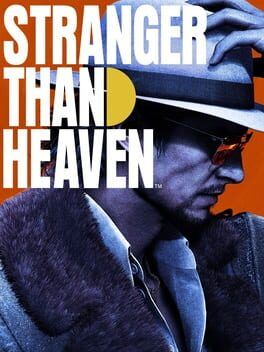

SEGA and RGG Studio have opened Stranger Than Heaven pre-orders, with a DLC weapon bonus and new show business gameplay details that clarify the game’s music, production, and performance systems before its January 2027 launch.
Image: IGDB
Store links: Stranger Than Heaven on Steam
Pre-orders are live, but the real pitch is the show business loop
SEGA and RGG Studio have opened pre-orders for Stranger Than Heaven, and the pre-launch offer now comes with a clearer look at the game’s unusual split personality: violent action-adventure on one side, music-driven show business management on the other. According to 8Bit/Digi, players who reserve a physical or digital edition will receive the Dosu: Kagekiri, an exclusive DLC weapon. The Xbox store listing also says pre-ordering grants the “Dosu: Kagekiri” weapon for in-game use.
That bonus is the easy part of the Stranger Than Heaven pre order pitch. The more revealing development is SEGA’s new Showbiz In-Depth Look trailer, which several outlets describe as a deeper explanation of how protagonist Makoto Daito finds musical inspiration, creates songs, recruits performers, and promotes shows. For a game being sold as a fifty-year action saga, the show business footage gives the pre-order campaign a second axis. It is no longer only about whether RGG Studio can make the combat land with enough brutality. It is also about whether the studio can turn performance, staging, and profit into a meaningful rhythm between fights.
The confirmed release timing is firm across the supplied sources. GamingBolt, MonsterVine, SEGAbits, and the Xbox listing all point to January 15, 2027. Xbox lists the game as available that day, included day one with Game Pass, and optimized for Xbox Series X|S. SEGAbits also lists PlayStation 5 and Steam alongside Xbox Game Pass, Xbox Series X|S, Xbox on PC, and Xbox Cloud Gaming. The platform picture is broad, but the most detailed storefront information in the source material comes from Xbox, which confirms Xbox Play Anywhere support, Windows 10/11, cloud streaming through Game Pass, and handheld play on supported devices.
What SEGA is actually showing about show business
The show business material gives players a safer read on Stranger Than Heaven gameplay details than a mood trailer would. GamingBolt reports that Makoto can pick up sounds and mix them into compositions, then take on the role of a producer by adjusting different instruments to change a track’s mood. Abancommercials’ breakdown of the GameStop-hosted overview adds more granular examples from the video, including gathering inspiration around town, collaborating on an original track called “Love of Our Life,” and changing elements such as bass, rhythm, mood, and instruments.
That suggests the music side is built as a preparation-and-performance structure rather than a simple cutscene reward. The player gathers material, shapes the song, selects the talent, spends money on presentation, and watches how the audience responds. Abancommercials describes a vertical revenue meter visible during performances, while GamingBolt notes that shows still need to turn a profit. Those details matter because they establish a business layer with costs and returns, not only a musical minigame detached from progression.
There are limits to what can be safely expected. None of the supplied sources confirms a full tycoon mode, a freeform composition editor, or how deeply the show business economy connects to combat progression, city exploration, or story decisions. The confirmed loop is narrower: Makoto finds inspiration, creates or adjusts music, scouts singers and musicians, adds effects such as confetti and smoke, and tries to satisfy an audience while earning money. If the final game expands beyond that, SEGA has not laid out that scope in the provided material.
The tone is violence by day, performance by night
The most useful contrast comes from the official Xbox language. The store page describes Stranger Than Heaven as “a fifty-year, action-adventure saga” about men with nowhere to go, using “extreme violence to survive” and musical talent to thrive as a showman across five cities and eras of modern Japan. That is the tonal spine of the current pitch: survival is physical, advancement is theatrical, and Makoto’s identity is built through both.
GamingBolt frames the combat as unusually vicious for RGG Studio, saying prior gameplay showed more gore than Yakuza or Judgment. The Xbox page describes an evolving combat system where players move Makoto’s left and right sides independently to attack, defend, and force a path to victory. That claim comes from the storefront, so it should be treated as official feature language rather than hands-on verification. Still, placed beside the show business reveal, it tells us how SEGA wants the game paced: bruising street-level conflict giving way to the controlled spectacle of stage production.
For players familiar with RGG Studio’s appetite for tonal collision, the idea is less surprising than it first appears. The studio’s games often place melodrama, street violence, nightlife, performance, and side activities in close orbit. What is different here, based on the supplied sources, is the emphasis. MonsterVine says show business will serve as one of Stranger Than Heaven’s central themes. The new trailer details the system at a level that makes it part of the main selling proposition, not background flavor.
Makoto Daito’s music career is tied to a larger cast and timeline
The show business systems land differently because Stranger Than Heaven is not being presented as a single-city crime story. The Xbox listing says the game begins in San Francisco in 1915, with Makoto Daito orphaned and persecuted for his mixed American and Japanese heritage before he sneaks aboard a ship to Japan. SEGAbits and MonsterVine both describe the story as spanning from 1915 to 1965, following Daito across five cities while he searches for a place to belong.
The Xbox page names the five eras and locations as 1915 Kokura in Fukuoka, 1929 Kure in Hiroshima, 1943 Minami in Osaka, 1951 Atami in Shizuoka, and 1965 Shinjuku in Tokyo. That structure gives the show business angle a longer runway than a single club management arc would have. If Makoto is producing acts across decades, the music systems can potentially reflect changes in place, audience, and social pressure. The sources do not confirm how each city changes the mechanics, so that remains an expectation rather than a fact.
The revealed cast supports the same idea of a sprawling melodrama. 8Bit/Digi, MonsterVine, and SEGAbits all identify Makoto Daito as portrayed by Yu Shirota and Yu Shinjo as portrayed by Dean Fujioka. Shinjo is described as another mixed-heritage traveler who meets Daito aboard the ship to Japan and becomes his lifelong friend. Orpheus, portrayed by Snoop Dogg, is described by SEGA-focused coverage as a globe-trotting merchant with flexible views on legality who recognizes Daito’s musical talent. Heigo Yashima, portrayed by Akio Otsuka, is described as a Kokura merchant and mentor figure.
The music side also has named performers inside the fiction. MonsterVine and SEGAbits identify Suzy Day, portrayed by Tori Kelly, as an aspiring or talented singer whose rise begins after meeting Daito. They identify Takashi, portrayed by Satoshi Fujihara of Official Hige Dandism, as Daito’s sworn brother and a gifted pianist. Those names give the show business systems narrative faces. The player is not only hiring anonymous stats, at least in the surrounding story context. The sources do not clarify which cast members can be mechanically scouted, managed, or used in performances.
The pre-order value is clearer for Game Pass players, murkier for price buyers
The practical buying question is narrower than the marketing makes it feel. Xbox confirms Stranger Than Heaven will be playable day one with Game Pass and that buying it once through Xbox Play Anywhere covers Xbox console and PC for no additional cost. The same listing says it will be playable on Xbox Series X|S, Xbox on PC, supported gaming handhelds, and Xbox Cloud Gaming through Game Pass. For subscribers already planning to stay in the ecosystem through January 2027, the pre-order incentive appears to be the Dosu: Kagekiri weapon rather than access to the game itself.
The supplied sources do not include standard edition pricing, deluxe edition details, upgrade paths, PC requirements, performance targets, or PlayStation-specific pre-order terms. SEGAbits links the game to Steam and PlayStation 5, but the source text provided does not include store-page specifics for those versions. That creates a simple recommendation boundary: players who care mainly about the show business systems now have enough detail to know what kind of activities SEGA is advertising, but not enough to judge long-term depth, balance, or platform performance.
The Dosu: Kagekiri bonus is also worth treating carefully. It is confirmed as a pre-order weapon by 8Bit/Digi and the Xbox listing, but the sources do not explain its stats, whether it is cosmetic, whether equivalent weapons appear through normal play, or whether the bonus will be sold separately later. For a game whose core pitch now includes a fifty-year story, extreme combat, and production systems, one weapon should not be the deciding factor unless a player was already ready to buy.
What players can safely expect before launch
Based on the current source material, Stranger Than Heaven release details are solid in date and broad in platform coverage, while the finer systems remain partly guarded. The confirmed launch date is January 15, 2027. SEGA is the publisher and Ryu Ga Gotoku Studio is the developer, according to Xbox. The Xbox listing marks the game Rating Pending and notes it may contain content inappropriate for children. It also classifies the genre as Action.
The safest gameplay expectation is a dual structure. On one side, players follow Makoto Daito through a violent, era-spanning action-adventure with an evolving combat system. On the other, they engage with show business by finding musical inspiration, arranging tracks, recruiting performers, choosing stage effects, monitoring audience excitement or revenue, and trying to make shows profitable. Abancommercials’ summary says the performance focus is strategic preparation and execution rather than strict rhythm timing, which is useful for players worried this might suddenly become a pure rhythm game.
The biggest unanswered question is integration. RGG Studio’s strongest set-pieces usually work because the side activities, city drama, and main confrontations create momentum around the same character pressure. The show business reveal hints at that kind of structure: Makoto survives through force, then builds identity and money through performance. But until SEGA shows longer uncut gameplay or explains progression, players should treat the new trailer as a systems preview, not proof of scope. The pre-order campaign has become more specific and more interesting, but the smart read is still measured: the activities are real, the tone is clearer, and the depth of the business side remains the part to watch.