
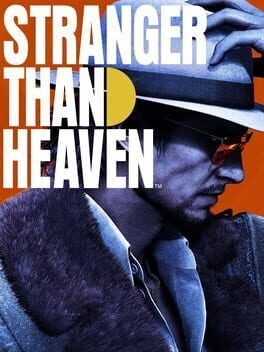

The Stranger Than Heaven Kokura trailer reveals Makoto Daito’s Act 1 arrival in Japan, Yu Shinjo, Snoop Dogg’s Orpheus, and the first step in RGG Studio’s five-era crime drama.
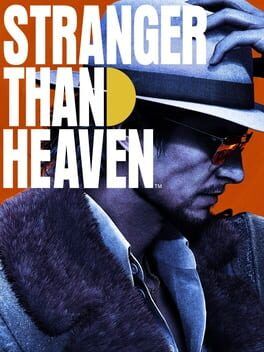
Image: IGDB
Store links: Stranger Than Heaven on Steam
The Kokura trailer turns Stranger Than Heaven into a clearer crime epic
SEGA and RGG Studio have released the first era-focused story trailer for Stranger Than Heaven, and the concrete news is that Act 1 now has a sharper shape: Makoto Daito’s story begins with a flight from persecution in America, a dangerous passage to Japan aboard the merchant Orpheus’ ship, and a harsh landing in Kokura, Fukuoka, in 1915.
That setup comes from the new Stranger Than Heaven Kokura trailer, which Gematsu identifies as the first in a set of multiple story trailers for the game’s 50-year action-adventure saga. GameSpot’s listing for the trailer says it traces the events that lead Daito to sneak aboard Orpheus’ trading ship bound for Japan, then follows the realities waiting for him in the first city he reaches. Console Creatures adds that the trailer runs just over four minutes and frames Daito’s decision through the casual racism he faces in America before he pursues Japan as a place where he hopes to find greater acceptance.
The tension RGG Studio is building is immediately recognizable to anyone who follows its crime dramas, but the period framing changes the rhythm. This is not the familiar modern city crawl of recent Like a Dragon entries. Stranger Than Heaven Act 1 begins as an immigrant story, a survival story, and the first movement of a long criminal biography. The trailer’s value is that it gives the game’s huge premise a starting point with a face, a port, and a first city where the fantasy of escape meets another kind of exclusion.
Act 1 follows Makoto Daito from America to Kokura
Across the provided trailer descriptions, the confirmed spine of Act 1 is consistent. Makoto Daito leaves America, boards the Orpheus’ ship bound for Japan, and arrives in Kokura, Fukuoka, where the life he imagined does not match the city waiting for him. GamersHeroes, citing a press release, says Daito had endured persecution in America before stowing away on the “ghost ship” of the merchant Orpheus. Twisted Voxel likewise describes Daito leaving persecution behind and seeking Japan, only for his arrival to expose him to the harsh realities there.
There is one small wording gap worth separating from the core facts. Most provided sources, including GameSpot, Gematsu, GamersHeroes, Console Creatures, and Twisted Voxel, use the language of sneaking aboard or stowing away. DroidFeats notes that some coverage described a different version in which Makoto asks Orpheus to take him, but that same article also says accounts differ. Based on the material here, the safer confirmed reading is that the trailer and official-style descriptions present Daito’s passage as a secret or desperate boarding of Orpheus’ vessel.
Console Creatures and Twisted Voxel both say the trailer also shows the circumstances that lead Daito to become a showman and begin building the foundation he needs to survive in Japan. That detail matters because it positions performance as part of Daito’s early adaptation, not a side flourish. For an RGG Studio new game built around crime, status, and identity, “showman” is a loaded word. It suggests Act 1 may be about learning how to command a room before learning how to command a city.
Orpheus and Yu Shinjo give the opening act its human anchors
The Stranger Than Heaven story setup now has two key supporting figures attached to Daito’s earliest journey. Console Creatures reports that Daito meets Yu Shinjo on the voyage and that Shinjo will become his best friend. Twisted Voxel also identifies Shinjo as another stowaway who becomes central to Daito’s life. In practical story terms, that gives Act 1 a relationship to track from the crossing onward, rather than leaving Daito as a solitary protagonist dropped into a historical backdrop.
The other figure is Orpheus, the merchant tied to the ship itself. Console Creatures reports that Orpheus is voiced by and modeled after Snoop Dogg, and Beebom also identifies Orpheus as played by Snoop Dogg. According to Console Creatures, Orpheus warns Daito and Shinjo that Japan may offer them much of the same hostility they are fleeing, since both men are described there as “halflings.” GamersHeroes similarly says Daito and Shinjo experience the harsh reality awaiting them in Kokura.
Those casting and character details sharpen the trailer’s emotional temperature. Orpheus is not only the means of passage; he appears to function as a warning sign before the story changes continents. Yu Shinjo, meanwhile, gives Daito’s survival arc a friendship line from the start. RGG’s best crime stories tend to depend on bonds that become pressure points later, and the Kokura trailer appears to be planting that kind of fuse early. That is interpretation, not a confirmed plot outcome, but it is the reason longtime fans should be watching the names around Daito as closely as Daito himself.
Five eras give RGG Studio room for escalation
SEGA and RGG Studio are not presenting Kokura as a self-contained chapter. Gematsu describes Stranger Than Heaven as a 50-year action-adventure saga, while GameSpot says players will follow Daito across five eras and five cities from 1915 to 1965. Console Creatures also reports that more trailers like this are planned, each teasing life in other cities and acts.
Beebom lays out the currently reported route in more detail: Kokura, Fukuoka, in 1915; Kure, Hiroshima, in 1929; Minami, Osaka, in 1943; Atami, Shizuoka, in 1951; and Shinjuku, Tokyo, in 1965. GameSpot’s page also points to a separate “1929 Kure, Hiroshima” era gameplay trailer among its related Stranger Than Heaven coverage, reinforcing that RGG is already selling the game through era-specific slices rather than a single broad overview.
That structure is the piece RGG crime drama fans should pay attention to. A five-decade span creates room for cities to change, loyalties to curdle, and Daito’s public identity to evolve. VGTimes goes further by describing Daito’s larger trajectory as moving from fugitive to showman, influential crime boss, and founder of the legendary Tojo Clan. That claim is from VGTimes’ report, not directly quoted in the official trailer descriptions included here, so it should be treated as reported context rather than a newly confirmed detail from the Kokura trailer itself.
Even without leaning on that broader claim, the confirmed setup is ambitious. Act 1 is about arrival and survival. The promised later acts imply transformation over decades. RGG Studio is using the Kokura trailer less like a launch beat and more like the opening reel of a generational crime film, where the first humiliation, first friendship, and first compromise can echo long after the setting changes.
The trailer sells tone before combat, but the combat question hangs over it
The Act 1 footage described by the provided sources is story-forward. It foregrounds Daito’s passage, Orpheus’ warning, Shinjo’s introduction, Kokura’s hostility, and the early path toward showmanship. It does not, in the supplied descriptions, introduce new combat systems, performance specs, or mission structure details for Act 1.
That restraint is notable because GameSpot’s Stranger Than Heaven hub references prior coverage titled “I’m Obsessed With Stranger Than Heaven’s Combat” and a “Combat Gameplay Trailer,” suggesting RGG has already shown action elsewhere. The Kokura trailer instead appears designed to explain why Daito fights, performs, bargains, and survives before players judge the feel of those systems. For a studio associated with street fights that can shift from brutal to theatrical in seconds, that sequencing makes sense: define the wound first, then let the combat carry its rhythm.
For readers trying to decide whether this is their kind of RGG Studio new game, the Kokura trailer points toward a heavier historical drama than a simple crime power fantasy. The confirmed beats involve racism, displacement, uncertain belonging, and social survival in a city that does not welcome Daito. The set-piece promise, at least from this trailer’s story framing, is the voyage into Kokura and the first attempt to build a life there. How that translates into exploration, brawling, boss fights, or performance-driven side activities remains unannounced in the provided material.
Release date, platforms, Game Pass, and editions
Stranger Than Heaven is scheduled to release on January 15, 2027. Gematsu lists the game for PlayStation 5, Xbox Series, and PC via Steam and the Microsoft Store, with Game Pass availability. GameSpot lists PC, PS5, and Xbox Series X|S. Console Creatures and GamersHeroes add Xbox Game Pass, Xbox Series, Xbox on PC, Xbox Cloud Gaming, Steam, and PlayStation 5.
There is a minor date-listing wrinkle. DroidFeats reports that Steam’s listing was once reported to show January 14, 2027, while SEGA’s own post says January 15. Based on the provided sources, January 15 is the publisher-backed date readers should use.
GamersHeroes also embeds a post from the official Stranger Than Heaven account promoting a limited Collector’s Edition priced at $129.99 USD. The visible text says it includes an exclusive 12-inch vinyl featuring the main theme and original tracks, a physical copy of the base game for Xbox Series X|S or PlayStation 5, and a Deluxe Upgrade, though the provided excerpt cuts off before the full contents are shown. Readers interested in that edition should verify the complete package through SEGA or the official game channels before ordering.
For Game Pass subscribers, the practical takeaway is simple: the sources here consistently say Stranger Than Heaven will be available through Game Pass at launch. For PlayStation 5 and Steam players, the Kokura trailer is a story signal rather than a purchasing deadline. With more era trailers still to come, anyone waiting to see how the later cities reshape Daito’s arc will have more official material before January 2027.
Why RGG crime drama fans should watch the Act 1 framing closely
The Stranger Than Heaven Kokura trailer gives RGG Studio’s next game the kind of foundation its crime dramas need: a protagonist with a specific wound, a city that tests his idea of home, a best friend introduced early enough to matter, and a larger timeline built to measure the cost of survival. The confirmed Stranger Than Heaven Act 1 setup starts with Makoto Daito seeking Japan and finding Kokura instead, which is a sharper dramatic premise than a generic rise-through-the-underworld pitch.
The trailer also suggests RGG is treating place as character. Kokura is the first stop, but the game’s announced five-city structure means the studio can change the social rules around Daito as history moves from 1915 to 1965. That is where the story could distinguish itself from a standard origin tale. If each city forces Daito to reinvent the way he moves through public life, the five-era structure could give the game a different cadence from a single-city crime sandbox.
There are still important unanswered questions. The provided sources do not confirm how much of each era is playable, how large Kokura is as an explorable space, whether Daito remains the sole playable lead throughout, or how the showman angle connects mechanically to RGG’s combat and city activities. They also do not provide PC requirements, performance targets, or upgrade details beyond the edition language visible in the official social post excerpt.
What is confirmed is enough to make the trailer significant. Stranger Than Heaven is no longer only an enormous 50-year pitch. With Act 1: Kokura, it now has a first crossing, a first friend, a first warning, and a first city ready to reject the man at its center. For RGG fans, that is the kind of opening move worth tracking before the next era trailer arrives.