
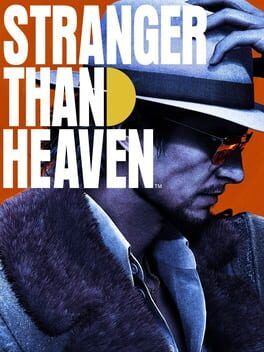

Sega and RGG Studio’s Stranger Than Heaven Act 2 Kure trailer shifts Makoto Daito’s 50-year story to 1929 Hiroshima and shows why each act is being sold as its own PS5 story beat.
Image: IGDB
Store links: Stranger Than Heaven on Steam
Sega’s new Act 2 trailer turns Kure into Daito’s point of no return
Sega and RGG Studio have released a new Stranger Than Heaven Act 2 story trailer centered on Kure, Hiroshima, moving Makoto Daito’s life from the 1915 Kokura chapter into 1929 and placing him inside the Iwaki family’s yakuza world. That is the firm news out of the latest video, which multiple outlets, including RPG Site, Gematsu, Siliconera, IGN, and Push Square, identify as the second act-focused story trailer for RGG Studio’s upcoming action-adventure game.
The trailer’s tension is clear because it is not being sold as a simple location preview. According to Sega’s trailer description quoted by RPG Site, Daito receives a ceremonial sake cup from Genzo Iwaki and ventures deeper into the yakuza while trying to rise through the organization. Gematsu quotes the description more bluntly, saying Daito “swears his loyalty to Iwaki Genzo” and steels himself to commit atrocities as he climbs the ranks. IGN’s listing adds that this happens after an attack on Genzo Iwaki, and that Daito becomes known as the “Red Oni” while wrestling with his life in the yakuza and the choices he has made.
That combination makes the Stranger Than Heaven Kure trailer a story positioning piece rather than a systems breakdown. It tells players where Act 2 sits emotionally: Daito has moved beyond survival and into allegiance, ambition, and compromise. Kure is the chapter where the outsider introduced in Act 1 begins building power through violence, and the marketing is treating that turn as important enough to carry its own trailer.
Kure, Hiroshima gives Act 2 a sharper historical charge
The setting matters because Stranger Than Heaven is structured around five eras and five cities from 1915 to 1965, a framework confirmed in Sega’s materials as quoted by RPG Site and repeated by IGN and MonsterVine. Act 2 takes place in 1929 Kure, in Hiroshima Prefecture, following the Act 1 Kokura story trailer released earlier. Push Square reports that the remaining acts are set in 1943, 1951, and 1965, while SavePoint Gaming identifies the full city sequence as Kokura, Kure, Minami, Atami, and Shinjuku, citing Sega’s official site.
Within that span, 1929 Kure is positioned as a darker, more organized environment than the opening chapter. Siliconera reports that Daito is trying to get close to Genzo Iwaki, described in the trailer context as the “Emperor of Kure,” and that he is first surrounded by Iwaki’s guards before being given the chance to meet him and become a yakuza. Siliconera also says the trailer shows Daito watching gambling halls and collecting debts for the clan, which gives the act a street-level rhythm: intimidation, enforcement, loyalty tests, and public violence.
GamingBolt frames the era as one in which an earlier form of the Japanese yakuza is taking shape, and says the trailer emphasizes the violent combat players will encounter. SavePoint adds historical texture by describing RGG Studio’s 1929 Kure as a Hiroshima port city tied to shipbuilding importance, foreign cultural influence, and a stronger organized-crime grip than in Kokura. That last detail comes from SavePoint’s own coverage, so it should be treated as outlet-reported context rather than a newly quoted Sega specification in the provided materials.
Daito’s alienation is becoming useful to dangerous people
The Act 2 trailer appears to continue one of the game’s central pressures: Makoto Daito does not fully belong anywhere. GamingBolt reports that Makoto’s native language is English, creating a language barrier between him and the people around him in Kure. The outlet connects that barrier to his alienation and to wider geopolitical tensions, including the presence of more English speakers in Japan for nefarious reasons.
That detail gives the Stranger Than Heaven Hiroshima chapter more bite than a familiar underworld rise story. Daito’s separation from the city around him is not only social. It affects how he moves through conversations, how others read him, and why a criminal family might become both a refuge and a trap. In Act 1, according to GamingBolt’s account of the earlier Kokura trailer, the emphasis was on Makoto being treated as an outsider during a period of modernization in Japan. SavePoint describes that earlier chapter as Daito arriving in Japan after fleeing persecution in America and struggling to survive in Kokura.
Act 2 changes the direction of that outsider status. The new trailer, as summarized by Sega through RPG Site and Gematsu, shows Daito choosing loyalty to Iwaki and a path through the yakuza. The story signal is not simply that Daito becomes violent. It is that violence gives him status in a place where language, origin, and history have already marked him as separate. The “Red Oni” name reported by Siliconera, IGN, and Push Square sounds like a legend being built around that separation.
The trailer sells story beats, but combat still shapes the promise
Sega and RGG Studio are currently foregrounding story, but the Act 2 footage is still being read through the studio’s action pedigree and Stranger Than Heaven’s new combat expectations. GamingBolt says the trailer places considerable emphasis on violent combat. Siliconera notes that it shows Daito’s progress in Kure along with combat for this story segment. Those are broad descriptions rather than hands-on verdicts, but they confirm that Act 2 is being marketed through a mix of narrative escalation and physical consequence.
The practical question is whether that combat can carry a long, multi-era action-adventure structure. Push Square says it has played the upcoming PS5 game a few times and has been impressed overall, while raising concern about the new combat system. The outlet quotes editor Sammy Barker criticizing how one-handed weapons, such as knives, can skew combat options toward one hand, leaving the other arm feeling weaker in that context. SavePoint also references its Gamescom 2026 hands-on with Kure’s street fights and says the game uses an unusual system for independently controlling Daito’s left and right limbs.
Those impressions are not a final review, and they should not be treated as proof of how the launch version will feel. They do, however, explain why Act 2’s trailer has to do two jobs at once. It has to sell Daito’s descent through the yakuza hierarchy, and it has to reassure action players that the violence shown in cutscenes and story framing translates into readable, satisfying street-level encounters. For an RGG Studio game moving away from the exact feel of Like a Dragon’s familiar brawling history, that is a real test.
Why each act is getting its own PS5 story trailer
The most revealing part of the campaign may be the format. Push Square frames the new video as part of a run in which Stranger Than Heaven’s acts each receive their own PS5 trailer, following last month’s Act 1: Kokura coverage. RPG Site quotes Sega as saying additional videos focused on Daito’s life in each featured city will be released sequentially in the future. MonsterVine reports the same plan: Kure follows the previously released Kokura story trailer, with further videos planned for the remaining cities.
That approach makes sense for a game built around decades instead of a single fixed moment. A normal overview trailer could blur the structure into a montage of period costumes, street fights, and famous locations. Separate act trailers let Sega and RGG Studio give each era a distinct identity: Kokura as the starting wound, Kure as criminal commitment, then the later chapters still to be detailed. Push Square reports that Stranger Than Heaven comprises five acts, with future settings in 1943, 1951, and 1965, which means the publisher has a clear pre-release runway for three more story beats before launch.
There is also a platform-marketing reason to keep the trailers coming on PS5 channels and PlayStation-focused outlets. Push Square calls Stranger Than Heaven the first big PS5 release of next year, while other sources confirm it is also coming to Xbox Series platforms and PC. By presenting each act as its own PS5 story trailer, Sega can keep the game visible to console players without revealing the whole plot at once. The method fits a character saga: give the audience a chapter, name the wound, then move the clock forward.
RGG Studio is selling a more serious kind of spectacle
The Act 2 trailer also fits RGG Studio’s stated tonal shift. GamingBolt cites director Mikinobu Abe saying that Stranger Than Heaven will tone down some of the absurdity associated with the Yakuza and Like a Dragon series so the team can focus on a more grounded and serious story. Abe’s explanation, as quoted by GamingBolt, is that the social norms and values of decades or a century ago already felt striking and unusual during research, so the team did not need to create situations solely for laughs.
That comment is useful because Stranger Than Heaven still carries some unusually high-profile and unexpected surrounding material. Siliconera notes that earlier reveals included combat, characters, and a Summer Game Fest 2026 cast reveal, while SavePoint mentions a cast spanning Snoop Dogg, Ado, and Tori Kelly, plus Tupac Shakur’s appearance revealed alongside the January release date. Those details are not the focus of the Kure trailer, and the Act 2 footage appears to be doing the opposite: narrowing attention onto Daito, Iwaki, oath, debt, gambling halls, and the cost of rank.
For readers tracking Stranger Than Heaven Act 2, that tonal discipline is the key marketing signal. Sega is not positioning Kure as a spectacle reel full of disconnected features. The trailer suggests the act is meant to define the moral tempo of Daito’s life. The ceremonial sake cup is a clean image because it turns belonging into obligation. From there, every debt collected and every fight won can be read as a step deeper into a role he may not be able to shed.
Release date, platforms, and the unanswered questions before launch
Stranger Than Heaven is scheduled to launch on January 15, 2027. Siliconera, MonsterVine, RPG Site, Gematsu, IGN, and Push Square all list that date in the provided coverage. Platform listings are mostly consistent, though they vary in detail by outlet. Siliconera lists PS5, Xbox Series X, and PC. Gematsu lists PlayStation 5, Xbox Series, and PC via Steam and the Microsoft Store, and says it will also be available through Game Pass. RPG Site similarly lists PS5, Xbox Series, Xbox on PC, Steam, Play Anywhere, and Xbox Game Pass. IGN lists Xbox Series X/S, Xbox on PC, Xbox Cloud, Xbox Game Pass, Steam, and PS5.
For buyers, the confirmed picture from these sources is that Stranger Than Heaven is a current-generation console and PC release, with Game Pass availability reported by Gematsu, RPG Site, IGN, and SavePoint. The provided materials do not include price, PC requirements, console performance modes, preload timing, physical edition details, or upgrade paths. Anyone deciding between PS5, Xbox, and PC should wait for those specifics if performance, storefront ownership, or subscription access will determine the purchase.
The next marketing beats should clarify the remaining acts. If Sega follows the sequence described by RPG Site and MonsterVine, the Kure trailer is only the second step in a planned set of city-focused story videos. That leaves three chapters to explain how Daito’s yakuza life carries through 1943, 1951, and 1965, and whether the “Red Oni” identity is a mask he controls or a reputation that traps him. For now, the Stranger Than Heaven PS5 story trailer campaign has made its immediate point: Act 2 is where Makoto Daito stops merely surviving history and starts leaving damage inside it.