
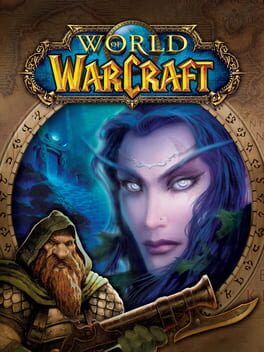
Stormforge is closing after a Blizzard cease-and-desist, marking another clash between official World of Warcraft and fan-run legacy projects. Here is why private servers like Stormforge persist, what they offered, and what the closure means for players seeking unofficial versions of WoW.
Blizzard has moved again against one of the biggest World of Warcraft private server projects. Stormforge, a long-running network that offered free realms emulating The Burning Crusade, Wrath of the Lich King, and Mists of Pandaria, will fully shut down World of Warcraft operations by May 14, 2026 after receiving a cease-and-desist from Blizzard and speaking with the company’s legal team.
In its farewell message, the Stormforge team confirmed that all WoW development and distribution are ending, new accounts are disabled, and that they will not operate private servers for Blizzard or Activision games in the future. Servers will stay online until the shutdown date, but the project is effectively winding down. For the broader MMORPG community, this is not just another takedown story. It is another flashpoint in Blizzard’s long, uneasy relationship with fan-run alternatives and the legacy playstyles that private servers keep alive.
Why private WoW servers refuse to die
World of Warcraft has official classic offerings today, yet private servers continue to flourish. Legally they are always in the firing line, but their persistence speaks to gaps between what Blizzard ships and what many players still want from Azeroth.
One motivation is preservation. Each era of WoW is effectively a different game, defined not only by content but by balance quirks, social norms, and pacing. When Blizzard patches or replaces an expansion, that specific snapshot of the game disappears from official servers. Players who loved a certain version often feel that the only way to experience it again is through emulation.
Another factor is philosophy. Private realms often tune rates, systems, and events to emphasize social friction and slower progression. Many players feel that modern WoW, both retail and official Classic branches, is too focused on convenience and solo accessibility. Community-run projects can double down on older design values that prioritize long-term commitment, server identity, and player-driven drama.
Access also matters. Private servers are free to play, which turns them into entry points for returning veterans and curious newcomers who want to dip into a specific expansion without a subscription or expansion purchase. While cost is not the only driver, it broadens the audience for niche or nostalgia-focused variants that might struggle as paid products.
Finally, there is the creative angle. Private teams iterate on Blizzard’s work with custom events, class tweaks, or entirely new progression ideas that would never pass through an official pipeline. For some players, private WoW feels like a living mod scene built on top of one of the most familiar MMOs in the world.
What Stormforge actually offered
Stormforge sat squarely in this space. Rather than focusing on a single expansion, the network supported multiple eras of World of Warcraft at once, including Burning Crusade, Wrath of the Lich King, and Mists of Pandaria. This gave players a menu of legacy experiences that Blizzard does not currently replicate in the same form.
Each realm targeted a specific feel from its chosen expansion. Wrath and Burning Crusade servers tried to recreate the rhythm of heroic dungeons, attunements, and raid progression as players remembered them from mid-2000s WoW. Mists of Pandaria gave fans of that expansion a home that felt closer to the original launch version than to any one patch snapshot.
Although details such as experience rates and loot tuning varied by realm, the broader pitch was consistent. Stormforge wanted to deliver stable, well-scripted content where raids, dungeons, and class abilities behaved closely to how they did on Blizzard servers, then wrap it all in community-driven events and active moderation. For many players, it was the way to play an older version of WoW in a community that was fully committed to that expansion as its “main game.”
The appeal was not just nostalgia. Many of these expansions have no direct official equivalent today. Blizzard’s current WoW Classic and Seasonal servers rotate rulesets and progression, but they move forward and change over time. By contrast, Stormforge promised permanence. If you wanted to live in Wrath indefinitely without worrying about future patches or transitions, you could.
Blizzard’s posture toward fan-run WoW
Stormforge’s end comes on the back of other high-profile clashes between Blizzard and private realms. Recent legal pressure on projects like Turtle WoW, along with earlier shutdowns going back to Nostalrius and others, establish a clear pattern. Blizzard accepts no gray area where its server binaries and game assets are concerned.
From a corporate standpoint, the rationale is straightforward. Private servers operate using Blizzard’s IP without a license and sometimes compete directly with the company’s own offerings. As World of Warcraft Classic and its seasonal variants become a more important part of Blizzard’s subscription strategy, tolerating free, parallel versions of the same content looks less like benign neglect and more like an undercut to a live service product.
At the same time, the persistence of private realms, and the community backlash that often follows takedowns, highlight a tension between strict IP enforcement and goodwill among long-term fans. Many of the players who gravitate toward projects like Stormforge have already paid Blizzard for years of subscriptions and expansions. For them, private servers are less piracy and more an act of cultural preservation, keeping alive interpretations of Azeroth that no longer exist elsewhere.
Stormforge’s own closing statement leaned into this community angle, emphasizing pride in what the team and players built together and urging people to stay respectful and calm through the final months. That tone reflects the awkward middle ground these projects occupy. They rely on an IP holder they cannot legally satisfy, yet they also operate as social hubs and historical archives for one of PC gaming’s defining MMOs.
What this means for legacy-focused WoW players
For players who chose Stormforge as their main home, the immediate impact is disruption. Characters, guilds, and raid calendars built over years now face a hard end date. Some will migrate to other private realms; others will attempt to resettle inside Blizzard’s own Classic ecosystem.
In the medium term, Blizzard’s continued legal assertiveness narrows the options for those who want unofficial, frozen-in-time versions of WoW. Each high-profile shutdown encourages remaining projects to stay smaller, more fragmented, or more cautious about visibility. That makes discovery tougher and increases the risk that progress on any given realm can vanish with a single cease-and-desist.
For Blizzard, the question is whether official offerings can absorb and satisfy these players. Classic Era, Hardcore, and seasonal variants show the company is willing to experiment with rulesets, but so far they remain anchored to a limited range of expansions and a particular set of design assumptions. Fans of Wrath-style raiding, Burning Crusade attunements, or Mists of Pandaria class design may find no perfect substitute on Blizzard’s servers today.
If Stormforge signals a more aggressive clampdown phase, Blizzard will likely face renewed community pressure to fill those gaps. Players do not only want progression from one expansion to the next. They want the ability to settle permanently into specific versions of the game and trust that those worlds will remain available for years.
The long shadow of unofficial Azeroth
Stormforge’s shutdown underscores that private servers are not going away through enforcement alone. As long as there are discontinuities between what World of Warcraft was and what it officially is, fans will try to rebuild the missing pieces. Each major takedown redistributes that population rather than erasing it.
For the industry, the story is a case study in how live service games intersect with preservation and community expectations. An MMO is not a static release archived on a shelf. It is an evolving service in which old versions disappear by design. Publishers have a legal right and a commercial incentive to control that evolution. Players, in turn, have a growing desire to curate and revisit the eras that defined their time online.
Stormforge thrived because it gave those players a place to do that on their own terms, across multiple expansions that Blizzard does not currently support in a fixed, official form. Its end may push some fans back to official realms, but it will also reinforce the belief that if you care about a specific version of an online game, you cannot assume the rights holder will preserve it for you.
That lingering mistrust is the real legacy of conflicts like this. Blizzard can and will protect its IP. Yet unless its official Classic roadmap eventually addresses the full spectrum of legacy playstyles that projects like Stormforge cultivated, private Azeroth will keep reappearing elsewhere, rebuilt by the same community that has never fully left.