
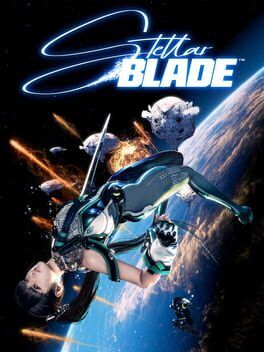

Shift Up is openly eyeing Xbox and Switch 2 for Stellar Blade. We break down what the ports would take technically, the business hurdles around Sony’s existing deal, how new platforms could reshape the community, and what it all signals about PlayStation exclusivity in 2026.
Sony’s once “only on PlayStation” darling Stellar Blade is quietly approaching a new phase. In fresh investor materials, developer Shift Up says it is “reviewing platform expansion beyond PS5 and PC to broaden audience reach,” and multiple reports from Nintendo Life, Eurogamer, IGN and others all point in the same direction: the studio is actively exploring Xbox Series X|S and Nintendo’s next system, widely nicknamed Switch 2.
Nothing is signed or dated yet, but the intent is clear. Stellar Blade has already passed the 3 million sales mark across PS5 and PC and has become a long‑tail flagship for Shift Up. Rather than leave it anchored to a single console, the studio wants to turn Eve’s first outing into a multi‑platform pillar that can support a sequel and a wider universe.
That goal sounds straightforward. The reality is a knot of engine constraints, hardware differences and publishing contracts that all need to line up before Xbox or Switch owners even see a logo.
The technical side: Unreal Engine 5 helps, but it isn’t a free ticket
On paper, Stellar Blade is built for portability. Shift Up developed it in Unreal Engine 5, and that makes a potential Xbox version the most technically straightforward of the two.
UE5 already runs on Xbox Series X|S and PC. The studio has done the hard work of getting the game performant on a fixed console spec and then scaling it across a wide range of PC hardware. Features such as Nanite and Lumen, as well as modern material and streaming systems, are already working on DirectX 12‑class GPUs. For Xbox, which shares much of that ecosystem, the job is mostly about optimization rather than reinvention.
The challenge is to preserve what made Stellar Blade feel like a PS5 showpiece. The 60 fps action, dense particle effects and fine character detail all rely on high‑bandwidth SSD streaming and reasonably strong GPU headroom.
On Series X, feature parity should be realistic. A target of the same performance modes as PS5 is plausible, with the usual differences in dynamic resolution and minor toggles. Series S is trickier. Its lower memory budget and weaker GPU mean more aggressive cuts to texture quality, level‑of‑detail distance and possibly crowd and effect density. The PC port already proved Stellar Blade can scale down, but doing so without undercutting its stylish action is a balancing act.
Switch 2 is a different kind of puzzle. Recent reporting around the dev kits suggests a modern custom Nvidia chip that is far stronger than the original Switch, with contemporary upscaling solutions and decent CPU power. Even then, it will not be in the same class as PS5 and Series X.
For Shift Up, that will push them to think in terms of a tailored version rather than a straight port. Expect heavy use of temporal upscaling, trimmed geometry detail and significantly adjusted post‑processing, with the priority on keeping input latency low and animations crisp. The core combat loop of perfect parries and i‑frame dodges lives or dies on frame pacing, so a stable 30 fps quality mode or a 40+ fps VRR mode may be the realistic floor.
The good news is that Unreal is already the default engine for big third‑party titles heading to Nintendo’s next hardware. The bad news is that every concession hits right where Stellar Blade’s visual identity lives: ultra‑clean character models, reflective sci‑fi surfaces and dense environmental clutter. Shift Up will have to decide how far it is willing to bend that identity for a portable audience.
The business knot: Sony’s name is still on the box
If the engine and hardware problems are solvable, the real hurdle sits in contracts. On PS5 and PC, Stellar Blade is published by Sony Interactive Entertainment. It started life as a console exclusive, with Sony handling funding, marketing and platform support in return for a period of control over where the game could appear.
That period has clearly loosened. The PC version arrived with Sony’s branding intact, and Shift Up’s latest investor report talks openly about “additional platforms.” That alone suggests the initial exclusivity window, believed to be around a year for console and later extended for PC, is either over or has clear off‑ramps.
What remains opaque is who gets to publish an Xbox or Switch 2 version. Sony has never released one of its co‑published console titles directly on Xbox hardware. It has, however, been more flexible about cases where it supported a game without fully owning the IP, with PC ports and staggered releases handled as part of wider partnership deals.
Reports and industry commentary around the new ports generally lean toward one outcome. Shift Up would self‑publish the new versions or partner with a third‑party label, while Sony’s role is treated as complete once the PlayStation and PC launches have run their course. That accelerates Shift Up’s long‑term goal of becoming a fully independent AA/AAA publisher, but it also means negotiating everything from trademarks to SDK access without Sony’s umbrella.
Timing complicates the picture further. Shift Up already told investors that it expects 2026 to be a year where more players experience the existing game while anticipation builds for the sequel. That phrasing sounds like a soft target window for new platform launches, yet any remaining contractual clause about minimum PS5 sales milestones or marketing exclusivity beats could nudge those ports later in the year.
How an Xbox version could reshape Stellar Blade’s community
Beyond contracts, there is the question of what an Xbox release actually does for Stellar Blade’s ecosystem.
Since launch, the game has lived inside the PlayStation and PC bubble, where character‑action fans overlap heavily with audiences for titles like Devil May Cry 5, Bayonetta and Final Fantasy XVI. Conversation has primarily stayed in PlayStation‑centric spaces and PC social hubs, which helped it grow a focused but somewhat siloed community.
Xbox changes that calculus. The platform has a sizable action fanbase that tilts toward third‑person combat like Ninja Gaiden, Sekiro and the newer Resident Evil remakes. Stellar Blade fills a relative gap there, especially if it lands in a quieter release window.
The biggest wild card is Game Pass. No outlet has reported the service as a done deal, but if Microsoft manages to secure Stellar Blade for subscription launch, the impact on player count could be dramatic. A Game Pass drop usually floods a title with experimentation players who might never have paid full price. For a single player‑focused game with a fairly demanding combat curve, that is both risk and opportunity.
On the upside, more players means more guides, more combo tech discovery and more content creation. The PC release has already shown how modding and challenge runs can keep a combat‑driven game alive; Xbox would add yet another layer of leaderboard and achievement meta to play with.
On the downside, a sudden wave of new players can overwhelm smaller communities. Balancing discussions get noisier, criticism about difficulty or tone can spike and the original audience may feel the game has been “taken over” by a very different demographic. How Shift Up moderates feedback and patches post‑port will decide whether this expansion feels like a victory lap or a culture clash.
What a Switch 2 port would mean for design and perception
Switch 2, meanwhile, has less to do with hardcore leaderboard chasers and more with broad reach. Nintendo’s next system is expected to launch into an enormous install base of upgraders and new players who missed the PS5 era entirely. Bringing Stellar Blade there effectively repositions it as a portable sci‑fi epic you can play on the couch or on a commute.
That alone can reshape how the game is perceived. On PS5, Stellar Blade sits firmly in the “prestige console exclusive” lane, propped up by first‑party‑style cinematics and Sony‑backed marketing. On a Nintendo hybrid, it would sit beside everything from Monster Hunter to Xenoblade, closer in feel to a stylish cult favorite than a flagship platform piece.
The Switch audience has also historically been extremely accepting of visual downgrades as long as the core experience is intact. If Shift Up can maintain combat feel and reasonably quick loading while trimming image quality, it may find a far more forgiving crowd than on other platforms. The result could be a version that technically looks weaker but generates some of the strongest word‑of‑mouth.
There is one more knock‑on effect. A Switch 2 version would almost certainly force the studio to take a more modular view of content and pipeline. Asset streaming, level sizing and encounter density all need to be reconsidered for hybrid play. Those lessons feed directly into work on the sequel and on Shift Up’s other big project, the cross‑platform “Project Spirits.” In that sense, a port is not just a revenue play, but a training ground for a future where every Shift Up blockbuster launches everywhere on day one.
What this tells us about Sony’s changing exclusivity strategy
Stellar Blade does not exist in a vacuum. Its slow drift away from PlayStation‑only status is part of a wider shift in Sony’s thinking about exclusives that has played out over the last few years.
Sony spent the PS4 era building a fortress of single‑platform hits. The PS5 era started the same way, but mounting development costs and a softening hardware market have forced a recalibration. PC releases have become routine. Live service experiments have been scaled back or rethought. The focus has quietly moved from “only on PlayStation” to “best on PlayStation, first on PlayStation.”
Stellar Blade encapsulates that approach. Sony stepped in to fund and publish a promising Korean action title, used it as a showcase for PS5’s capabilities, then rode that momentum into a PC launch where it reportedly became Sony’s best‑performing single‑player PC release. Now, rather than clamp down on its future, Sony appears willing to let Shift Up chase a broader audience, knowing that the association with PlayStation is already cemented.
For Sony, that is a low‑risk, high‑reward arrangement. The company gets a hit that helped define its mid‑generation slate, plus digital catalog revenue across PS5 and PC for years to come. In return, it allows a partner studio to graduate into multiplatform territory, which in turn can strengthen the relationship for future collaborations.
What is unusual is the possibility of a Sony‑associated title hitting Xbox. That would have been unthinkable a generation ago. Today, with Microsoft itself moving select first‑party games to rival hardware and the overall market leaning toward platform agnosticism, it feels like a logical if still symbolic step. It signals that Sony is more interested in flexible, case‑by‑case deals than fixed dogma about what an exclusive must be.
If Stellar Blade does arrive on Xbox and Switch 2 in 2026, expect it to be cited for years as a case study in post‑exclusivity life: how a console showpiece can turn into a true franchise, how a rising independent studio can navigate big‑platform politics, and how the old lines between “ours” and “theirs” in the console war era keep fading.
For now, Eve’s next mission is on paper only. But the pieces are in motion, and the next stop for Stellar Blade looks less like a single platform and more like a constellation.