
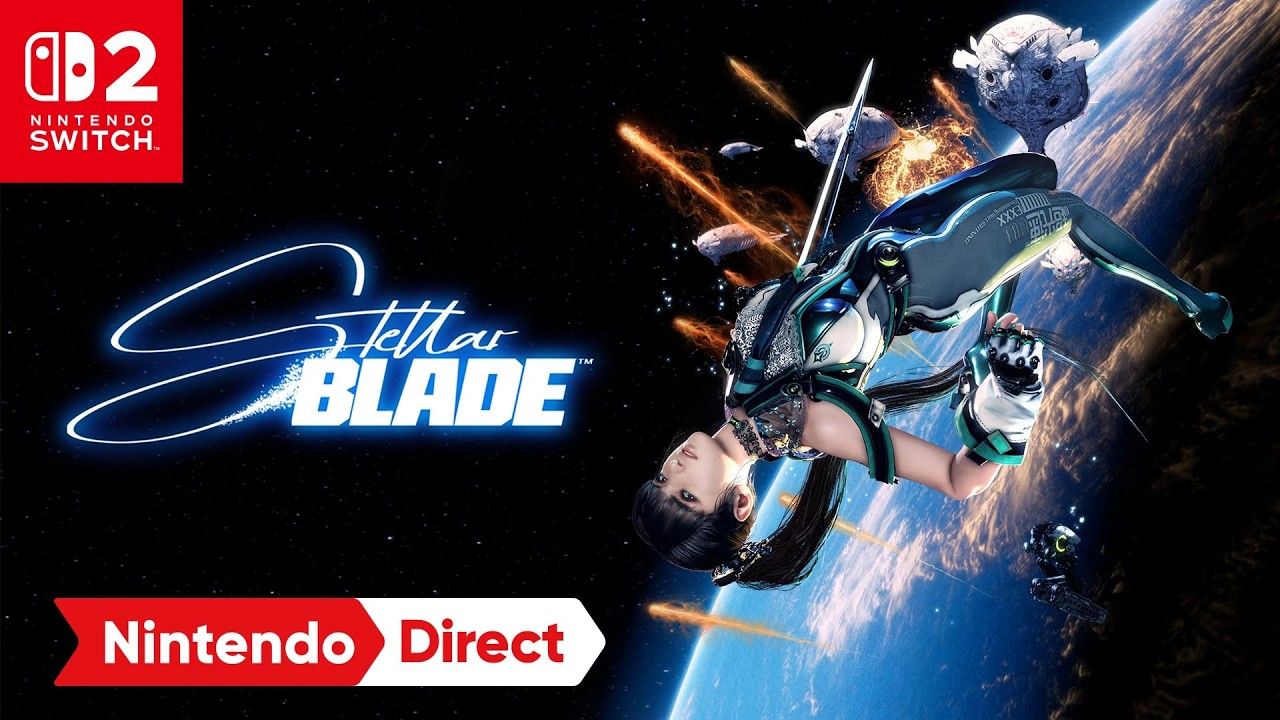
First Stellar Blade Nintendo Switch 2 gameplay from Gamescom shows Shift Up aiming for 60 FPS in handheld and docked play, with upscaled resolutions and visible port compromises still worth watching before launch.
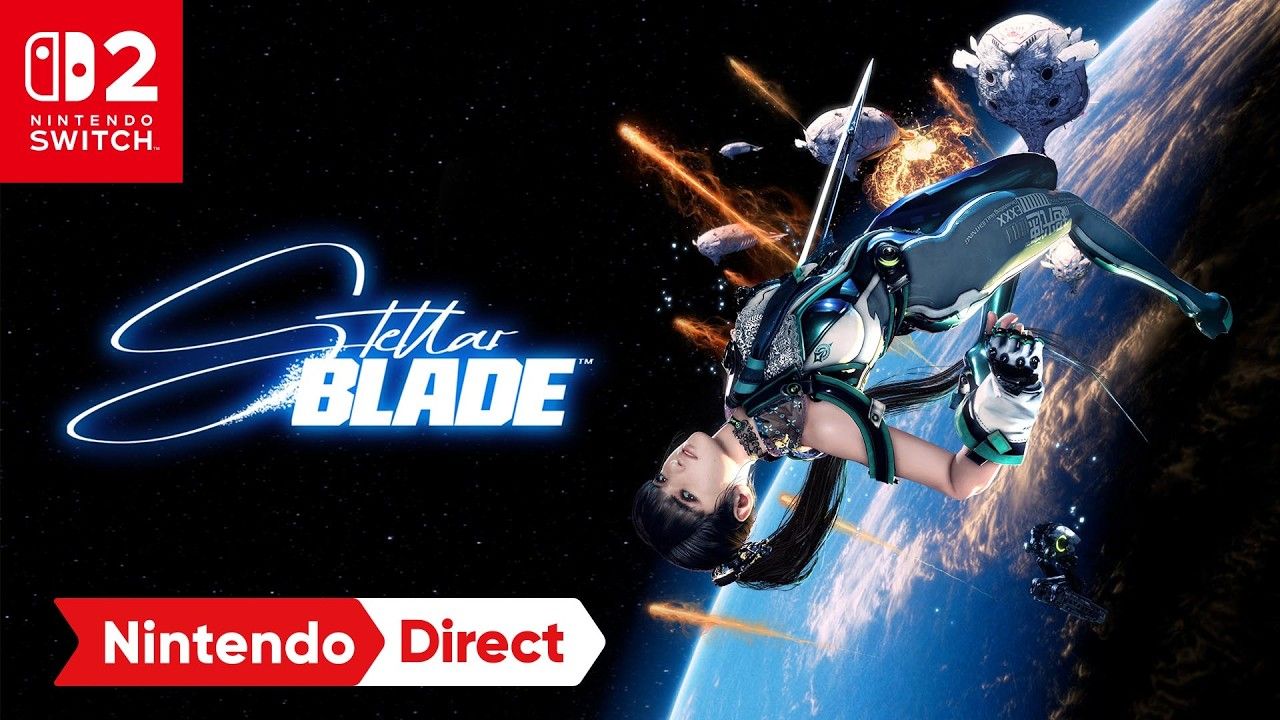
Image: nintendoreporters.com
Shift Up’s first real test is no longer theoretical
The first extended Stellar Blade Nintendo Switch 2 gameplay is now public, and the most concrete development is that Shift Up is showing the port in motion while reportedly targeting 60 FPS in both handheld and docked play. Nintendo Everything says Shift Up followed last week’s trailer with several minutes of direct-feed docked footage, while IGN’s Gamescom 2026 video runs 5 minutes and 38 seconds and presents the Switch 2 version of Stellar Blade: Complete Edition ahead of its 2026 release.
That puts the port under a very specific kind of pressure. Stellar Blade built its reputation around fast, readable action: parries, evasions, close-range punishment, boss tells, and combat encounters that lose their shape if timing gets soft. A portable version cannot be judged only by whether Eve, the ruined Earth, and the Naytiba survive the visual cut. The sharper question is whether the rhythm survives.
According to My Nintendo News, citing Nintendo Online, Shift Up is aiming for 60 FPS in handheld and docked mode, with upscaled 720p in handheld play and upscaled 1080p when docked. The same report says DLSS is used for upscaling, AMD FSR 3.1 is used for frame interpolation, there are no separate graphics modes, and a day-one patch is planned for further optimization. Those are targets and reported technical details, not final independent performance results from a retail build, but they give action fans the first useful frame for judging the footage.
What the Gamescom footage actually shows
IGN describes the new video as 5 minutes of action-packed gameplay from the Nintendo Switch 2 version of the post-apocalyptic action-adventure game. Nintendo Everything says the footage is direct-feed docked gameplay, which matters because docked capture is usually the most flattering way to introduce a visually ambitious port. It removes the handheld screen from the equation and shows the version Shift Up wants players to see on a television or monitor.
The footage is being presented around the same combat identity Shift Up used to sell the original game: fast combo strings, brutal enemy pressure, and set-piece forward momentum. IGN’s listing repeats the core premise, with Eve trying to save humanity from extinction while uncovering the mysteries of Earth’s downfall. Nintendo Everything’s overview similarly describes “blisteringly fast combat,” unlockable moves and weapon upgrades, and boss encounters designed to challenge “brain and brawn.”
For this port, the meaningful part of that showcase is less the premise than the density of motion. Viewers should watch how cleanly inputs seem to chain from attack into dodge, whether the camera holds up as enemies crowd the frame, and how effects behave when the action accelerates. Footage can look composed in isolated traversal shots. Stellar Blade’s real test is the moment a boss winds up, Eve has half a heartbeat to answer, and the player needs animation, input response, and frame pacing to stay in lockstep.
Handheld play may be the stronger sales pitch
Nintendo Everything’s separate hands-on preview gives the clearest reported account of portable play. Richard Ford says he played Stellar Blade on an undocked Nintendo Switch 2 at Gamescom 2026 with ShiftUp’s DongKi Lee present, starting from the opening cutscene and tutorial sequence. Ford describes the opening as busy, with background fighting, fire effects, explosions, and heavy action after Eve’s crash landing. His assessment was that the game “never chugged once,” with a locked frame rate and no frame drops during that demo section.
That is a hands-on preview of a controlled Gamescom build, not a full technical analysis. Still, it is the most relevant report for players who would buy Stellar Blade Switch 2 primarily as a portable action game. Ford also writes that it did not feel like there was lag as the game taught him its core systems, and he concludes that it felt “incredible to play portably.” For a combat game built around counters and timing windows, perceived latency is as important as pixel count.
The same preview raises a practical concern: battery life. Ford says the battery seemed to drain quickly and adds that, apparently, the system has a 3 to 4 hour battery lifespan in handheld before needing to charge. That phrasing leaves room for uncertainty, and it does not establish how Stellar Blade compares to other demanding Switch 2 software. But it does flag the portable tradeoff clearly. If the port can keep combat responsive at a 60 FPS target in handheld mode, players may still be planning around shorter sessions or a charger for longer runs through bosses and exploration zones.
Docked and handheld targets are close, but not identical
The reported performance profile suggests Shift Up is prioritizing consistency over menu complexity. My Nintendo News reports that the Switch 2 version has no separate graphics modes, with 60 FPS targeted in both play styles. If that holds for the final game, players would not be choosing between a higher-resolution quality mode and a faster performance mode. The design goal appears to be a single baseline: keep the action moving at 60 FPS whether the console is in hand or on the dock.
The resolution targets, however, are different. My Nintendo News says the game is targeting upscaled 720p in handheld and upscaled 1080p docked, with DLSS handling upscaling. That aligns with what several outlets inferred from the footage before the more specific report emerged. Nintendo Wire described the new footage as seemingly running at 1080p with DLSS filling in gaps, while NoobFeed noted that Shift Up’s own upload was presented in 4K at 60 FPS and Nintendo’s channel version at 1080p and argued that native 4K on Switch 2 seemed unlikely.
Those observations should be kept separate from confirmed output. A YouTube upload option is not proof of native rendering resolution, and NoobFeed itself cautioned that a stable locked frame rate would need to be tested after release. The strongest supported picture right now is this: Shift Up is showing docked footage, hands-on handheld impressions are positive, and the reported target is 60 FPS with upscaling rather than native high-resolution rendering.
The visible compromises are where fans should focus
The footage is drawing broadly positive early impressions, but the sources do not describe a compromise-free port. Nintendo Life says the Switch 2 visuals look “pretty great so far,” while also noting visible compromises to make the game run adequately. Nintendo Wire is more specific, saying the image looks surprisingly sharp with DLSS but that some hair effects look fizzly and some textures can appear low resolution. NoobFeed also points to hair tessellation as a giveaway that this is the Switch 2 build, describing rougher edges similar to other big-budget ports adapted to the hardware.
For an action game, these concessions are not equal. Lower texture resolution on background surfaces is easier to accept than image instability around a character constantly centered on screen. Hair shimmer, particle noise, and edge breakup can become distracting because Stellar Blade spends so much time locked onto Eve’s movement, enemy silhouettes, and split-second attack reads. If those artifacts stay mostly cosmetic, the port could remain a strong fit for Switch 2. If they interfere with combat visibility, they become a design problem rather than a graphics complaint.
There is also the question of frame interpolation. My Nintendo News reports AMD FSR 3.1 is being used for frame interpolation. Frame interpolation can help smooth perceived motion, but action fans should wait for final analysis before treating the 60 FPS target as equivalent to a native, fully stable 60 FPS presentation in all combat scenarios. The key launch question is not whether a trailer can play smoothly. It is whether late-game bosses, effects-heavy arenas, and rapid camera swings preserve input feel and visual clarity.
Release timing and format are still unresolved
Stellar Blade: Complete Edition is listed for Nintendo Switch 2 in 2026 by IGN, Nintendo Everything, Nintendo Life, and NoobFeed, but none of the supplied sources provides a firm release date. Nintendo Everything says it is coming later in 2026. Nintendo Life notes that there is still no firm release date despite the planned later-year launch window. NoobFeed similarly says there is no confirmed release date.
The retail format is also still unannounced in the provided reporting. NoobFeed says nobody has said whether Stellar Blade will ship as a full physical cartridge, a game key card, or a digital-only release. That is a meaningful gap for Switch 2 buyers, especially for a Complete Edition likely to draw interest from collectors and players who skipped the PS5 or PC versions.
The Complete Edition label gives the package extra weight, but buyers should be cautious about assuming every storefront detail until official listings spell it out. NoobFeed reports that the edition includes content added since launch, including NIKKE collaboration material, NieR-themed additions, patches, and updates. IGN’s page also labels the Switch 2 release as Stellar Blade: Complete Edition and notes that Stellar Blade is already available on PlayStation 5 and PC. Price, file size, cartridge situation, and any region-specific physical plans remain unanswered in the supplied material.
What to watch before pre-ordering
The new footage gives Stellar Blade Switch 2 a strong first impression, but the launch decision should come down to evidence that has not fully arrived yet. Players should watch for three things in future footage and technical coverage: handheld combat in demanding encounters, docked image stability during effects-heavy fights, and whether the day-one patch reported by My Nintendo News materially improves frame pacing or visual artifacts.
Action fans should also pay attention to the kind of footage being shown. Direct-feed docked gameplay is useful, but it does not answer every question for a hybrid console release. The hands-on report from Nintendo Everything is encouraging because it covers undocked play and says the opening sequence held steady, but a short Gamescom demo cannot represent the whole campaign. Boss fights, later enemy groups, and exploration in larger environments are where performance targets either become dependable or start to bend.
For now, the reported shape of the port is clear enough to be promising without being final. Shift Up is aiming for Stellar Blade Switch 2 60 FPS across handheld and docked performance, using upscaled 720p handheld and upscaled 1080p docked according to My Nintendo News’ report from Nintendo Online. The first Nintendo Switch 2 gameplay shows a conversion that several outlets describe as impressive, with visible visual tradeoffs. If Shift Up can keep the counter-heavy combat readable and responsive through the full release, this could become one of the more important third-party action showcases for Nintendo’s new hardware in 2026.