

Valve’s SteamOS 3.9.7 beta targets Steam Deck backlight behavior, rare white-rectangle rendering corruption, and cumulative 3.9.6 frame timing fixes, while a separate Steam client beta addresses crashes, Workshop, reviews, and Remote Play.
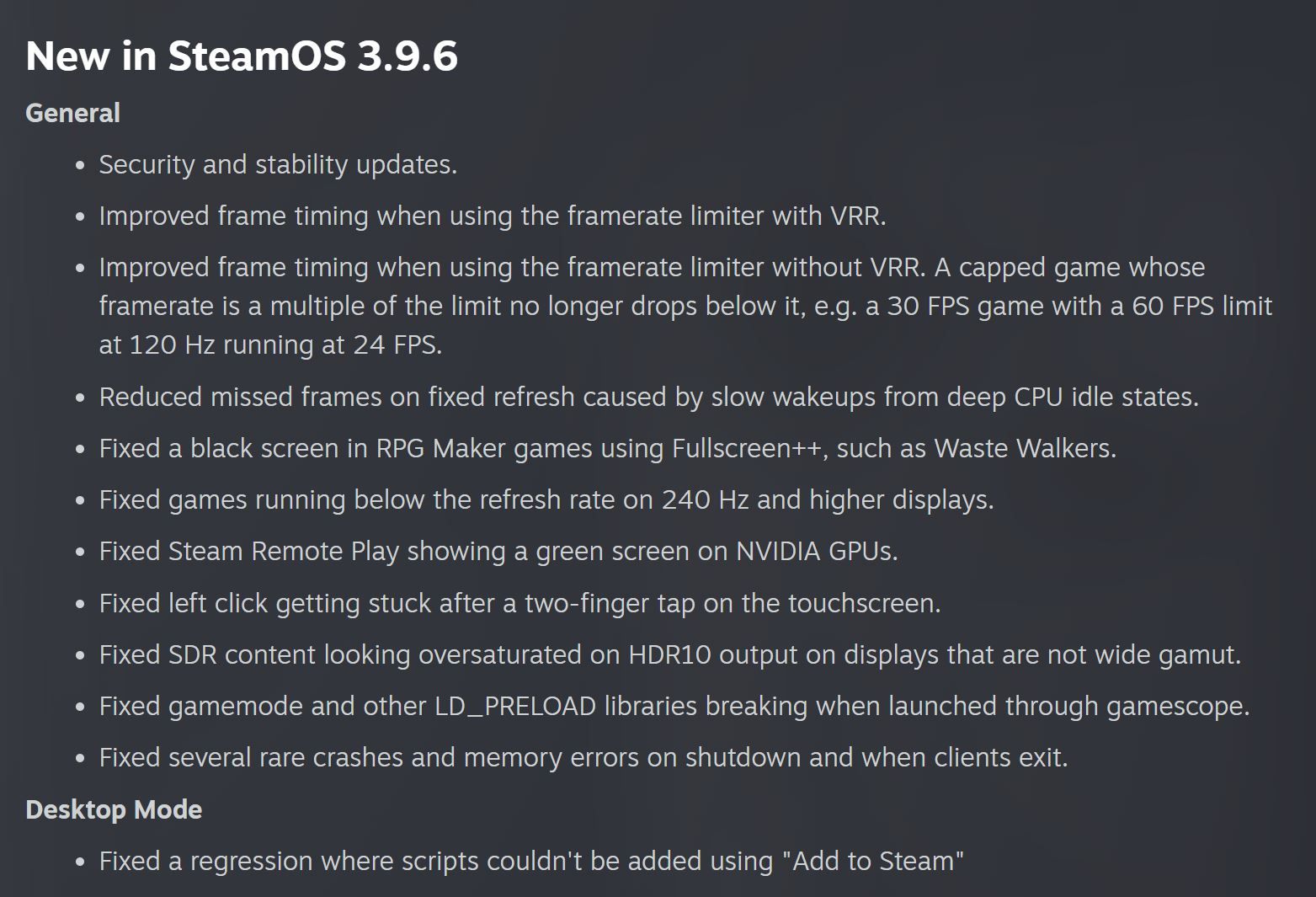
Image: wccftech.com
Valve’s latest SteamOS beta is small, but it targets visible failures
Valve has released SteamOS 3.9.7 beta for the SteamOS Beta and Preview channels, and the most concrete change is aimed at a bug users could immediately see: a rare rendering corruption error that produced white rectangles on screen in specific situations. Valve’s Steam Deck news page also says the update fixes a SteamOS 3.9 regression affecting Steam Deck backlight adjustment behavior, updates timezone definitions, and includes security and stability updates.
That makes this a maintenance release rather than a feature drop, but the timing is still important for Steam Deck and SteamOS users who opted into Valve’s testing channels. Valve explicitly describes this branch as including features that are still being tested, and says users can opt in through Settings, then System, then System Update Channel. The practical caveat is clear: these SteamOS patch notes apply to the Beta and Preview channels, not a newly promoted Stable release.
GamingOnLinux reported that SteamOS 3.9.7 beta arrived alongside a new Steam Client Beta, with both updates focused on bug fixes. 3DM International also separates the two updates, noting that SteamOS 3.9.7 is the operating system beta while the Steam Client Beta is a separate client-side update with its own changelog. For users trying to decide whether to switch channels, that distinction matters. A Deck OS fix and a Steam client fix can affect the same handheld experience, but they are not the same update path.
The beta label is the first strategic decision
The SteamOS 3.9.7 beta is available through Valve’s opt-in testing channels, according to Valve’s Steam Deck news page. Valve’s note says the release is for the SteamOS Beta and Preview channels and includes changes still being tested. That is the most important context for anyone reading these SteamOS patch notes as a potential install recommendation.
If your Steam Deck is currently stable, the conservative move is to stay on Stable unless one of the listed issues affects you. The sources provided do not include a Stable rollout date for SteamOS 3.9.7. 3DM International writes that users with no intention of participating in testing can remain on Stable, with these fixes expected to be integrated into future Stable updates, but Valve’s supplied note does not announce timing for that promotion.
The calculation is different for players already living on Beta or Preview, or for users who ran into the backlight regression, white-rectangle rendering corruption, frame pacing problems, Remote Play issues, or the compatibility bugs carried forward from the prior beta notes. In strategy terms, the update is a risk trade. Stable users protect a working setup. Beta users accept testing friction in exchange for targeted fixes that may solve specific pain points before they reach the wider Deck population.
The headline 3.9.7 fixes are about trust in the basic handheld loop
The SteamOS 3.9.7-specific list is short, but it touches two low-level experiences users notice quickly. Valve says it fixed rare rendering corruption that could result in white rectangles appearing on the screen in specific situations. The company does not describe which games, render paths, overlays, display modes, or workloads triggered the corruption, so the scope remains undefined beyond Valve’s own “rare” and “specific situations” wording.
Valve also says it fixed a SteamOS 3.9 regression with Steam Deck backlight adjustment behavior. Again, the note does not spell out the exact symptom, such as whether brightness failed to change, behaved inconsistently, or did not persist. Still, backlight control sits in the core handheld loop. A bug there can affect battery management, night play, docked-to-handheld transitions, and basic comfort far more often than a niche menu issue.
The remaining 3.9.7 lines are housekeeping with real user consequences. Updated timezone definitions can affect clock correctness in regions where time rules change. Valve’s “security and stability updates” line is broad, and the provided notes do not itemize individual vulnerabilities or crash fixes under that heading. That lack of specificity is normal for many platform updates, but it also means users should not infer unlisted fixes beyond Valve’s stated categories.
The bigger gameplay feel change is carried over from SteamOS 3.9.6
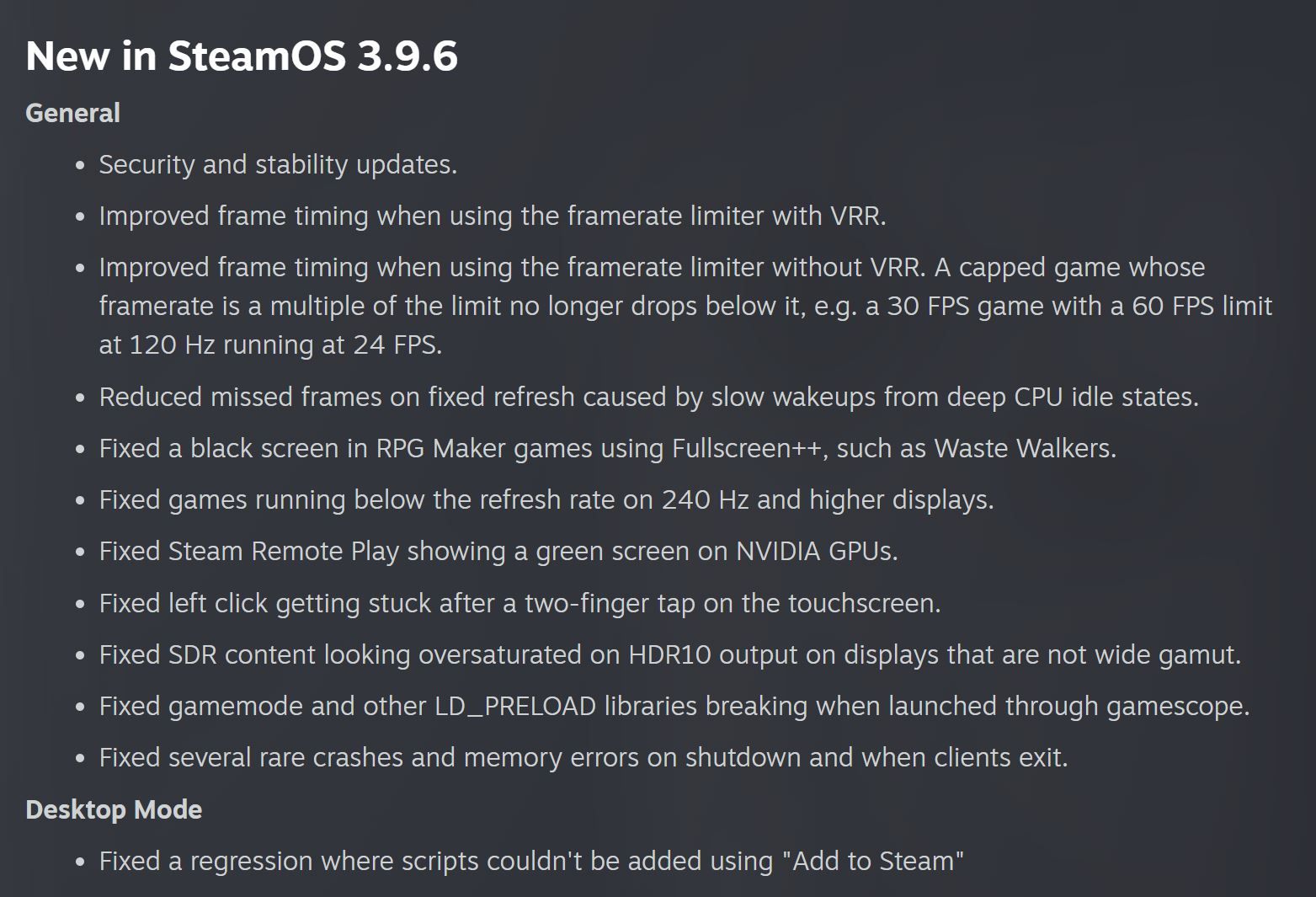
Valve’s Steam Deck news page says the 3.9.7 notes contain all changes since the current Stable SteamOS 3.9 release, with changes added since previous 3.9 beta releases noted separately. That makes the SteamOS 3.9.6 section part of the practical story for anyone moving from the current Stable 3.9 branch to this beta.
The most important cluster is frame timing. Valve says SteamOS 3.9.6 improved frame timing when using the framerate limiter with VRR and without VRR. In the non-VRR case, Valve gives a specific example: a capped game whose framerate is a multiple of the limit should no longer drop below it, such as a 30 FPS game with a 60 FPS limit at 120 Hz running at 24 FPS. For handheld and living-room SteamOS setups, that kind of cadence problem can make a game feel worse than its average FPS number suggests.
Valve also says 3.9.6 reduced missed frames on fixed refresh caused by slow wakeups from deep CPU idle states. That line is technical, but the player-facing implication is straightforward: some stutter-like presentation problems can come from timing and power-state behavior rather than raw GPU load. As Deck players increasingly tune caps, refresh rates, and battery targets, improvements to limiter behavior can matter as much as headline performance gains.
There are also display-specific fixes. Valve lists a fix for games running below the refresh rate on 240 Hz and higher displays, plus a fix for SDR content looking oversaturated on HDR10 output on displays that are not wide gamut. Those notes reach beyond the handheld screen and into docked or external-display use, where SteamOS has to juggle refresh rates, HDR output, and display capabilities that vary widely from setup to setup.
Compatibility fixes cover games, input, Remote Play, and gamescope launches
Several 3.9.6 carryover fixes address issues that can look like broken games even when the root problem sits in the OS stack. Valve says it fixed a black screen in RPG Maker games using Fullscreen++, naming Waste Walkers as an example. That is a narrow note, but for affected games it is the difference between launching and failing at a blank display.
Valve also lists a fix for Steam Remote Play showing a green screen on NVIDIA GPUs. The wording points to a particular Remote Play display failure, not a general NVIDIA performance claim. For players who use a Deck as a remote client, or who stream from a PC into a SteamOS environment, a green-screen bug is a session-ending problem rather than a small cosmetic issue.
Input also gets attention. SteamOS 3.9.6 fixed left click getting stuck after a two-finger tap on the touchscreen, according to Valve. Desktop Mode users get a related quality-of-life fix: Valve says it fixed a regression where scripts could not be added using “Add to Steam.” That matters for users who treat the Deck as a configurable Linux handheld and add non-Steam shortcuts, scripts, tools, or launchers through Steam’s interface.
The 3.9.6 notes also mention fixes for gamemode and other LD_PRELOAD libraries breaking when launched through gamescope, and several rare crashes and memory errors on shutdown and when clients exit. Those lines are less visible than a white rectangle or black screen, but they hit the plumbing that makes SteamOS viable for tinkerers and for players who rely on performance helpers, compatibility layers, and clean shutdown behavior.
The Steam Client Beta solves different problems on top of the OS work
The Steam client beta released alongside SteamOS 3.9.7 beta is separate from the operating system update. GamingOnLinux reports that the Steam Client Beta dated November 24 fixes a Steamworks SDK regression that caused a crash for games calling IsP2PPacketAvailable with a null pointer. 3DM International reports the same client-side fix and frames it as part of the Steam Client Beta changelog, not the SteamOS 3.9.7 OS list.
That distinction matters because a game crash tied to Steamworks SDK behavior may affect users across Steam beta environments, while the Steam Deck backlight fix belongs to SteamOS. The client beta also fixes an issue where a Steam Workshop item would sometimes pick the wrong version if the user was on the default game branch, according to the Steam Client Beta notes cited by GamingOnLinux and 3DM International. For mod-heavy games, Workshop version selection can quietly undermine troubleshooting because the game, mod, and branch may appear correct while the wrong Workshop version is being used.
The Library changes are narrower but useful for people who write or edit reviews. The client beta makes editing a review for a game in the library properly clear the “Early Access” flag from the review, and the “Attach PC Specs to this review” checkbox should now accurately reflect whether specs were already attached to an existing review. Remote Play also gets attention, with the client beta fixing several VR streaming crashes.
None of those client notes should be read as SteamOS 3.9.7-specific OS fixes. Together, though, the two betas show Valve working through a stack of stability issues from different layers: SteamOS presentation and hardware behavior, gamescope and display handling, Steam client library metadata, Workshop resolution, Steamworks crash behavior, and Remote Play VR streaming.
Who should install now and who should wait
If you are affected by the listed problems, SteamOS 3.9.7 beta is worth considering precisely because the fixes are targeted. A Steam Deck user seeing broken backlight behavior on the 3.9 line has a clear reason to test it. So does anyone who encountered white rectangles on screen, frame limiter cadence problems, missed frames on fixed refresh, RPG Maker Fullscreen++ black screens, green-screen Remote Play on NVIDIA GPUs, touchscreen click sticking, or the Desktop Mode “Add to Steam” script regression listed in Valve’s cumulative notes.
If your Deck is your primary travel device, your family machine, or the system you rely on without time to troubleshoot, the safer read is to remain on Stable. Valve labels this as Beta and Preview channel software, and the sources provided do not include a final Stable release date for these changes. Beta software can fix one targeted issue while exposing you to other test-branch behavior, and Valve’s own wording makes clear that this branch is still being tested.
For SteamOS users who do opt in, the clean expectation is maintenance, not transformation. There are no major interface changes or new headline features in the supplied SteamOS 3.9.7 beta notes. The value is in restored behavior, fewer rendering and timing failures, and a smoother set of edge cases across handheld play, external displays, Remote Play, Desktop Mode, and client features.
The unanswered questions are still significant. Valve does not identify the exact conditions behind the white-rectangle corruption, the precise shape of the Deck backlight regression, the details behind the security updates, or when these fixes will land for Stable users. That uncertainty is the price of reading beta patch notes early. The upside is that this Steam Deck beta update gives affected users a concrete path to test fixes now, while everyone else can watch the branch mature before changing update channels.