
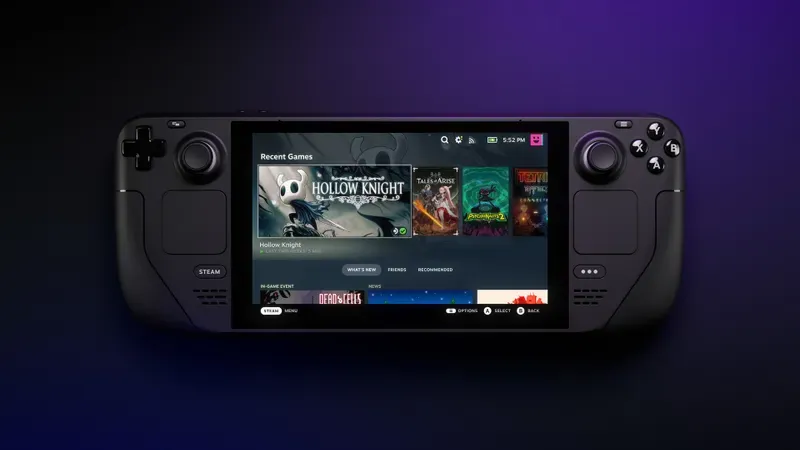

Valve’s SteamOS 3.9.6 beta targets frame timing, a 30 FPS to 24 FPS limiter quirk, Remote Play issues, HDR color bugs, and several Steam Deck edge cases.
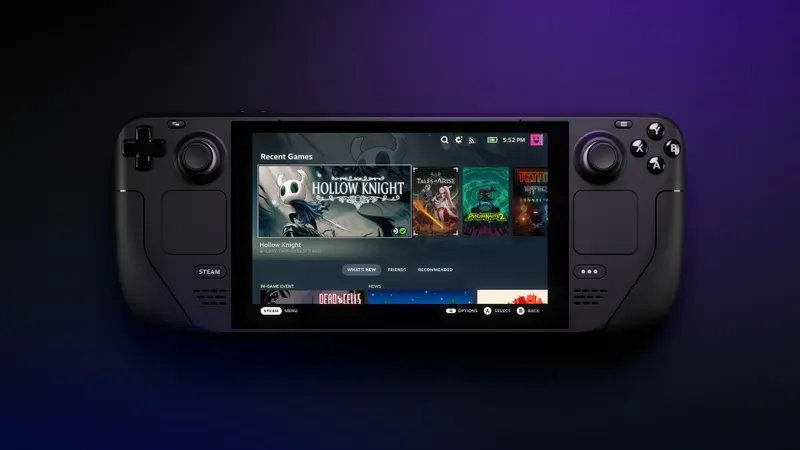
Image: jeu.video
SteamOS 3.9.6 beta puts frame pacing ahead of flashy features
Valve’s SteamOS 3.9.6 beta is available for testing on the SteamOS Beta and Preview channels, and its most concrete change is a fix to how the system-level framerate limiter handles frame timing. According to Valve’s SteamOS beta patch notes, as reproduced by GamingOnLinux, Steam Deck HQ, PC Guide, HappyGamer, and LinuxCompatible, the update improves the limiter both with VRR and without VRR, while also addressing several specific Steam Deck and SteamOS bugs.
The tension is that this is a beta build, not a stable-channel update. Valve’s quoted release language, carried by HappyGamer, says the update is for Beta and Preview channels and includes features that are still being tested. Players can opt in through Settings, then System, then System Update Channel, but doing so means accepting the usual beta tradeoff: earlier access to fixes, with a higher chance of running into regressions.
That distinction matters here because SteamOS 3.9.6 beta is not chasing a new headline app or a major interface overhaul. It is aimed at the hidden layer that makes handheld PC gaming feel consistent: frame delivery. For a Steam Deck owner who plays plugged into a high-refresh display, or for anyone using SteamOS on hardware with VRR, the limiter change could be immediately useful. For a player whose Deck is already behaving normally on the stable channel, the smarter move may be to wait for Valve to push these fixes into a stable release.
The key limiter fix targets a 30 FPS game falling to 24 FPS
Valve’s clearest example is the one that has drawn most attention from the Steam Deck community. The SteamOS 3.9.6 beta notes say that, without VRR, a capped game whose framerate is a multiple of the limit should no longer drop below it. Valve’s example, quoted across the coverage, is a 30 FPS game with a 60 FPS limit on a 120 Hz display previously running at 24 FPS.
That is a narrow-sounding bug with broad practical consequences. Handheld PC players often cap games to 30 FPS, 40 FPS, 45 FPS, 60 FPS, or another target that balances battery life, heat, fan noise, and responsiveness. If the limiter mispaces frames and silently lands below the intended target, the player loses the whole point of the cap. A strategy player settling into a long campaign, an RPG fan locking a demanding title to save battery, or a docked Steam Deck user playing on a 120 Hz TV all depend on the cap being predictable.
This is also where the Steam Deck framerate limiter becomes a platform feature rather than a convenience toggle. A game’s own internal limiter may vary wildly by engine, port quality, or graphics API. SteamOS gives players a system-level control layer that can sit above individual games. When that layer is accurate, it lets users build repeatable profiles across a library. When it is inaccurate, every game becomes a fresh troubleshooting session.
VRR support helps docked and SteamOS device users, while fixed refresh still matters on Deck
The SteamOS 3.9.6 beta patch notes split the limiter work into two cases: improved frame timing with VRR and improved frame timing without VRR. PC Guide notes an important hardware caveat: neither the Steam Deck LCD nor the Steam Deck OLED has a built-in VRR display, although SteamOS can use VRR with a compatible external monitor. That means the VRR part of this update is most relevant to docked setups, external displays, and other SteamOS hardware configurations rather than the Deck’s own screen.
The fixed-refresh improvements are still directly relevant to Steam Deck play. Valve’s notes say the beta reduces missed frames on fixed refresh displays caused by slow wakeups from deep CPU idle states. In plain terms, the system was sometimes slow to wake from a low-power state, and that delay could show up as missed frames. On a handheld, those power-management choices are part of the whole performance economy. The device is constantly negotiating between smooth frame pacing, battery drain, heat, and fan behavior.
That is why this patch is more interesting than a routine line about stability. Valve is tuning the interaction between performance caps and power behavior, which is where handheld PCs live or die. A desktop tower can brute-force past many pacing problems. A battery-powered device has to win by scheduling work cleanly.
The rest of the beta fixes real edge cases, not cosmetic annoyances
Beyond the limiter, SteamOS 3.9.6 beta addresses several bugs that affect specific but meaningful groups of players. Valve’s notes say the update fixes a black screen in RPG Maker games using Fullscreen++, with Waste Walkers named as an example. For players with libraries full of RPG Maker titles, that is the difference between a game launching and failing at the display layer.
Valve also lists a fix for games running below the refresh rate on 240 Hz and higher displays. That again points toward SteamOS being used beyond the built-in Deck panel, whether through external monitors, living-room setups, or other compatible machines. Steam Remote Play users get a targeted fix as well: Valve says the beta resolves a green screen issue on NVIDIA GPUs.
Input, color, and compatibility fixes round out the update. The patch notes say Valve fixed left click getting stuck after a two-finger tap on the touchscreen, SDR content appearing oversaturated on HDR10 output when the display is not wide gamut, and gamemode plus other LD_PRELOAD libraries breaking when launched through gamescope. Valve also lists fixes for several rare crashes and memory errors on shutdown and when clients exit. In Desktop Mode, the lone listed change is a fix for a regression that prevented scripts from being added through “Add to Steam.”
There is some version confusion around the changelog baseline
One wrinkle in the reporting is the baseline Valve appears to use for the changelog. GamingOnLinux points out that Valve’s announcement still compares changes against SteamOS 3.8, even though SteamOS 3.9.5 had recently released as the latest stable version. LinuxCompatible also notes that mismatch and says it explains why some fixes appear repackaged from an earlier build.
That does not invalidate the SteamOS 3.9.6 beta patch notes, but it does change how readers should process them. Some items may be new to 3.9.6 specifically, while others may be part of the broader 3.9 branch when compared with 3.8. HappyGamer similarly describes the notes as covering changes since the current stable release SteamOS 3.8, while GamingOnLinux and LinuxCompatible identify 3.9.5 as the latest stable line at the time of their reporting. The safest reading is that Valve’s published notes are authoritative for what the beta contains, but the “new since” framing is messy.
For players deciding whether to install, that distinction matters less than whether the beta addresses a problem they actually have. If your Steam Deck update November 2026 concern is the 30 FPS to 24 FPS limiter quirk, the notes point to 3.9.6 beta as the relevant test build. If you are looking for a clean stable-channel upgrade path, the version-label confusion is a reason to be patient rather than a reason to panic.
Who should install the SteamOS 3.9.6 beta now, and who should wait
The best candidates for SteamOS 3.9.6 beta are players who can directly test one of its fixes. If you use the Steam Deck framerate limiter on a 120 Hz display and have seen a 30 FPS target sink to 24 FPS, this beta is built for your problem. If you dock to a VRR monitor, use a 240 Hz or higher display, rely on Remote Play with an NVIDIA GPU in the chain, play affected RPG Maker games, or use gamemode and other LD_PRELOAD tools through gamescope, the patch has a clear reason to exist in your setup.
Players who mostly use the Deck’s internal screen, stay on conservative caps, and have not hit these bugs should treat the beta like any other test channel. Valve says these are still-tested features, and the update is not on the stable line. Waiting is especially sensible if the Steam Deck is your main gaming device and you do not want to spend time rolling back or troubleshooting a beta-side issue.
If you do install it, approach the update like a performance experiment. Use a game with a stable workload, set a known cap, and watch frame pacing rather than judging only by average FPS. The specific Valve example gives a clean test case: a 30 FPS game, a 60 FPS limiter, and a 120 Hz display. If the graph holds steady instead of falling to 24 FPS, the patch is doing the job Valve says it targets.
The strategic read is simple: Valve is still investing in the system-level controls that make SteamOS viable across handhelds, docks, TVs, monitors, and future hardware. SteamOS 3.9.6 beta is a maintenance update, but its focus on timing precision is exactly the kind of maintenance handheld PC players feel every time a capped game either glides or stutters.