
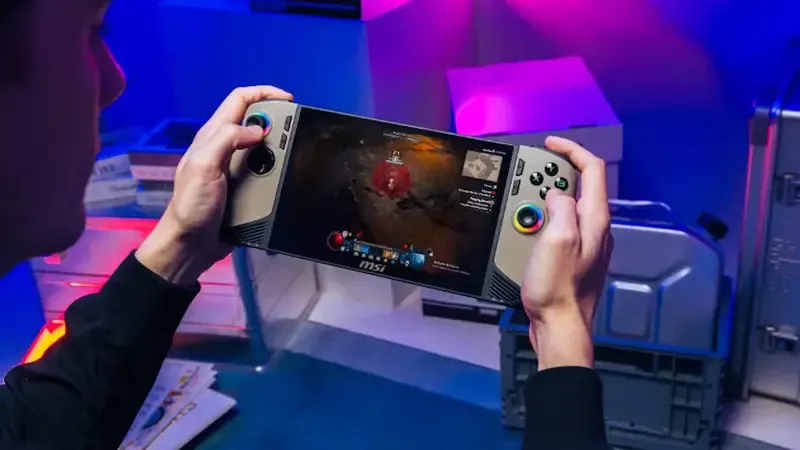

Valve's SteamOS 3.8.25 beta brings Steam Machine firmware fixes, broader handheld support, and preliminary Steam Frame wireless adapter support, but players need to weigh those gains against a known beta performance issue.
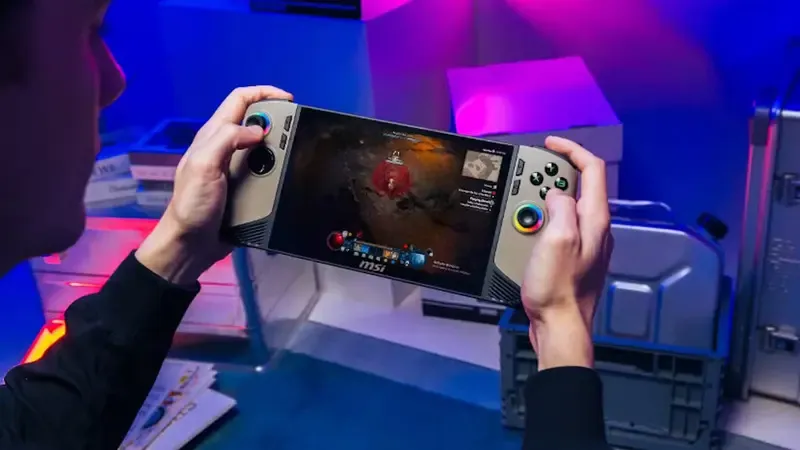
Image: dlcompare.com
Valve’s latest beta is a hardware roadmap in patch form
Valve’s SteamOS 3.8.25 beta adds Steam Machine Firmware 108, wider non-Valve handheld support, and preliminary support for the Steam Frame Wireless Adapter, according to the SteamOS changelog surfaced by GamingOnLinux. That is the concrete development. The tension is that this is still a beta build, and Valve’s own notes warn of degraded performance in some cases when composition is required, including scenarios such as FSR being enabled.
For players following Valve’s current hardware push, this update reads less like a routine maintenance release and more like a snapshot of the company’s platform priorities. SteamOS is being asked to cover three different battlefields at once: the living room PC, the handheld Windows-to-Linux conversion lane, and the next Steam hardware category tied to Steam Frame. Each has a different risk profile. A sleep bug on a Steam Machine makes the box feel unreliable under a TV. A missing gamepad profile on a third-party handheld can make the operating system feel unfinished. A wireless adapter for Steam Frame introduces a latency-sensitive link where the first impression will be brutal if the basics are wrong.
The upgrade context is therefore unusually important. GamingOnLinux notes that users must manually opt into the beta through Settings, System, and System Update Channel. Valve’s notes also say the known composition performance issue is fixed in the latest stable SteamOS release, identified there as 3.8.16, while the beta channel is still waiting for that fix. In other words, SteamOS 3.8.25 beta is the build with the newest hardware enablement, but stable remains the safer target for anyone who values predictable performance over early firmware and device support.
Steam Machine owners get firmware fixes aimed at console-like reliability
The Steam Machine portion of the update is focused on the kind of defects that matter most when a PC is pretending to be an appliance. Valve’s Steam Machine Firmware 108 fixes an issue where the system could occasionally wake immediately after being put to sleep, and it fixes a rare case where CPU performance could be degraded until reboot after waking from sleep, according to the changelog quoted by GamingOnLinux.
Those fixes are strategically important because sleep and resume behavior is one of the biggest practical divides between a living room console and a small PC under the television. A machine that wakes itself back up, or returns from sleep with reduced CPU performance, asks the player to troubleshoot instead of play. That is fatal friction for the audience Valve is courting with Steam Machine.
The same beta also includes living-room adjacent fixes outside the firmware heading. Valve lists a fix for HDMI display hotplugging causing lockups in Desktop Mode, a fix for some TVs where the initial boot logo appeared before HDMI Game Mode engaged and caused delay or flashing, HDMI audio dropout fixes for some game and TV combinations, and improved HDMI hotplug detection. Taken together, those patch notes point at the messy edge where PC flexibility meets consumer electronics behavior: displays, receivers, TVs, sleep states, and audio handshakes.
There is one practical wrinkle that makes the beta more tempting for Steam Machine owners. GamingOnLinux reports that Valve developer Pierre-Loup Griffais said on Bluesky that users can update to the beta to get the newer firmware and then go back to stable, with the firmware persisting. That is not a broad recommendation to live on beta. It is a useful route for Steam Machine users specifically affected by the sleep or wake-performance issues who want Firmware 108 without remaining exposed to the beta channel’s known composition performance regression.
Third-party handheld support is shifting from broad enablement to device tuning
The handheld side of SteamOS 3.8.25 beta is more incremental, but it reveals how Valve’s support model is maturing. The changelog lists improved support for MSI Claw and OneXPlayer device variants, better support for devices with external or no Wi-Fi adapters, a fix for an infrequent bug where some third-party handhelds would ignore input when held, and initial gamepad support for the MSI Claw 8 EX AI+. GamingOnLinux also highlights expanded support for devices including the MSI Claw 8 EX AI+, Konkr FIT, AYANEO Pocket S2, MSI Claw, and OneXPlayer hardware.
That matters because SteamOS handheld support is no longer a single Steam Deck story. Tech Insider’s June 2026 SteamOS 3.8 report described the stable 3.8 release as a broad expansion across devices such as the Asus ROG Ally line, Lenovo Legion Go family, MSI Claw, and handhelds from companies including OneXPlayer, GPD, Anbernic, and OrangePi. The same report framed the post-3.8 updates as ongoing point releases rather than a one-time compatibility push.
The distinction between broad support and good support is where the strategy gets interesting. Getting SteamOS to boot on a class of handhelds is one step. Making every integrated controller, Wi-Fi setup, sleep behavior, gyro profile, external adapter, and power quirk behave correctly is the harder game. The 3.8.25 beta’s device-specific notes suggest Valve is now operating in that second phase. It is less glamorous than announcing another supported device family, but it is the phase that decides whether a ROG Ally, Claw, Legion Go, or OneXPlayer owner treats SteamOS as a daily driver or a weekend experiment.
There is also a source conflict worth flagging. Tech Insider’s excerpt says that as of August 5, 2026, SteamOS 3.8.14 was still the newest stable build, while the GamingOnLinux SteamOS 3.8.25 beta report quotes Valve’s known-issues text identifying 3.8.16 as the latest stable release. Wikipedia’s SteamOS entry also lists 3.8.16 on July 16, 2026. For upgrade decisions, Valve’s current channel notes are the better guide, but the mismatch underlines how quickly the 3.8 branch has been moving.
Steam Frame wireless support is early, specific, and still mostly unproven
The Steam Frame item in SteamOS 3.8.25 beta is short but notable: Valve lists preliminary support for the Steam Frame Wireless Adapter. The word preliminary is doing work here. The patch note confirms that SteamOS is gaining early adapter support, but it does not confirm final performance, latency behavior, launch readiness, pricing, or whether players should expect a polished out-of-box experience from this beta alone.
Public Steam Frame information gives the adapter context. Wikipedia’s Steam Frame entry describes Valve’s headset as an upcoming standalone VR device and lists an included wireless adapter using Wi-Fi 6E on 6GHz for a low-latency PC link. That makes adapter support inside SteamOS a foundational piece rather than a peripheral nicety. If Steam Frame is going to bridge standalone use and PC-linked play, the operating system on the host side needs reliable recognition and handling of that adapter.
The strategic read is straightforward, as interpretation rather than confirmation: Valve appears to be preparing SteamOS as the common tissue between Steam Deck, Steam Machine, third-party handheld PCs, and Steam Frame. The confirmed fact is narrower. SteamOS 3.8.25 beta adds preliminary Steam Frame Wireless Adapter support. Everything about real-world VR streaming quality, range, setup complexity, and supported configurations remains unannounced in the provided material.
The beta channel is useful, but the stable channel is still the safer default
For most players, the practical question is not whether SteamOS 3.8.25 beta is interesting. It clearly is. The question is whether the listed fixes solve a problem you actually have. Valve’s beta notes, via GamingOnLinux, state that users must manually opt in through Settings, System, and System Update Channel. That alone should set expectations: this is an early update path for users willing to absorb regressions.
The known issue is specific enough to affect real play. Valve warns of degraded performance in some cases when composition is required, such as when FSR is enabled. The same known-issues section says that problem is fixed in the latest stable SteamOS release, 3.8.16, and that affected users may wish to switch to the stable channel while Valve works on bringing the fix to beta. If you rely heavily on FSR or frequently use scenarios that trigger composition, the beta’s new hardware work may not be worth the trade.
Steam Machine owners have the clearest reason to consider the beta because Firmware 108 targets sleep and wake-performance bugs, and GamingOnLinux reports Griffais’ note that firmware can persist after returning to stable. Third-party handheld owners should be more selective. If you own one of the newly improved or initially supported models, especially an MSI Claw variant, OneXPlayer variant, or MSI Claw 8 EX AI+, the beta may be relevant. If your current SteamOS setup is stable and your device is not named in the notes, waiting for these changes to reach stable is the lower-risk move.
Steam Frame followers should treat the adapter line as a signpost, not a buying guide. The beta confirms early support work on the PC-side SteamOS stack, but the provided sources do not establish final headset availability details, adapter performance, or user-facing setup requirements.
Valve is building confidence through firmware, metadata, and device coverage
SteamOS 3.8.25 beta lands after a series of updates that show Valve tightening the entire hardware ecosystem, not only the operating system kernel and drivers. In July, GamingOnLinux reported that a stable Steam Client update added Steam Machine Verified details in the Steam Library and a Great on Machine Library page, making it easier for users to see which games should run out of the box. Steam Deck HQ separately reported that a July Steam Deck beta client showed Steam Machine and SteamOS compatibility information on game pages in their own tabs before that work reached the stable client.
That compatibility metadata matters because Steam Machine has a different burden than Steam Deck. A handheld owner may tolerate settings tweaks because the device already feels like a PC-console hybrid. A living room player expects fast answers: does the game run, does the controller behave, does the display wake correctly, and does the box resume without drama? The July Steam Client changes address the library-confidence layer. SteamOS 3.8.25 beta addresses firmware, HDMI, audio, Wi-Fi, adapter, and handheld input layers.
Wikipedia describes SteamOS as Valve’s gaming-focused operating system, based on Arch Linux in its modern 3.x form, with Steam as the default gaming interface and KDE Plasma for Desktop Mode. That split personality is the platform’s strength and its balancing problem. Valve wants console-like clarity without giving up PC breadth. The 3.8.25 beta is another move in that direction, but it also shows how much coordination is required across firmware, controller drivers, display handling, wireless adapters, and storefront compatibility signals.
The unanswered questions are now mostly about timing and polish. Valve has not, in the provided material, announced when SteamOS 3.8.25 beta changes will reach stable. Steam Frame Wireless Adapter support is explicitly preliminary. Third-party handheld support continues to improve device by device, but support status and badge language can lag behind functional gains. For now, SteamOS 3.8.25 beta is best read as a forward-looking Valve SteamOS update for enthusiasts, Steam Machine owners chasing Firmware 108, and handheld users whose specific device appears in the changelog.