

Valve’s SteamOS 0.5.7 beta for Steam Frame adds WebXR support, SteamVR tuning, controller fixes, and audio controls, while a separate Mac modding thread remains unofficial.
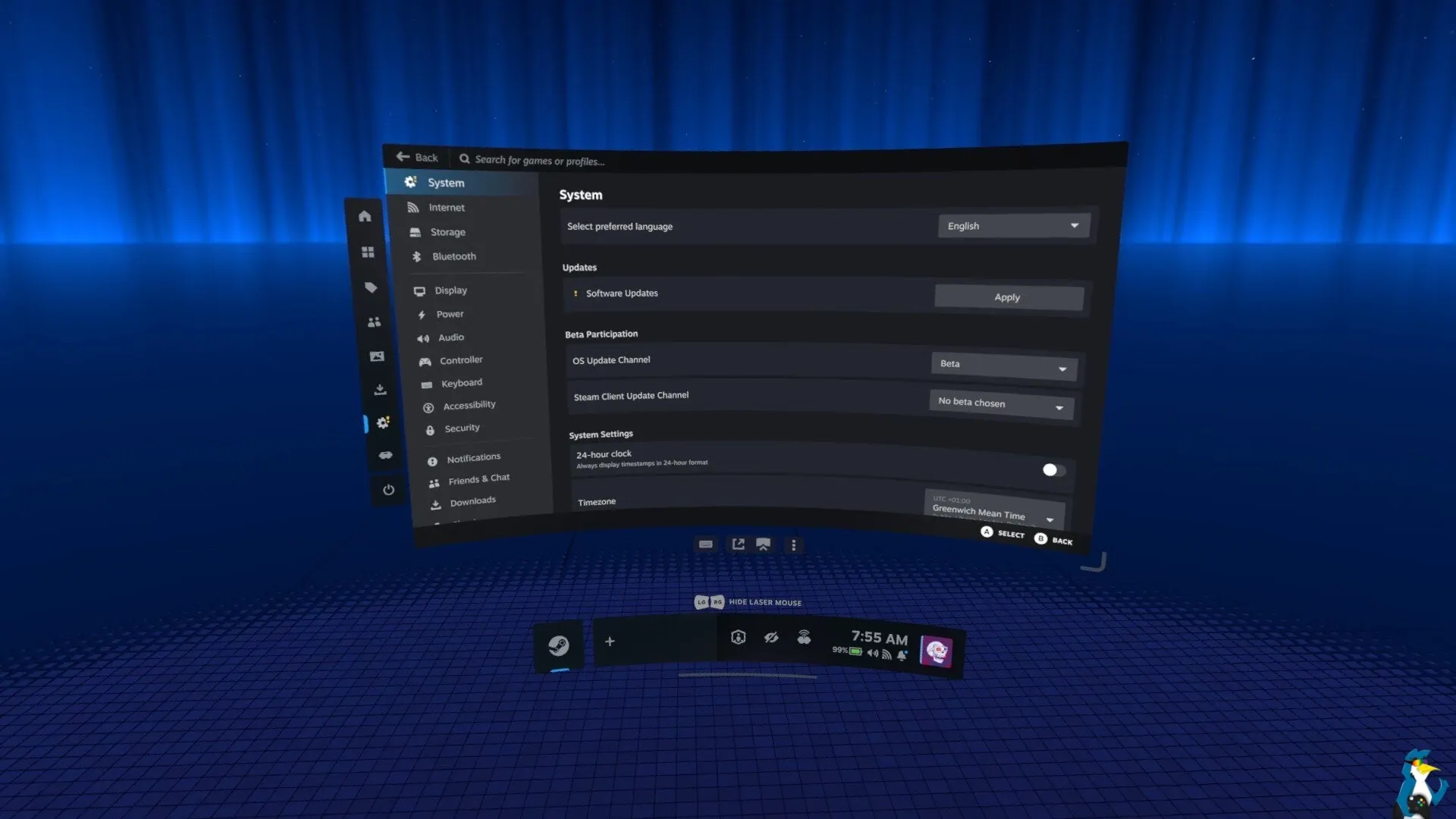
Image: gamingonlinux.com
Valve’s newest Steam Frame beta is about browser VR and headset polish
Valve has released SteamOS 0.5.7 beta for Steam Frame, and the headline change is official WebXR support in Chromium 157 and newer. That matters because it points to a Steam Frame update built around making the headset behave like a more flexible VR platform, rather than only a SteamVR appliance. The catch is that this is still a beta, so the useful new parts sit alongside the usual testing risk.
The update was detailed through Valve’s Steam news post for Steam Frame and reported by GamingOnLinux, Twisted Voxel, Techtroduce, and the Steam Hardware Updates account on X. Across those sources, the confirmed changes include SteamVR 2.19.1, improved vibration filtering for pose prediction on some units, display dimming before sleep, foveated sharpening changes, controller battery reporting fixes, new default bindings for several VR games, WebXR support, and audio fixes for USB and Bluetooth speakers.
The tension around SteamOS 0.5.7 beta is that two stories are moving at once. Valve’s official Steam Frame work is focused on headset stability, browser-based VR support, audio reliability, and comfort settings. Separately, PC Gamer’s headline reports that modders have brought the Steam Frame build of SteamOS and its translation-layer benefits to Mac. Those are not the same development. One is an official beta for Steam Frame. The other is an unofficial modding effort, and the provided source material does not include Valve endorsing SteamOS on Mac.
WebXR is the clearest signal in the Steam Frame update
The most forward-looking change in SteamOS 0.5.7 beta is the operating system note: Valve has enabled WebXR support in Chromium 157 and up. Techtroduce describes WebXR as a web technology that lets compatible browsers deliver immersive virtual reality experiences, including interactive 3D environments and browser-based VR applications. The important qualifier is compatibility. Valve’s update enables support on Steam Frame, but individual experiences still depend on the browser version and the web app or site.
That is a different kind of platform work from adding a single native app or improving a single game profile. WebXR support creates room for browser-delivered VR experiments, web-based tools, galleries, social spaces, or playable prototypes, provided those experiences support the stack Valve is enabling. For a headset named Steam Frame, that is a notable direction: Valve is tightening the device’s ability to move between SteamVR content and web-based immersive content without presenting it as a finished consumer promise.
For players who bounce between big VR releases and smaller experimental projects, this is the part to watch. Small developers often use web technology to test interaction ideas quickly, especially when the core appeal is a clever mechanic rather than cinematic production. Steam Frame WebXR support does not guarantee a flood of polished browser VR software, but it gives that lane a more official footing on Valve’s headset.
The SteamVR changes read like early hardware triage
SteamOS 0.5.7 beta also updates SteamVR to version 2.19.1 on Steam Frame. The patch notes reported by GamingOnLinux and Twisted Voxel say Valve improved vibration filtering for pose prediction, a change tied to an issue affecting some units. GamingOnLinux framed this as something that will hopefully help with reported tracking issues, but that is an expectation from the outlet, not a confirmed blanket fix from Valve for every user.
Pose prediction is the kind of invisible craft that makes or breaks VR comfort. When it works, players rarely think about it. When it falters, the whole illusion gets noisy. Valve’s decision to call out vibration filtering suggests the company is still tuning the hardware-software relationship on Steam Frame rather than treating tracking behavior as settled.
The beta also changes how the headset behaves around sleep. Sources report that the display now dims for 30 seconds before the headset enters sleep mode. That sounds modest, but in a head-mounted device, a short visual warning can reduce confusion when someone pauses between sessions, adjusts straps, or steps away from a seated experience. Valve also updated the guided tour so Steam stays docked front and center, which reads as a small onboarding correction. It is the sort of user-interface tidying that usually appears when real users are finding rough edges in a new device flow.
Foveated sharpening moves away from eye tracking dependency
One of the more technically meaningful settings changes is the split between foveated sharpening and Eye Tracking. According to the SteamOS 0.5.7 beta notes reported by GamingOnLinux, foveated sharpening is now independent from Eye Tracking. Previously, it would disable when Eye Tracking was off. With this update, it defaults to the center when Eye Tracking is disabled.
That tells us something about Valve’s priorities for Steam Frame: key image-processing options should remain useful even when a related sensor feature is off. For players, the practical benefit is simpler. Turning off Eye Tracking should no longer automatically remove foveated sharpening, at least under the behavior described in the beta notes. The setting becomes less all-or-nothing.
There is a subtraction here too. Valve has removed Advanced Supersampling support on Steam Frame in this beta. The sources do not provide Valve’s rationale, so it would be speculation to call it a performance decision or a compatibility cleanup. What can be said is that Valve is narrowing at least one advanced visual option while making foveated sharpening more flexible. That combination points toward a headset settings menu designed around predictable defaults rather than giving every PC-style graphics lever equal weight.
Controllers and audio fixes target the boring failures that ruin sessions
SteamOS 0.5.7 beta includes a few fixes that sound unglamorous until they happen during a play session. Frame Controllers now report 0% battery correctly, according to the patch notes summarized by GamingOnLinux, Twisted Voxel, and Steam Hardware Updates on X. Accurate battery reporting is basic, but in VR it is also a trust issue. If the controller lies at the wrong moment, the player blames the whole setup.
Valve also added default bindings for Chromalab, Batman Arkham, and Doom VFR. The sources do not specify which Batman Arkham VR release is meant, so that title should be read as it appears in the patch reporting rather than expanded beyond the available notes. The spread is still useful: Valve is not only tuning system menus, it is filling in controller support for specific VR software.
The audio section is equally practical. The beta fixes an issue where audio could stop working through USB or Bluetooth speakers if an application tried to access the microphone. Valve also added controls to selectively disable echo cancellation and noise suppression for the microphone, though the sources note that these controls require the current Steam Client Beta. For anyone using external speakers, voice features, capture setups, or social VR apps, that is the kind of fix that can decide whether the headset feels ready for regular use.
The Mac SteamOS story is separate and still unofficial
The Mac thread should not be folded into the Steam Frame beta as if it were part of Valve’s roadmap. PC Gamer’s provided source text gives us the headline claim: modders have brought the Steam Frame build of SteamOS and its translation-layer benefits to Mac. That is noteworthy, especially because SteamOS attracts attention beyond Valve’s own hardware, but the available source material does not include install instructions, supported Mac models, performance data, a Valve statement, or any indication of official support.
So the clean separation is this: SteamOS 0.5.7 beta is an official Steam Frame update from Valve. A SteamOS Mac mod is an unofficial community effort reported by PC Gamer. The first belongs in the supported beta channel discussion. The second belongs in the modding and experimentation column until there is clearer documentation or an official position.
That distinction matters for reader expectations. SteamOS has a gravitational pull because Valve’s translation-layer stack can make Windows-first game libraries feel less locked to Windows hardware. But a modded Mac install, based on the source material provided here, should be treated as enthusiast territory. It may be exciting, but it is not evidence that Valve is launching SteamOS for Mac or turning Steam Frame’s OS build into a general-purpose Mac gaming product.
Should Steam Frame owners install SteamOS 0.5.7 beta now?
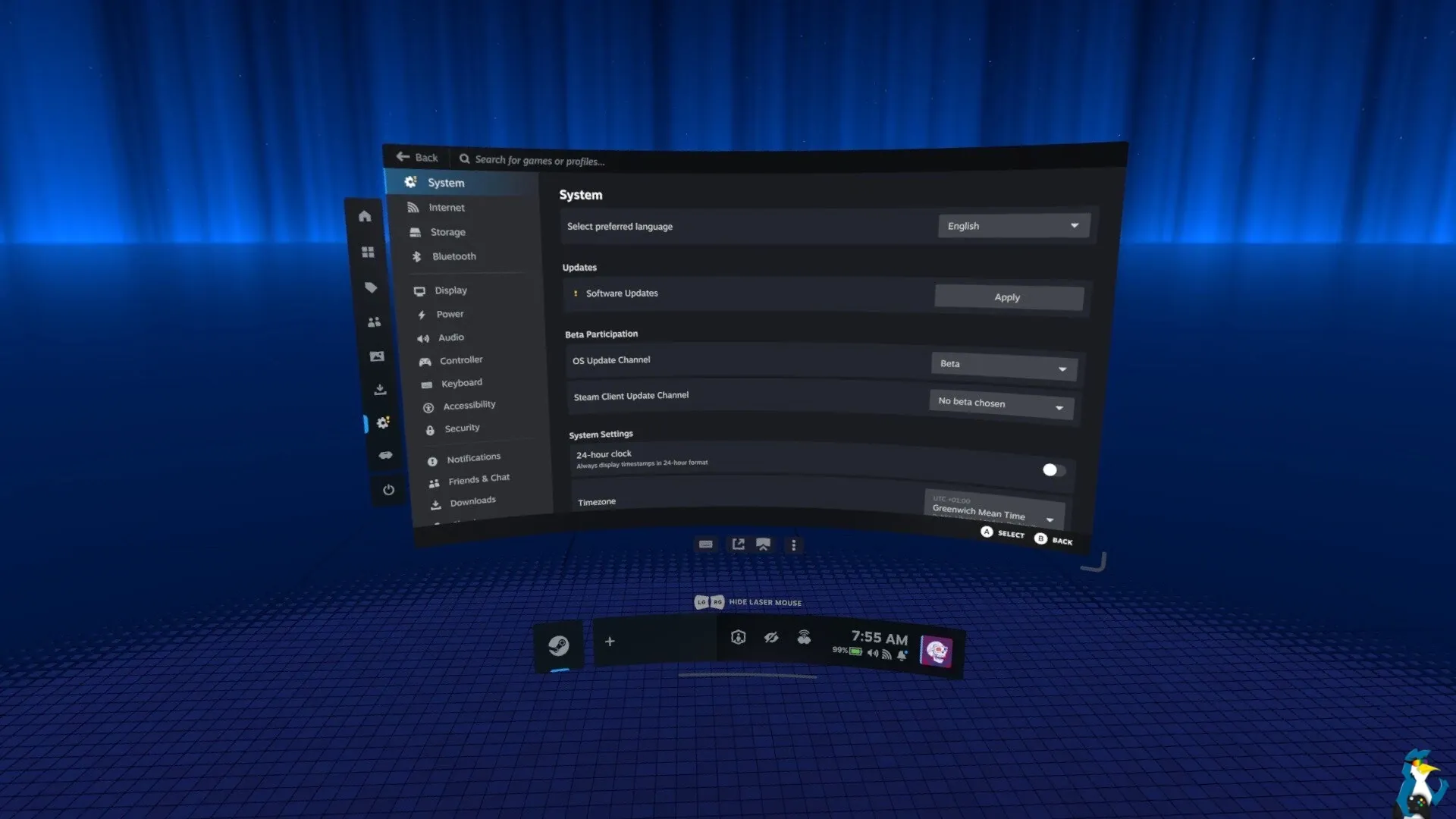
If you own a Steam Frame and want WebXR support, the new microphone controls, the pose prediction change, or the USB and Bluetooth audio fix, SteamOS 0.5.7 beta is the update to watch. GamingOnLinux says users need to opt in through Settings, then System, then Steam Client Update Channel. Twisted Voxel places the SteamOS beta opt-in under Settings, System, and System Update Channel, while separately saying the microphone echo cancellation and noise suppression controls require the Steam Client Beta. The shared practical point is that this is not presented as a standard stable update, and users should expect to opt into beta software from the system settings.
Cautious players can wait. The update is explicitly labeled beta, and none of the provided sources say when these changes will move to a stable Steam Frame release. If your headset is working cleanly and you do not need Chromium WebXR or the specific audio fixes, waiting for a non-beta rollout is the safer path.
For tinkerers, VR regulars, and anyone who has been frustrated by the issues named in the notes, the beta is more compelling. It shows Valve working through the practical layers that determine whether a headset becomes a daily device: tracking confidence, browser capability, predictable visual settings, controller mappings, sleep behavior, and audio reliability. That is less flashy than a major game announcement, but for Steam Frame’s future, it may be the more revealing update.