

A focused indie spotlight on the most played Steam Next Fest February 2026 demos, cross‑referencing Valve’s own stats with wider coverage to highlight the best deckbuilders, soulslikes, and cozy sims – plus how each one ran on Steam Deck.
Steam’s first big festival of 2026 is over, but the February Next Fest left behind a long tail of wishlists, Discord sign‑ups and “just one more run” demo addictions. Valve quietly shared a mid‑festival list of the most‑clicked and most‑played demos, and that snapshot tells an interesting story when you stack it up against broader press coverage and community chatter.
Some of the most played demos were exactly what you would expect: big‑name shooters and flashy action games with huge marketing budgets. But dig a little deeper into Valve’s list, Eurogamer’s and GamingOnLinux’s write‑ups, and the various “best of Next Fest” roundups, and a different picture emerges. Smaller teams working on deckbuilders, soulslikes and cozy sims managed to hang with the heavyweights, and in more than a few cases completely stole the conversation – especially among Steam Deck owners.
Below is a cross‑referenced indie spotlight built from Valve’s most‑played list and our own February coverage, focused on games you can still reasonably track, wishlist and in many cases re‑download. The emphasis is on how they feel to actually play, and how friendly they were to the Steam Deck.
Wanderburg
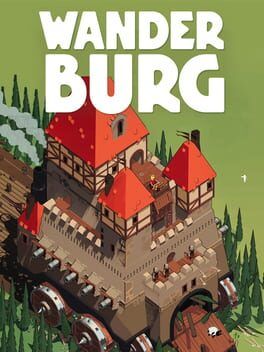
Valve’s own data and GamingOnLinux’s coverage both point to Wanderburg as one of the true breakout hits of the fest. On paper it sounds odd: a minimalist, open‑world roguelike where everyone rides around on modular castles balanced on giant wheels. In practice it plays like a bizarre hybrid of vehicle deck‑building and sandbox exploration, with an elastic difficulty curve that lets you opt into fights rather than constantly being ambushed.
The demo drops you into a small but surprisingly dense region, gives you just enough resources to bolt a few cannons and gadgets onto your lumbering fortress, and then asks you a simple question: how greedy are you willing to be in pursuit of more scrap. Every encounter is a physics‑ey brawl between Franken‑castles, and the delight comes from watching your improvised contraption barely survive, then patching it up with whatever modules you scavenge next. It has that roguelike rhythm of quick failures and sudden power spikes, but stretched across a map that nudges you to explore instead of simply beelining from fight to fight.
On Steam Deck, Wanderburg was a pleasant surprise. GamingOnLinux’s early testing lined up with what Deck owners were reporting elsewhere: Proton handled it well, controls mapped cleanly to the gamepad and the minimalist art style meant stable performance even during larger brawls. You will want to cap the frame rate and nudge shadows and post‑processing down a notch for longer battery life, but nothing about the demo felt like a compromise. If you like the idea of tinkering and iterating on a build between fast runs and you want something that feels genuinely new, this is the one you should start with.
Vampire Crawlers: The Turbo Wildcard from Vampire Survivors
The Next Fest demo list did not lack for horde‑survival roguelites, but Vampire Crawlers managed to stand out even among the clones chasing Vampire Survivors’ crown. That is partly because it leans into the absurdity of its origins, wearing the connection on its sleeve, and partly because of how quickly its systems come together in the demo’s runtime.
Sessions start familiarly enough: a tiny character, a big empty arena, enemies trickling in. Within minutes though, you are juggling wildcard modifiers that drastically change your build on the fly. Instead of simply stacking the numbers on your favourite weapons, you are encouraged to draft strange synergies that can turn a doomed run into something brilliant. It feels closer to a lightweight deckbuilder in the way you manage a queue of evolving powers, and the demo does an admirable job of letting you try a few different archetypes before it spits you back to the menu.
On Steam Deck, the performance story is exactly what you hope from a 2D‑ish, horde‑based roguelite. Frame rates remained smooth even when the screen was packed, and the default controller mapping for movement, aim and quick selection of upgrades felt natural. Text size is always a concern on the Deck, but the demo’s UI was legible without tweaking system‑level scaling. It is the kind of game that quietly eats an entire flight or weekend because it runs effortlessly on handheld.
Outbound
Outbound appeared near the top of both Valve’s internal metrics and several editorial lists, and after a few hours with the demo it is easy to see why. It is a systemic survival sim with a focus on traversal, navigation and improvisation rather than checklist grinding. You are constantly weighing how far you can push into the unknown with the limited tools and stamina you have, and that alone gives it a very different feel from the usual crafting treadmill.
For players who gravitate toward cozy sims, Outbound lands in an interesting middle ground. You still set up small camps, chop trees and gather resources, but you are never allowed to completely settle. The world keeps asking you to move on, and the tension between that wanderlust and the comfort of a well‑arranged campsite is the heart of the experience. The demo is generous enough to showcase different biomes and weather patterns, and it ends right when you feel yourself slipping into the game’s rhythm.
On Steam Deck the experience was mostly positive, though a bit more finicky than lighter games. Outbound pushes its visuals harder, which means you will need to lean on the Deck’s performance overlay and custom profiles. Dropping the resolution slightly and locking the frame rate offered a solid experience in our testing, and reports from Linux‑focused outlets matched that impression. Controls were gamepad‑friendly, but menus clearly originated on keyboard and mouse, so expect the occasional awkward cursor‑driven interaction. If you are comfortable tweaking a few settings, the payoff is a deeply atmospheric sim that plays very well on the couch.
Windrose
Windrose was one of Valve’s most‑played demos that seemed to suddenly appear in everyone’s “hidden gem” lists at once. It is part tactics game, part deck‑builder, set in a world of airships, spell‑flinging and precarious positioning. Rather than presenting combat as discrete fights scattered across a map, Windrose treats each engagement as a compact puzzle where the order in which you play your cards matters just as much as where you move your units.
The tutorial does something smart that more tactics games should copy. It starts with extremely simple encounters and gradually layers in mechanics like terrain effects and card synergies, but it never locks you into a single “correct” solution. By the end of the demo you are already making little risk‑reward calculations familiar to any deckbuilder fan: do you burn a powerful card early to secure tempo, or hold it and hope you draw the missing piece for a bigger combo next turn. There is enough friction to feel satisfying, but turns still resolve quickly enough for handheld play.
On Steam Deck, Windrose sits in the sweet spot. It is turn‑based, so occasional frame‑time hiccups are a non‑issue, and its clean art scales nicely to the Deck’s display. The big win here is input. The game fully embraces controller support, with radial menus and clear button prompts that keep you away from clumsy cursor emulation. If you are after something thinky to play in shorter bursts, Windrose feels like it was quietly tailor‑made for Valve’s handheld.
Far Far West
Far Far West is a stylish action game that blends top‑down shooting with bits of immersive‑sim trickery. Think dusty frontier towns, saloons full of breakable objects, and combat encounters where improvisation is rewarded more than strict stealth or pure aggression. As with several of the fest’s surprise hits, it threads the needle between high spectacle and systems you can actually poke and prod.
The demo smartly restricts you to a contained slice of town and a few key missions, using that small space to show off how reactive the world can be. You can storm into a fight swinging, or you can use the environment to set up chain reactions that wipe out entire groups before they know you are there. Even if you ignore optional challenges, the basic act of bouncing between cover, testing weapons and detonating barrels remains satisfying from start to finish.
On Steam Deck, Far Far West pushed the hardware more than something like Wanderburg, but stayed within comfortable bounds. Medium graphical settings delivered a stable experience and responsive controls, though longer sessions did heat the device up more noticeably. The developers included a decent suite of options, so you can trade visual flair for battery life if you are away from a charger. Importantly, nothing about the gunplay or movement felt compromised on a gamepad, which is not always a given for small‑team shooters.
Wanderburg and the rise of “modular” indie design
Looking back across Valve’s metrics and the wider coverage, one pattern stands out. Many of the most talked‑about demos share a love of modular systems. Wanderburg has bolt‑on castle parts. Windrose has card‑driven tactics that encourage recombining abilities. Vampire Crawlers uses wildcards to remix a familiar genre. Even Outbound and Far Far West give you toolkits rather than rigid roles, asking you to experiment within their constraints.
For Steam Deck owners, that modularity pairs particularly well with portable play sessions. These are games where you can run a quick build, try an oddball strategy and then walk away, rather than committing to a long story beat every time you power on the device. That makes them ideal fits for the way people actually use the Deck: in short bursts on breaks, commutes or couch sessions between other responsibilities.
If February’s Next Fest is any indication, expect future events to lean even harder into experimental systems, tighter demos and thoughtful controller support. The headliners will keep drawing attention, but it is these smaller, stranger projects that end up living on your Steam Deck long after the banners disappear from the store.