
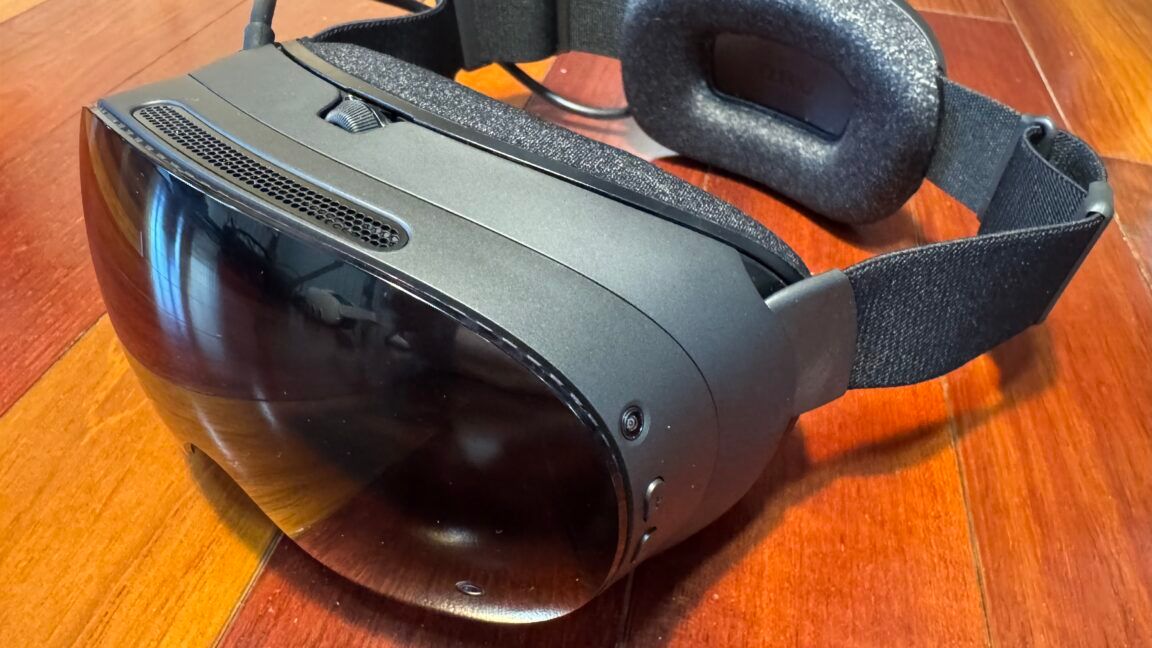

Valve’s first SteamOS 0.3.0 patch for Steam Frame speeds up charging, fixes a garbled microphone bug, improves controller tracking, and changes motion smoothing behavior before most buyers have the headset in hand.
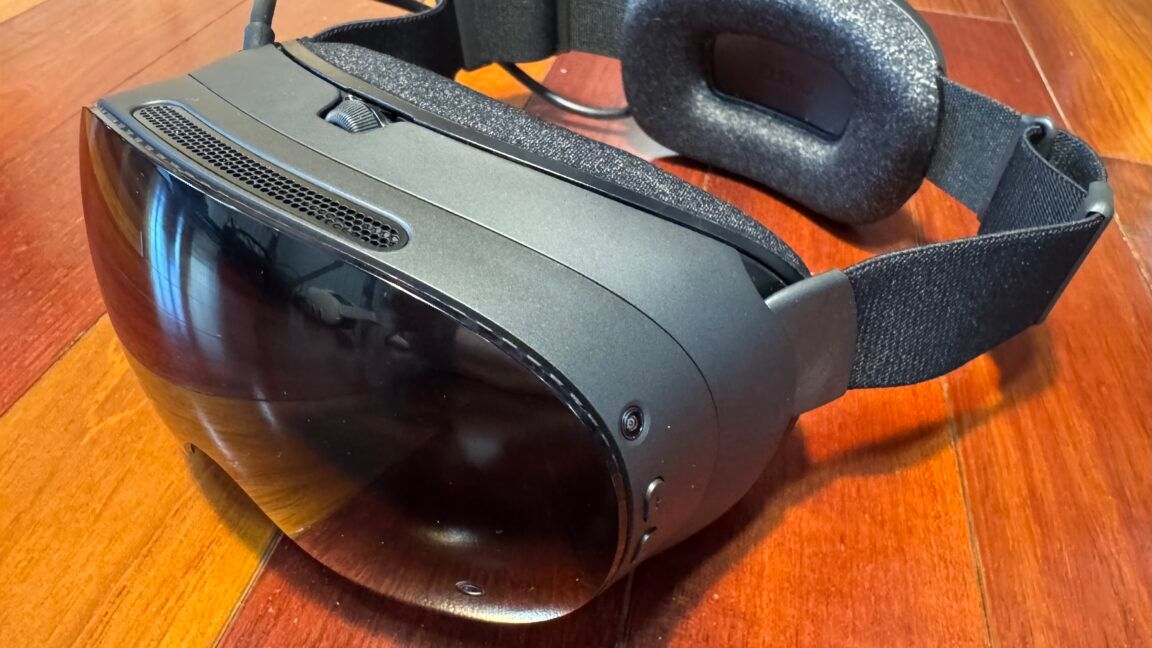
Image: archyde.com
Valve’s first Steam Frame patch targets the headset’s biggest practical weakness
Valve has released SteamOS 0.3.0 for Steam Frame, and the headline change is a charging fix that the official patch notes describe as “substantially faster charging while unit is off / sleeping.” That is the most concrete improvement in the Steam Frame update because it lands directly on one of the headset’s early pain points: reviewers found that the standalone VR headset could drain quickly, then take long enough to recharge that the next session was not always convenient.
Rock Paper Shotgun reports that SteamOS 0.3.0 is the first software update for Steam Frame after launch, and its official notes also include improved controller tracking while haptics are active, better stability and reliability under high load, and a fix for a “garbled audio” microphone bug. The same update adjusts motion smoothing, changes a play area behavior, and adds developer-facing compatibility and performance work.
The timing is unusual. Mixed reports that Steam Frame launched on September 14, with SteamOS 0.3.0 posted on September 17, but also notes that very few ordinary buyers can install it yet. According to Mixed, purchase emails for the US and Europe were set to begin going out on September 18, while Valve’s distributor KOMODO was already selling the headset directly in Japan, Taiwan, and Hong Kong. In practice, this Steam Frame patch is both a post-launch update and a pre-arrival correction for many early customers.
The Steam Frame charging fix changes the session economy
Valve’s patch note is brief, but the impact could be larger than the wording suggests. Steam Frame is a wireless VR headset built around a balancing act: local standalone play gives it independence from a PC, but battery life sets a hard ceiling on how long that independence lasts. Rock Paper Shotgun says battery longevity is not one of the headset’s strengths, and its review experience found Half-Life: Alyx in standalone mode could run the unit down from full in about an hour. VideoCardz, summarizing other early testing, cites Ars Technica at around 1.5 hours in Performance mode.
That makes charging speed part of the device’s real performance profile. In strategy terms, battery life is the resource cap, but recharge time is the respawn timer. A headset that drains quickly can still fit into a routine if it returns to playable condition quickly. A headset that drains quickly and charges slowly asks owners to plan around it.
Valve has confirmed only that charging is substantially faster while Steam Frame is off or sleeping. Mixed cites Valve’s spec sheet as listing USB-C charging at up to 45W. The Shortcut reports that the headset costs $1,059 for the 256GB model and $1,299 for the 1TB model, and says buyers must pay $29 for a separate charger because one is not included. That detail makes the charging fix more than a convenience tweak for owners. Anyone buying into a four-figure headset ecosystem will reasonably expect the power behavior to feel finished, especially when the recommended charger is a separate purchase.
Reported wattage tests suggest a bigger change than Valve’s note confirms
There is one important distinction in the Steam Frame charging fix: Valve’s own SteamOS 030 patch notes only promise faster charging while the headset is off or asleep. They do not publish before-and-after wattage numbers, and they do not explicitly say charging while actively playing has improved.
VideoCardz reports a more aggressive result, citing The Verge’s testing. According to that report, a depleted Steam Frame previously started charging at around 8W and peaked at 27W. After SteamOS 0.3.0, the same headset reportedly started around 19W to 21W and could reach up to 42W while a game was running. VideoCardz’s interpretation is that the update gives the headset enough power to begin using a depleted unit immediately while it remains connected to a charger.
That is a useful signal, but it should be treated differently from Valve’s own changelog. The confirmed claim is faster charging while off or sleeping. The reported field result is that active-use charging also improved in at least one test. If that behavior holds across chargers, battery states, thermals, and games, Steam Frame owners may find that the patch reduces both downtime and the frustration of hitting zero battery. If it varies, the safest expectation remains the one Valve published: sleep or power the unit down for the fastest recharge.
The microphone bug fix is real, but its scope is still narrow
SteamOS 0.3.0 also fixes what Valve calls a “garbled audio” microphone bug. That is the entire official description. The patch note confirms a software-side microphone problem existed and that Valve believes this release addresses it, but it does not explain how often it occurred, what triggered it, whether it affected recording, voice chat, streaming, or all microphone use, or whether any hardware variability was involved.
That matters because microphone complaints can be hard to diagnose from the outside. A garbled microphone can be caused by driver behavior, codec handling, bandwidth issues, app-level voice processing, sample rate mismatches, or a physical mic problem. Valve’s wording frames this as a bug fix, not a hardware revision. Rock Paper Shotgun’s writer says they did not personally encounter the garbled audio microphone bug, which suggests it was not necessarily universal across review use.
So does the Steam Frame microphone bug fix answer early hardware concerns? It answers one specific, named microphone defect if affected users were hearing garbled audio. It does not prove that every audio complaint has been solved, and it does not establish that there was a physical microphone flaw. For owners, the practical test is straightforward: update to SteamOS 0.3.0, record local voice or join a voice chat session, and compare clarity against the pre-patch behavior if they experienced the issue. For buyers still waiting on shipment, the better news is that this fix should be in the software path before many units reach homes.
Tracking, motion smoothing, and Alyx get targeted fixes
The rest of the Steam Frame patch points to the same pattern: Valve is sanding down problems that could make the headset feel inconsistent under load. The official notes say controller tracking has been improved while haptics are active. Mixed explains that this means tracking while the controllers vibrate, though Valve does not specify the size of the problem. For VR, that interaction is important because haptic feedback often happens during moments when hand precision matters, such as firing, grabbing, striking, or manipulating objects.
Valve also says SteamOS 0.3.0 improves system stability and reliability under high load. That is a broad claim, but it fits the pressure Steam Frame puts on SteamOS. A standalone VR headset has to keep frame pacing, tracking, input, audio, thermals, and battery behavior aligned in a way a traditional handheld or living-room box does not.
The UX changes are especially relevant to Half-Life: Alyx, which The Shortcut says is included with every Steam Frame purchase. Valve fixed a per-app Motion Smoothing setting where “Force Always-On” was being ignored, and the patch notes also list improved motion smoothing behavior in Alyx. Motion smoothing is one of the tools VR platforms use to make performance dips feel less jarring, so this is effectively a comfort and consistency fix, not simply a menu correction. The update also adds a VR Settings control for game dimming when the dashboard is visible and stops VR Settings, then Play Area, from automatically showing bounds.
The developer changes show Valve adjusting the rules early
SteamOS 0.3.0 includes developer-facing changes that may matter over the longer life of Steam Frame more than they matter on day one. Valve changed the Playable performance criteria to allow any resolution, where the previous requirement was 1440p. Mixed reports that change from the official notes, and it is a notable early adjustment because compatibility labels influence what players believe will run well on new hardware.
The update also includes Vulkan layer fixes for increased game compatibility, multiple improvements to overall system and OS performance, and multiple graphics performance improvements tied to Mesa, the open-source driver stack used by SteamOS. Those notes are broad, but they point toward the same strategy Valve used with Steam Deck: ship hardware, then keep improving the operating system, compatibility layers, and performance rules after launch. Rock Paper Shotgun notes that Valve has repeatedly said it plans to keep updating and expanding the feature sets of its 2026 hardware, and compares that approach to the Steam Deck’s post-launch evolution.
There is also a separate PC-side wrinkle. Mixed reports that SteamVR beta 2.17.10, released on September 15, fixed the same ignored Force Always-On setting, turned Contrast Adaptive Sharpening off by default for Steam Link streaming, fixed two AMD-on-Linux crash issues, and renamed the Steam Frame controller OpenXR shoulder input from “bumper” to “shoulder” while keeping old bindings working for compatibility. That is not the same release track as SteamOS 0.3.0 for the headset, but it shows Valve tightening both sides of the Frame ecosystem at once.
Should early buyers wait, update, or change charger plans?
If you already have a Steam Frame, SteamOS 0.3.0 looks like an update to install immediately. The confirmed improvements address charging, tracking during haptics, system stability under load, motion smoothing settings, Alyx behavior, and the garbled microphone bug. There is no downside described in the provided patch coverage, and several of the fixes hit issues that would be obvious in normal use.
If you are waiting for a unit, the patch slightly improves the early ownership outlook but does not erase every open question. Valve has confirmed substantially faster charging while off or sleeping, while VideoCardz’s account of The Verge’s testing suggests much higher charging wattage may also appear during active use. Those reported numbers are encouraging, but buyers should still plan around the official requirement for USB-C charging and the fact that The Shortcut reports the charger is sold separately.
For anyone deciding whether Steam Frame is ready, this first Steam Frame update is a good sign for cadence rather than a full verdict on maturity. Valve moved quickly on charging, microphone audio, tracking, motion smoothing, compatibility, and performance criteria. The unanswered questions are how consistent the new charging behavior is across chargers and workloads, how many users were affected by the microphone bug, and how rapidly Valve can keep improving a headset that depends heavily on SteamOS refinement. SteamOS 030 is a strong first patch because it attacks real friction, but it also confirms that early Steam Frame ownership will be shaped by updates as much as by the hardware that shipped.