
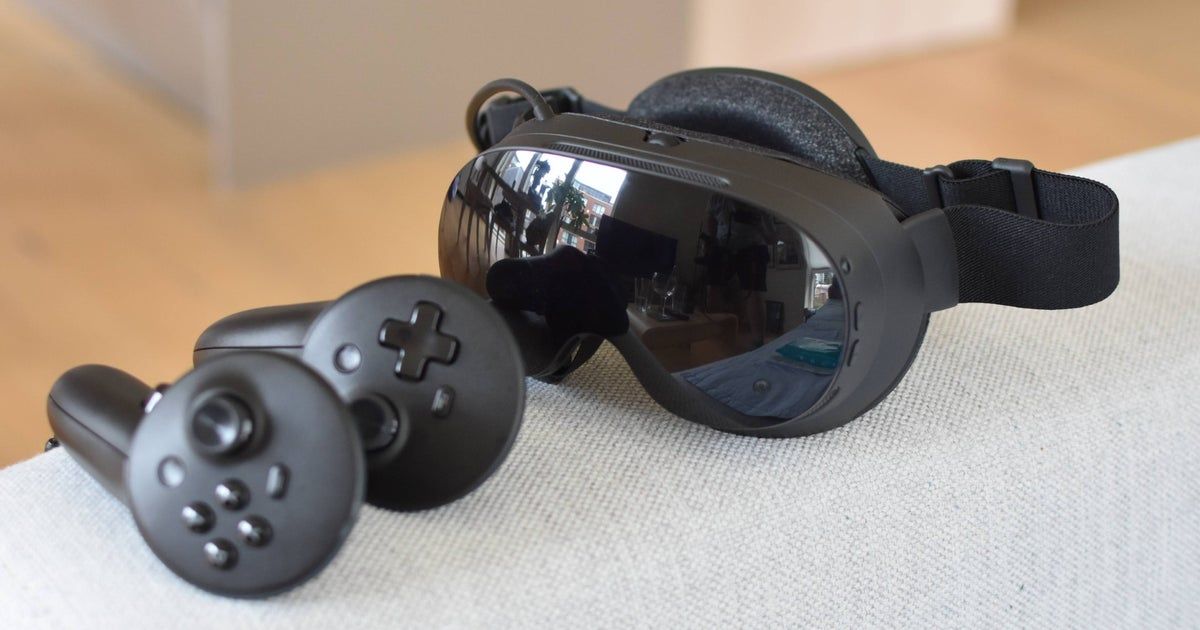

Valve’s rumored Steam Frame OLED sounds like a major display upgrade, but the reported prototype chatter leaves price, supply, performance, and timing unanswered.
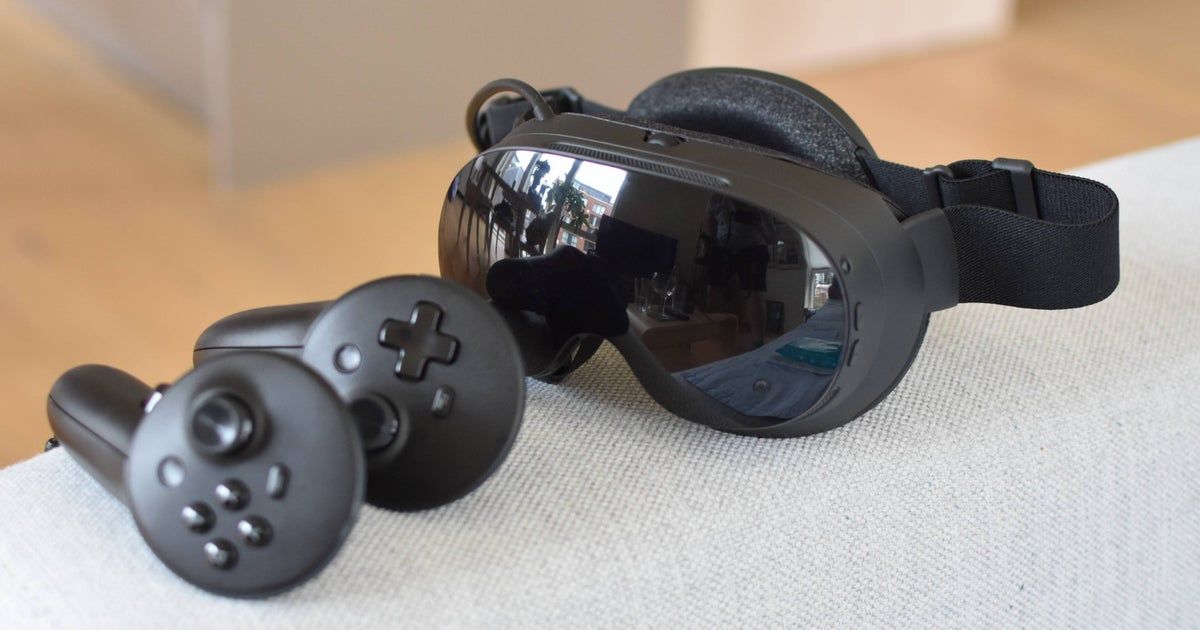
Image: eng.pressbee.net
Kernel-code clues point to OLED work, not an announced headset
The strongest concrete development around a possible Steam Frame OLED is not a product reveal, a store listing, or a Valve statement. It is a set of reported references in Valve’s publicly available Steam Frame Linux kernel source code, first surfaced by SteamFrameHub and then picked up by outlets including Rock Paper Shotgun, VideoCardz, PC Guide, Notebookcheck, and TwistedVoxel.
Those reports say the code points to an upgraded Valve VR headset variant using MicroOLED displays with a much higher per-eye resolution than the current Steam Frame headset. VideoCardz, PC Guide, Notebookcheck, and TwistedVoxel identify the device codename as “Plano,” while Rock Paper Shotgun refers to one related branch as “Planar.” That naming mismatch is worth keeping in view because it is a reminder of the state of the evidence: this is code archaeology around development branches, not a finished retail pitch.
The key buyer-facing fact is simpler. Valve has not announced a Steam Frame OLED, has not confirmed a Steam Frame upgrade path, and has not put an OLED model up for reservation. PC Guide explicitly notes there is no word on pricing or release date. Rock Paper Shotgun also raises the obvious alternative explanation, that this could be a failed or abandoned prototype, though it notes one related branch was updated on October 2 after the LCD Steam Frame opened for reservations.
That creates the tension. The reported display upgrade sounds meaningful enough to make early buyers hesitate, especially after the Steam Deck OLED proved Valve is willing to revise hardware in visible ways. But the evidence does not yet support treating the Valve Steam Frame OLED rumor as a shopping roadmap.
The rumored display would be a serious jump on paper
Across the reports, the alleged OLED model’s headline spec is consistent: 3,552 x 3,840 pixels per eye. VideoCardz, PC Guide, Notebookcheck, and TwistedVoxel all cite that figure from the SteamFrameHub findings. The current Steam Frame is described by those outlets as using 2,160 x 2,160 LCD panels per eye, so the rumored MicroOLED panels would carry close to three times the pixel count per eye, as Notebookcheck puts it.
The reports also say the rumored panels target up to 90Hz, with Valve reportedly experimenting with 120Hz support that is not yet functional. VideoCardz says the existing Steam Frame supports 72Hz to 144Hz, with the highest mode considered experimental. That makes the rumored Steam Frame OLED a more complicated display story than a pure spec-sheet win: higher native resolution and OLED contrast on one side, a lower reported working refresh ceiling on the other.
The resolution and 90Hz target are repeatedly compared to Samsung’s Galaxy XR. VideoCardz says the figures match Samsung’s Galaxy XR MicroOLED specifications, while Notebookcheck says SteamFrameHub speculates Valve could be sourcing panels from Sony or Samsung but adds there is no concrete evidence identifying the supplier. That is an important boundary. Matching specs do not prove a common supplier, and none of the provided reports show Valve confirming the panel source.
If the hardware ever ships, the appeal is easy to understand. Rock Paper Shotgun characterizes the current Frame’s lenses as “okay-not-amazing” and says an OLED version could make them sharper and more vibrant. Notebookcheck points to the superior contrast and black levels typically associated with OLED technology. For a headset, those traits matter because the display sits inches from the user’s eyes, and perceived clarity, contrast, and black level are part of the basic comfort and quality equation rather than a luxury flourish.
Resolution alone would not solve the performance problem
The most strategically important detail in the reports is not the panel resolution. It is the claim that the rumored OLED model keeps the same Qualcomm Snapdragon 8 Gen 3 processor as the current Steam Frame. VideoCardz, PC Guide, Notebookcheck, and TwistedVoxel all report that the alleged higher-resolution variant appears to retain that chip.
That matters because a native 3,552 x 3,840 image per eye is far heavier than the current 2,160 x 2,160 target. Notebookcheck says the alleged OLED version currently defaults to 1,776 x 1,920 pixels per eye because of Adreno 750 display bandwidth limitations. VideoCardz similarly reports a default output resolution of 1,776 x 1,920 per eye, an experimental 1.5x scaling mode at 2,368 x 2,560, and full native panel support still under development.
In other words, the rumored Steam Frame OLED may have panels capable of far more detail than the system routinely renders. That is not unusual in modern display design, but it does change the buying calculus. A higher-resolution panel can improve perceived image structure, color, contrast, and optics, yet it does not automatically mean every standalone VR game runs at that panel’s native resolution.
The possible bridge is the reported foveated scaling feature. VideoCardz says the code includes “fovial scaling,” apparently referring to foveated scaling. Notebookcheck describes it as a display-controller-level technique that scales individual portions of an image, aiming to increase perceived sharpness around the user’s focal point without rendering the whole image at native resolution. TwistedVoxel also distinguishes it from foveated rendering, saying it operates at the display level rather than by adjusting graphical detail inside games.
That is the kind of engineering answer Valve would need if it wants a Steam Frame OLED to feel sharper without crushing the same mobile-class chip. It is also still reported development work, not a confirmed feature. Until Valve explains the method, supported modes, latency behavior, and game compatibility, foveated scaling should be treated as a promising signal rather than a guaranteed fix.
OLED would polish the visible weakness, not the supply and price fight
The display rumor lands in an awkward market position for Valve. Rock Paper Shotgun argues that the current Steam Frame’s larger problems are pricing and availability, not black levels. The outlet attributes that pressure to RAM shortages and rising component prices, saying the headset ended up costing hundreds more than originally expected while Valve works to build enough units to satisfy demand.
The price context is severe. Rock Paper Shotgun’s earlier coverage, referenced in its OLED piece, put the cheapest model at £889 / $1,059. TwistedVoxel says the original Steam Frame model launched on September 14, 2026, priced at $1,059 for the 256GB kit and $1,299 for the 1TB kit. Those figures already place the current headset well beyond the consumer impulse-buy zone.
A Steam Frame OLED would be unlikely to ease that. Rock Paper Shotgun argues that an OLED version would compete with the LCD model for the same costly RAM and SSD parts rather than increase total supply. It also points to the Steam Deck OLED precedent as a reason to expect a higher price, not a cheaper replacement. The same article notes Samsung’s Galaxy VR at £1,699, £610 above the priciest Frame in its comparison, while TwistedVoxel says the upgraded headset may potentially cost as much as Samsung’s Galaxy XR or more.
Battery life also sits outside the display-only solution set. TwistedVoxel’s source text says reviews praised the original Steam Frame for some strong ideas but criticized it for price and battery life. An OLED panel can improve image quality, but the supplied reports do not say it would improve battery endurance. If anything, the reported higher-resolution target raises more questions about power, heat, and performance management, especially if the same Snapdragon 8 Gen 3 remains in place.
That is the core tradeoff. The rumored OLED display would address one of the most visible premium-headset concerns, image quality. It would not, based on the available reporting, answer the harder questions around affordability, supply, battery life, or standalone rendering headroom.
The Steam Deck OLED precedent cuts both ways
The Steam Deck OLED is the obvious comparison because Valve has already used OLED as a mid-cycle hardware upgrade. Rock Paper Shotgun calls the Steam Deck OLED a very nice upgrade over the original Deck and says a Steam Frame OLED could be a similar kind of improvement if it replaces the standard Frame’s current lenses with sharper, more vibrant ones.
That comparison is useful, but it should not be stretched too far. The Steam Deck OLED was a real announced product with known specifications, pricing, and availability. The Steam Frame OLED is, at this stage, a reported development branch and panel configuration. The existence of code references can show experimentation, but it does not prove a commercial release plan.
It also does not prove timing. TwistedVoxel reports that the project appears to remain in development and may not arrive until late 2027 at the earliest. PC Guide says there is no word on pricing or release date. Those two claims can coexist: one is a reported expectation, the other is the harder public fact that Valve has not dated or priced anything.
From a strategy perspective, this is where buyers can get trapped. Hardware rumors create an imaginary future SKU with all the upside and none of the compromises. The actual reports already contain compromises: same alleged processor, lower default rendered resolution than the current Frame’s panel resolution, unresolved full-native support, and unconfirmed 120Hz. The rumored product may end up compelling, but it is not currently a clean successor with known advantages across every axis.
Waiting only makes sense for a narrow kind of buyer right now
PC Gamer’s headline on the rumor captures the early community reaction: some Reddit users are already wondering whether to wait for a possible Steam Frame OLED even though it may never happen. That is understandable. No one wants to buy expensive hardware and watch a better model appear shortly after.
But the reported facts do not support a broad recommendation to delay. If you are already interested in the current Steam Frame headset, can get one at a price you accept, and care about Valve’s standalone VR and PC streaming ecosystem more than peak display quality, the Steam Frame OLED rumor alone is a weak reason to pause. There is no announced OLED SKU, no official upgrade program, no confirmed launch window, and no confirmed price.
Waiting is more rational if display quality is your main blocker. If LCD black levels, sharpness, or panel technology are dealbreakers for you, the reported MicroOLED work is a signal that Valve has at least explored a higher-end display configuration. In that case, patience may protect you from buyer’s remorse. Even then, you are waiting on an unannounced device that could change, slip, become prohibitively expensive, or never ship.
The practical move is to watch for confirmation points rather than treat the rumor as confirmation by repetition. A real Steam Frame upgrade story would need Valve to name the hardware, explain whether it is a replacement or premium tier, disclose the SoC and battery expectations, list supported display modes, and price it against the current $1,059 and $1,299 kits cited by TwistedVoxel. Until then, the Valve Steam Frame OLED rumor is best read as a credible engineering signal with major unanswered commercial questions.
The display upgrade would be exciting, but the hard questions remain
The most interesting version of a Steam Frame OLED is easy to imagine: MicroOLED panels with far better contrast, higher perceived sharpness through foveated scaling, and a premium revision that mirrors the Steam Deck OLED playbook. The reported code details give that idea enough substance to be worth following.
The less convenient reading is also the more useful one for buyers. A better display would improve the part of the headset you stare at every second, but it would not automatically fix the economics of an expensive Valve VR headset. It would not increase RAM and SSD supply. It would not confirm better battery life. It would not erase the performance cost of higher-resolution panels on the same reported Snapdragon 8 Gen 3 chip.
For now, the smart position is neither hype nor dismissal. The Steam Frame OLED chatter is specific enough to matter, especially because multiple outlets are pointing back to public kernel-source findings. It is also incomplete enough that buyers should not treat it as a scheduled product. If Valve confirms it, the conversation changes immediately. Until then, the current Steam Frame should be judged on the hardware Valve is actually selling or reserving, not on the best-case version implied by development branches.