
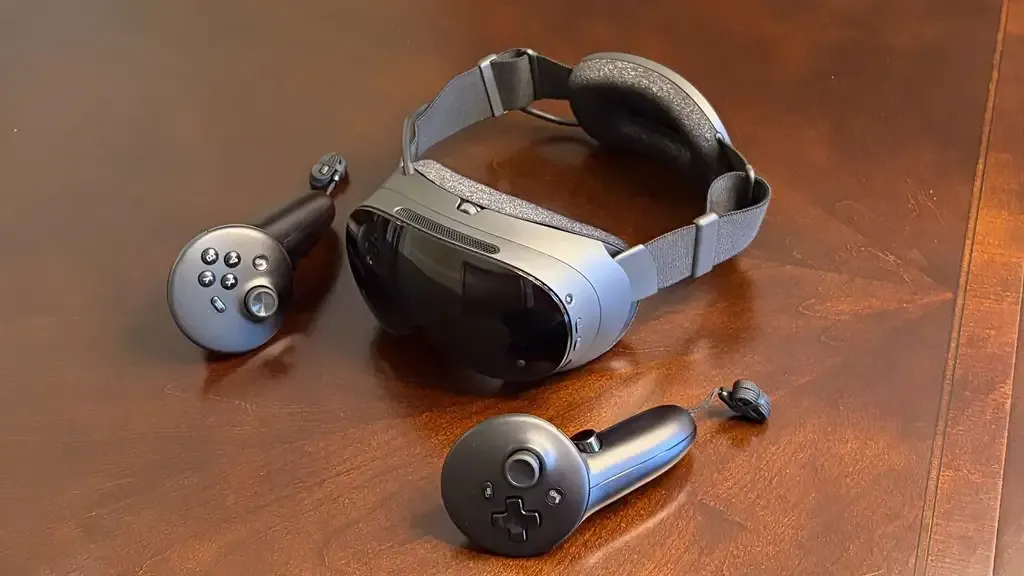

Valve enabled external CD-ROM drive support in the Steam Frame kernel minutes after acknowledging a forum request, but the feature is not yet in an official SteamOS update.
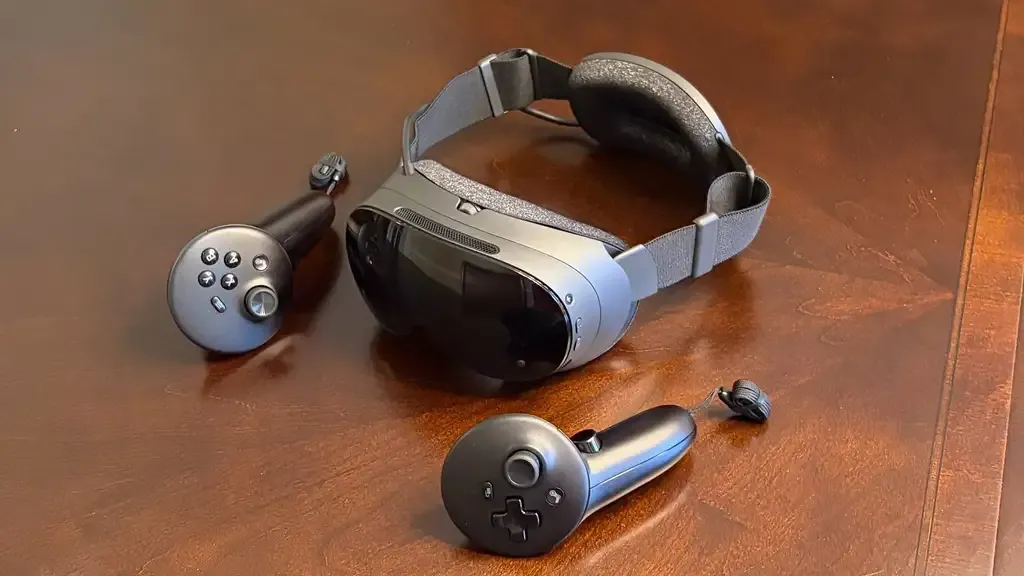
Image: mezha.net
Valve moved fast, but the feature is not on headsets yet
Valve has enabled external CD-ROM drive support in the Steam Frame kernel source after a Steam Community user asked why the headset could not read a detachable optical drive. The notable part is the timing: according to Rock Paper Shotgun and Output Lag, a Valve developer replied that the team would look into the request, and a related kernel commit appeared roughly ten minutes later.
That makes this a clean example of Valve’s hardware software loop at work, but it also creates the important caveat. The change is confirmed in Valve’s public kernel source, not in a released SteamOS build for every Steam Frame owner. Digital Citizen reports that Valve has not confirmed when the Steam Frame CD-ROM support will arrive through an official update, and Tbreak similarly notes that users should not expect a plug-in drive to work out of the box today.
The commit matters because it lowers one barrier for people trying to use physical media with the headset. It does not, by itself, guarantee that every USB optical drive will draw enough power, that every disc format will be usable, or that old PC game installers will behave cleanly once the disc is readable.
The request came from a very specific physical-media problem
The chain started with a Steam Community post by a user named Aiodensghost, cited by Rock Paper Shotgun, Digital Citizen, Tbreak, and Output Lag. The user wanted to connect an external optical drive to a Steam Frame to watch a movie while traveling and install Need for Speed Carbon from disc. Rock Paper Shotgun quotes the post as saying the missing support “KILLED MY ABILITY TO INSTALL MY ABANDONWARE FROM 2006,” followed by a request for optical drive support.
The complaint sits at the intersection of two trends PC players know too well. Physical PC games still exist in closets, binders, and storage boxes, while modern PCs often ship without internal disc drives. Rock Paper Shotgun points out that internal drives are now uncommon in desktops and laptops, making external drives the practical route for anyone trying to access older CDs, DVDs, or Blu-rays.
Steam Frame adds a stranger twist to that familiar problem. The headset can run VR and “flat” games without a separate PC, according to Rock Paper Shotgun, so users are naturally going to test how far that standalone promise extends. A detachable optical drive is an odd accessory for a headset, but it is not an irrational one if the goal is to access an old disc without involving another machine.
What Valve changed in the Steam Frame kernel
The confirmed technical change is narrow. Output Lag reports that Valve developer Gabe Rowe, posting as gaberowe, replied on October 19, “we will look into this thanks for alerting us.” Output Lag says the Steam forum reply was stamped 12:43pm, while the GitHub commit was stamped 19:51 UTC, which it identifies as 12:51pm Pacific, the default timezone shown by Steam forum posts.
The commit is in Valve’s deckard-linux-no-oopsies GitHub repository, which Rock Paper Shotgun identifies as the Linux kernel sources used in SteamOS for Steam Frame. Output Lag reports that the commit message reads: “gabe_defconfig: add support for cdrom drives for parity with steamdeck/machine.”
Output Lag also breaks down the change as three kernel configuration flags enabled as loadable modules: CONFIG_CDROM, CONFIG_BLK_DEV_SR, and CONFIG_CHR_DEV_SG. In practical terms, those cover the generic CD-ROM layer, the SCSI CD-ROM block driver used by many USB optical drives, and the SCSI generic interface that disc tools can use. No outlet in the provided material reports that Valve wrote a new optical drive driver from scratch. The reported change is Valve turning on existing Linux kernel functionality for the Steam Frame’s configuration.
The speed is getting attention because the fix was small, visible, and useful
The Steam Frame kernel update is not a sweeping platform revision. That is part of why the turnaround landed so well. According to Digital Citizen, the change was implemented in less than ten minutes after the request was acknowledged, and the source material consistently describes it as enabling an existing Linux feature rather than building a new stack.
From a strategy perspective, that distinction matters. Fast platform support is easiest when a user request matches dormant capability that already exists upstream. Valve did not have to invent optical media support for Linux. It had to decide that this edge case was worth enabling for Steam Frame, align the headset’s configuration with Steam Deck and Steam Machine behavior, and push the commit.
That is still meaningful for early hardware owners. Small compatibility gaps shape how enthusiasts judge an open-feeling device. A missing kernel option can turn an otherwise capable standalone system into a walled appliance for a particular use case. Enabling that option tells tinkerers that at least some low-level omissions may be addressed when they are clearly surfaced and technically straightforward.
External CD-ROM Steam Frame support could help retro PC owners, with limits
For retro PC game owners, the immediate appeal is obvious: if the headset can read an external optical drive, a disc-based game can at least become visible to the system. Aiodensghost’s cited example, Need for Speed Carbon, is a useful case because the user framed it as a game they could not buy through normal digital storefronts, a detail also reported by Digital Citizen and Tbreak.
Still, disc access is only the opening move. Digital Citizen notes that software compatibility does not automatically solve hardware limitations, including insufficient power delivery. Output Lag reports that the original user hit two issues: the Frame could not power the drive, and it lacked drivers to read a disc. Valve’s kernel commit addresses the driver side reported by the sources, but the power question remains open in the provided material.
There is also a content gap. A kernel recognizing a CD-ROM drive does not confirm broad support for every optical media scenario. The sources discuss CDs and external optical drives, and the user wanted movies as well as a PC game disc. None of the provided sources confirms DVD video playback behavior, Blu-ray support, disc DRM handling, old Windows installer compatibility, or whether every external drive model will work reliably with Steam Frame once the official update arrives.
Tinkerers can move first, ordinary users should wait
Rock Paper Shotgun reports that more experienced Steam Frame users could hypothetically install the updated kernel themselves, since the commit enables an existing Linux kernel feature. Tbreak and Digital Citizen make the same practical split: technically confident owners may be able to build or install the modified kernel, while ordinary users will need to wait for Valve to ship it through a SteamOS update.
That wait is the sensible path for most people. A public source commit is not the same as a tested consumer rollout. Valve may still need to package the modules, run device compatibility checks, and decide how it wants the feature exposed in SteamOS. Digital Citizen states that Valve has not announced a release date for official availability.
If your goal is simply to connect an external CD-ROM Steam Frame setup for old discs, the current status is therefore conditional. The capability has been added to the kernel source. It has not been confirmed as available on retail headsets through normal updates. And even after release, users should expect external drive power and individual disc behavior to be the real compatibility tests.
A small kernel switch hints at Valve’s broader hardware posture
The strongest read on this Valve Steam Frame update is not that optical drives are suddenly central to VR. They are not, based on the use case described in the sources. The stronger signal is that Steam Frame appears to share enough of Valve’s Linux hardware philosophy that a niche compatibility request can be handled through public kernel configuration rather than treated as outside the device’s purpose.
Output Lag’s reported commit message explicitly points to parity with Steam Deck and Steam Machine. That is the strategic thread. Steam Deck trained users to expect PC-like flexibility from Valve hardware, even when that flexibility involves strange peripherals and old software. Steam Frame is a headset, but the expectation follows Valve’s ecosystem: if it runs SteamOS and can operate standalone, some users will try to make it behave like a small PC strapped to their face.
The open question is how far Valve wants to support that behavior in practice. The Steam Frame compatibility story will be shaped less by headline features than by these small edges: which drivers are enabled, which peripherals work, how quickly forum reports become fixes, and how much of Steam Deck’s repairable, moddable culture survives the move into standalone VR hardware.