
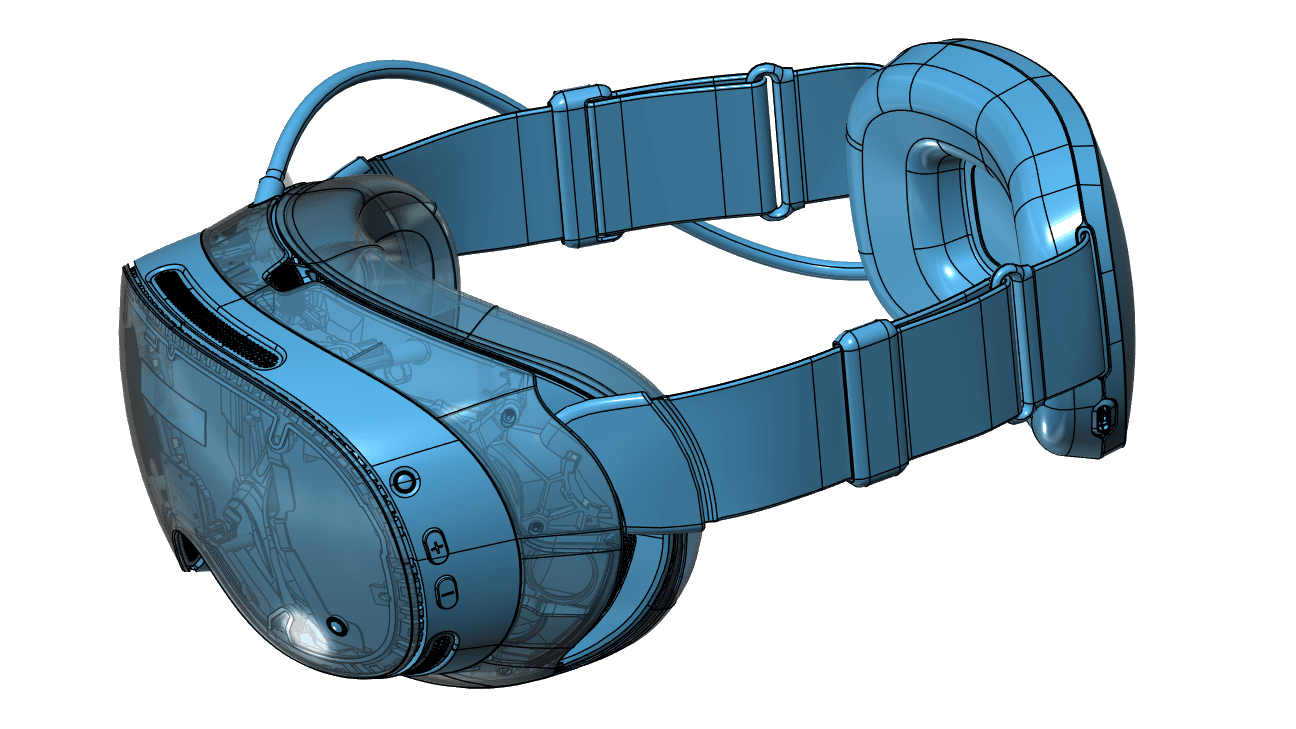

Valve has published Steam Frame CAD files and hardware references, giving modders a head start while raising questions about warranties, commercial accessories, and early headset availability.
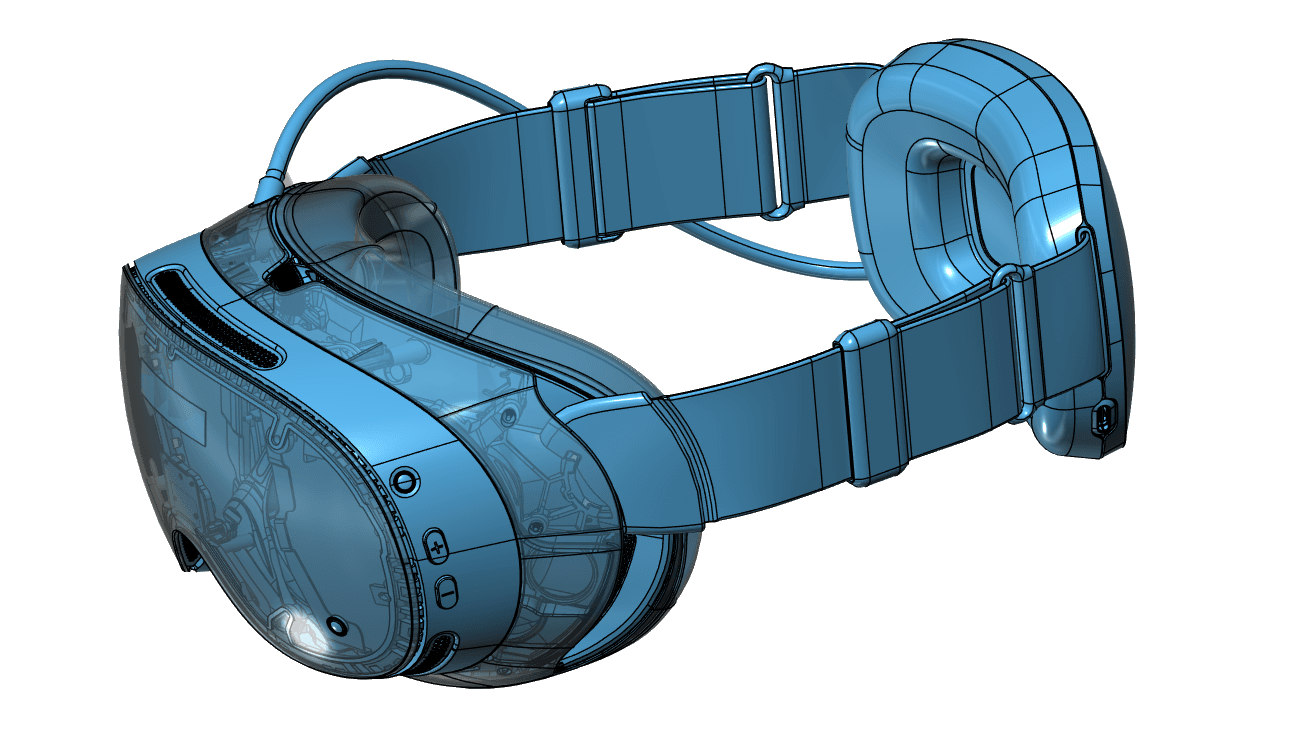
Image: newsy-today.com
Valve publishes the files, and the accessory race starts early
Valve has released Steam Frame CAD files through its Steam Hardware Git repository, giving owners, hobbyists, and accessory designers official reference material for building around the Steam Frame headset. The immediate tension is clear: Valve is inviting a modding ecosystem to form around a new VR device while also warning that the files are informational, subject to change, and licensed for non-commercial use unless partners make a separate arrangement with Valve.
Rock Paper Shotgun reported that Valve posted the files after announcing the headset, and noted that the release allows people with tools such as 3D printers, lathes, or injection moulding setups to build physical add-ons from official measurements rather than guesswork. Hackaday framed the practical benefit even more directly: makers no longer need to 3D scan the headset or use calipers before designing a fitting accessory.
That matters because the Steam Frame community has already begun behaving like a PC hardware community rather than a closed-console audience. Rock Paper Shotgun pointed to early DIY projects from first-wave recipients, including wrist strap variants, battery holders, light blocker extensions, and a lifesize skull stand. Some are practical, some are experimental, and some appear to be knowingly rough. The important development is that Valve has now given those projects a more reliable starting grid.
What is actually in Valve’s Steam Frame hardware repository
The strongest confirmed detail is that Valve’s repository includes more than decorative shell geometry. According to Hackaday, it contains STEP format models of the VR core module, head strap, and controllers. Hackaday also reported that the controller files document the location of embedded IR tracking LEDs, which is critical for anyone designing grips, shells, straps, or mounts that could accidentally block tracking.
Hackster.io reported that Valve’s release includes “stripped-down CAD” for the Steam Frame core module and headstrap, CAD files for controller accessories, Altium design files for a simple USB 3.0 hub accessory example, and KiCad design files for a cut-down minimal version of that hub. That distinction is worth keeping: this is not a public dump of every manufacturing secret inside the headset. The available material is enough to design around the device and its interfaces, but Hackster describes it as stripped-down reference material rather than a full production archive.
The repository also documents the Steam Frame’s front hardware expansion port. Hackaday reported that the port exposes two interfaces, high-speed MIPI camera and PCI Express, and that Valve included reference design material in both KiCad and Altium. Hackster similarly described the release as including initial details for the hardware expansion port and reference accessory designs. For hardware modders, that turns the Steam Frame from a sealed headset into something closer to a platform with defined attachment points and electrical assumptions, provided they accept the risks.
The license is open to tinkerers, but not a free commercial lane
Valve’s move should be read as mod-friendly, not as a blanket invitation for every accessory seller to start printing Steam Frame parts for profit. Hackster.io reported that the files are available under the Creative Commons Attribution-NonCommercial-ShareAlike 4.0 International license. GamingOnLinux also reported that the CAD files are for non-commercial use and that commercial use requires speaking directly to Valve.
That creates a predictable split in the early Steam Frame accessory scene. Owners with printers can use the Steam Frame CAD files to make personal mods, test fitments, or iterate on comfort upgrades. Community designers can share models under the same non-commercial framework. A company hoping to sell Valve Steam Frame accessories at scale has a different problem: it needs either Valve’s permission or a separate commercial path.
Valve’s own warning, quoted by Hackster.io, is also explicit about risk. The company says the reference material is provided on an AS-IS basis, that Valve may change hardware designs, and that Valve is not responsible for damage caused by mechanical or electrical interfaces that are not “Steam Frame Compatible.” Hackster also reported that Valve warns warranties may be void. That is the real strategic tradeoff in this ecosystem. Valve is lowering the information cost for modding, but it is not absorbing the support cost for every printed clip, battery mount, electrical add-on, or opened headset.
The first wave of Steam Frame mods is solving obvious pain points
The early accessory ideas reported by Rock Paper Shotgun show where the community thinks the Steam Frame needs help first: battery life, controller comfort, light blocking, and storage or display. RPS highlighted Boneyard Lab’s back-mounted power bank holder as a direct response to what it called the Frame’s brief battery life. The appeal is straightforward. A rear or shoulder-mounted battery can extend play sessions without adding weight to the headset’s main front assembly, which is the kind of ergonomic math VR owners notice immediately.
Controller straps are another early target. Rock Paper Shotgun noted that Valve’s Ergonomic Accessories Kit is the official way to upgrade the Steam Frame controller straps, with a reported price of £59. That price gives DIY strap projects a clear opening. RPS pointed to multiple “HackStrap” variants on MakerWorld and an ergonomic strap design by Wrathernaut on Printables. In a headset ecosystem, comfort accessories often become meta-defining hardware: the default controller may be acceptable, but the mod that reduces hand fatigue becomes the one people recommend.
The light blocker designs are more complicated. Rock Paper Shotgun was cautious about 3D-printed light blocker extensions because lower-end prints can create rough surfaces that would sit near a user’s nose and face. That is not a trivial complaint. Steam Frame 3D printing will be attractive because it is fast and cheap, but VR accessories touch skin, distribute weight, and sit around eyes and tracking systems. A badly finished part can be uncomfortable even if it technically fits the CAD model.
Then there are the weirder experiments. RPS cited Save-The-Baja’s Frame controller chest rig, while noting the project’s own description acknowledged a loose grip and sharp edges. Those caveats are useful because they separate fun community invention from buyer-ready accessories. Early mod scenes thrive on odd prototypes, but owners should treat community files as experiments until there is evidence of comfort, durability, and tracking safety.
The expansion port hints at a bigger hardware strategy
Valve appears to be encouraging two accessory tracks at once. The first is the familiar maker layer: printed straps, cases, stands, mounts, and comfort parts. The second is a deeper hardware layer built around the expansion port. Hackaday reported that the Steam Frame’s front expansion port exposes MIPI camera and PCI Express. Hackster.io noted that Valve has already published interface details and USB hub reference designs, and also pointed to Arcturus Vision’s full-color pass-through camera system as a third-party accessory announced for the headset.
That combination suggests Valve wants Steam Frame mods to extend beyond plastic ergonomics. A front-facing expansion interface with high-speed camera and PCIe access gives accessory makers a route to more ambitious add-ons, though the sources do not confirm final commercial products beyond the reported Arcturus Vision example. The repository gives designers a development map, but Valve’s warnings mean the map can still change.
The headset’s broader positioning reinforces that reading. Hackster.io reported that Steam Frame uses a Qualcomm Snapdragon 8 Gen 3 processor with 16GB of LPDDR5X memory and 256GB or 1TB of storage, while Valve is positioning it as “streaming-first” for use with a more powerful PC or laptop and dual 2,160 by 2,160 displays. Hackster also reported that its Arch Linux-based operating system includes a compatibility layer for Android-based games written for devices like Meta Quest. In other words, Valve is building a device that sits between standalone VR, PC streaming, and mod-friendly hardware.
From a strategy perspective, releasing reference files early helps Valve recruit the ecosystem before the installed base fully forms. Accessory makers can work while hardware is still scarce, and modders can identify pain points before the broader wave of owners arrives. The risk is that any hardware change could strand early designs, which Valve has already reserved the right to do.
Availability may shape the mod scene as much as the files do
The Steam Frame accessory economy is forming while access to the headset remains uneven. GamingOnLinux reported that Valve updated the Steam Frame page so reservation holders can see whether they should expect to receive a unit by December 2026 or sometime in 2027. The same report said Valve will give more information by January to those pushed into 2027, and reminded buyers that they have 72 hours to purchase after receiving the email or the opportunity passes to someone else.
That timing affects both owners and modders. People who already have a headset can prototype against real hardware. People still waiting can study the repository, design around the STEP files, and prepare prints, but they cannot fully validate fit, comfort, tracking, or material choices until a unit is in hand. Hackaday suggested waitlisted users could browse the repository and start planning customizations, which is sensible as long as those users treat early designs as drafts.
GamingOnLinux also described the rollout as rough, reflecting frustration around reservations and waitlist uncertainty. That frustration can cut two ways. Scarcity slows the number of real-world testers, but it can also intensify community attention around each useful accessory file. If a battery mount or strap upgrade proves effective among early recipients, it may become a default recommendation by the time later buyers receive their headsets.
Practical guidance for Steam Frame owners and early makers
For owners, the safest first wave of Steam Frame mods will be external, reversible, and mechanically simple. Stands, carrying solutions, controller strap adapters, and battery holders are easier to evaluate than electrical expansion accessories or parts that sit against the face. Valve’s repository can help with fit, but it does not guarantee comfort, print quality, or warranty safety.
For anyone planning Steam Frame 3D printing, the important questions are practical. Does the part avoid IR tracking LEDs, which Hackaday says Valve has documented in the controller files? Does it add weight to the headset in a way that worsens comfort? Does it touch skin, and if so, has the print been finished to avoid abrasion? Does it place stress on clips, ports, or housings that Valve has not certified for that use? The official CAD files reduce guesswork, but they do not turn every downloaded model into a good accessory.
For accessory makers, the commercial boundary is the central constraint. The sources consistently describe the files as non-commercial unless Valve grants separate permission. That means the most durable early business path may belong to makers who pursue Valve-compatible certification or direct licensing, while community sharing fills the gap for personal-use parts. Unlicensed storefront activity may appear, as GamingOnLinux anticipated, but the provided sources do not establish that such sellers have permission.
The Steam Frame CAD files are best understood as Valve opening the board for play before the first full accessory meta has settled. Owners get better odds of useful comfort and battery solutions. Modders get cleaner measurements and documented interfaces. Commercial accessory makers get a signal that Valve wants an ecosystem, but also a warning that the rules are not a free-for-all. The next phase will be decided less by the existence of the files than by which community designs prove comfortable, safe, and repeatable once more headsets leave the reservation queue.