
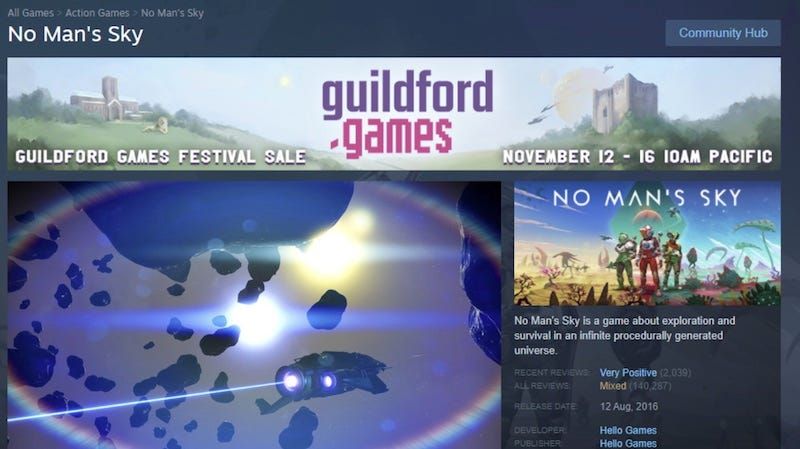

Valve is moving Steam Discounts and Events away from a manually curated homepage calendar toward personalized recommendations, a 2026 Steam update that could reshape how players find deals and how developers get traffic.
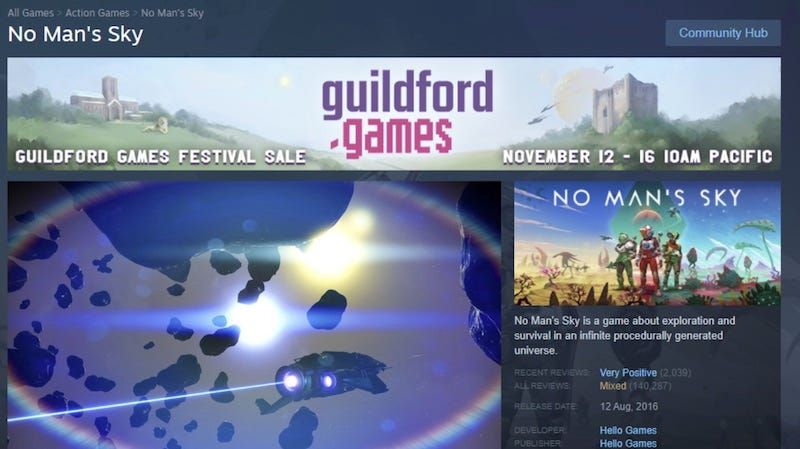
Image: newsletter.gamediscover.co
Valve is turning a prime Steam sale slot into a personalized feed
Valve is changing the Steam Discounts and Events section on the Steam homepage from a manually managed merchandising area into a more dynamic, personalized recommendation feed. In a Steamworks announcement cited by Rock Paper Shotgun and Game Developer, Valve said it has spent the past few months experimenting with replacing some curated spots with recommendations tailored to each customer.
That is the concrete shift: one of the most visible sale discovery areas on Steam is moving away from the same planned calendar for broad groups of users and toward the Steam algorithm deciding which discounted games and events each account is likely to see.
Valve’s stated goal, according to its Steamworks post, is “to show the right game to the right customer.” The company said the test version of this approach showed “10x more games to customers in a given day” in the Discounts and Events section, and that it saw “meaningful increases in store page visits, wishlists, and cart additions.”
The tension is obvious. For players, this could make Steam sale discovery feel less like checking a storefront billboard and more like scrolling a recommendation system. For developers, it could open traffic to games that rarely benefited from Valve’s limited curated slots, while also making visibility more dependent on algorithmic matching that Valve has not fully detailed.
What is actually changing on the Valve Steam homepage
The Discounts and Events row sits below higher-profile homepage areas such as the large ad banner and featured recommendations, according to Rock Paper Shotgun’s description of the current store layout. Until now, that section has been handled through a curated or calendar-based model. Game Developer reports that Valve currently rotates games in and out itself or allows placements to be scheduled directly by partners through Steamworks.
Valve now says that constraint no longer fits a storefront with broad customer tastes and a large volume of relevant deals available at any time. In the company’s framing, a manually managed calendar can show only a limited slate of games, while an algorithmic feed can serve different games to different customers based on likely interest.
The change does not mean every visible sale on Steam becomes automated overnight. Game Developer reports that Valve has paused scheduling new curated placements for the page, but developers with already scheduled slots will keep them. Valve also said it plans new and updated tools to help developers manage discounts and sale events on Steam, with the stated aim of reducing the need for developers to convince someone at Valve to feature their products.
Timing is still partly open. Valve said it does not have a definite date for implementing the full change and is still tuning details. Game Developer reports that Valve expects to share more timing information in the coming weeks, with early next year described as the rough estimate for the total stoppage of the curated calendar. So the confirmed Steam update 2026 is the direction and testing result, while the full rollout schedule remains unfinished.
The discovery upside is real, especially for games outside the bestseller lane
The strongest argument for the new Steam algorithm is reach. Valve says its testing allowed the Discounts and Events section to show ten times as many games to customers in a given day. That matters because a fixed homepage calendar is a scarcity system: a small number of tiles can dominate attention, and the games most likely to justify broad placement are often already visible elsewhere on Steam.
Game Developer’s reporting adds an early developer-side example. It cites GameDiscoverCo founder Simon Carless observing in September that the Discounts and Events page had become more personalized, a change he described as helpful for smaller games. Game Developer also reports that Hooded Horse’s Bender posted screenshots for an unnamed game showing the Discounts and Events page drove more than 7,000 Steam store visits in one month, compared with 7,355 visits over the prior six months combined. According to the quoted post, only 14 of those visits came from the earlier five-month stretch.
That single example should not be treated as a universal outcome. It is one reported data point from one unnamed game, and Valve has not published a public breakdown of which genres, prices, discount levels, or release windows benefited most in testing. Still, it illustrates the strategic promise of the change. If Steam can match niche games to players already signaling interest through play history, wishlists, purchases, or related browsing behavior, a section that previously felt irrelevant to many smaller developers could become a meaningful traffic source.
This is where the storefront meta shifts. Under a calendar model, the best move for a studio was partly about timing, pitching, and securing a slot. Under a personalized model, the long-term value may move toward clearer tagging, better discount planning, stronger wishlist conversion, and making sure Steam understands the audience a game is built for.
The risk is that the new gatekeeper becomes harder to read
A curated calendar has limits, but at least the rules are visible in a practical sense: a game either gets a placement or it does not. An algorithmic Discounts and Events feed changes the shape of uncertainty. Developers may get access to more potential traffic, but they may also have less ability to predict when and why Steam surfaces their game.
Rock Paper Shotgun raised the key concern directly: who will Steam reward, and who will it punish? Valve’s public statement says it has confidence the new approach is better aligned with its goals and will produce better outcomes for customers and developers, while also admitting the system will not be perfect right away. That caveat is important. Algorithmic discovery systems can improve relevance, but they can also amplify games that already send strong signals, miss unusual audiences, or create feedback loops where early engagement determines later visibility.
The available source material does not specify exactly which signals Valve is using for this version of Discounts and Events. Tech Insider reports that the feed appeared to account for factors such as what users have played, wishlisted, and bought, and frames the change as similar to recommendation systems used by streaming and music services. That should be treated as reporting and interpretation of observed behavior rather than a full Valve-authored technical explanation.
For developers, the unanswered questions are practical rather than philosophical. How much does discount depth matter? Does recent wishlist velocity help? Are older games given a fair shot when they discount, or does the feed favor titles with current engagement? How does Steam avoid burying games with smaller but highly committed audiences? Valve says more details are coming, but for now the system’s logic remains partly opaque.
How this could change the way players browse Steam sales
For players, the immediate effect is simple: the Steam Discounts and Events section may no longer be a shared view of the same notable sales. If Valve’s personalized feed becomes the default, two people opening the Valve Steam homepage during the same sale may see meaningfully different games.
That can be useful. A strategy player who buys grand strategy, colony sims, and tactical RPGs may see deeper cuts from those niches instead of the same broad-market hits everyone already knows about. A player who keeps wishlisting management games may get sale tiles closer to their actual backlog plans. In that sense, the Steam algorithm could reduce the wasted space that comes from showing the same homepage deals to customers with very different libraries.
The tradeoff is that personalized feeds can make sales feel complete when they are actually selective. A game missing from your Discounts and Events row is not necessarily absent from the sale. It may simply be outside what Steam thinks you are most likely to click. The practical habit change is to treat the section as a recommendation layer, not as the full map of available discounts.
Players who want the best read on a sale should still check their wishlist, search directly for games they are tracking, browse by genre or tag, and compare the homepage feed against the wider store. Valve’s own test metrics included increased store page visits, wishlists, and cart additions, which means the system is designed to move players deeper into purchase flow. That is not inherently bad, but it is a reason to slow down before assuming a highlighted discount is the best deal or the only relevant option.
A smarter sale feed, but one that deserves scrutiny
Valve’s case for the Steam Discounts and Events change is coherent. Steam has too many games, too many events, and too many customer preferences for a narrow calendar to serve every player well. If personalization really does show more games and generate more store visits, wishlists, and cart additions, the change could make the homepage a stronger discovery tool for both players and developers.
The business incentive is just as clear. Valve’s own metrics include cart additions, and Rock Paper Shotgun reads the experiment as a change that is likely to help Steam sell more games. That is a reasonable interpretation, but the confirmed claim from Valve is narrower: testing produced meaningful increases in store visits, wishlists, and cart additions.
The healthiest version of this update gives smaller and older games a better route to players who are likely to care about them. The weaker version turns another storefront surface into a black box that developers must optimize around without knowing the rules and that players may mistake for an objective sale list.
For now, the safest read is measured optimism. Valve has confirmed the direction, reported strong test results, and paused new curated scheduling while it prepares the next phase. It has not yet given a firm rollout date or a detailed explanation of the ranking system. Until those details arrive, players should use the personalized Discounts and Events feed as a useful starting point, then widen the search before buying.