
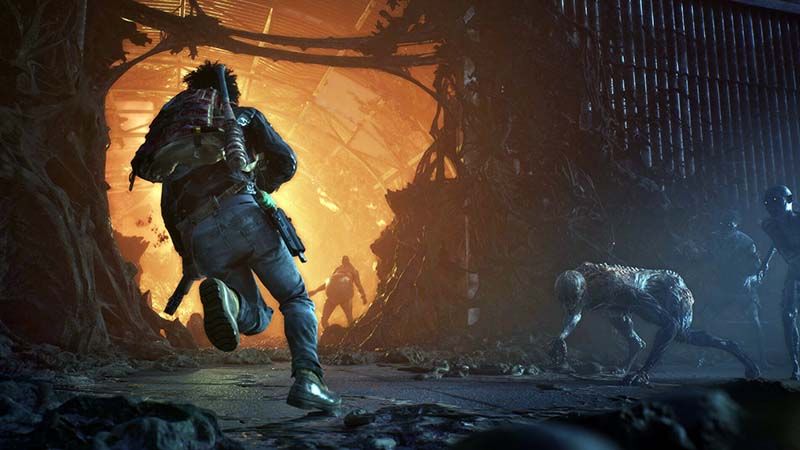
Undead Labs head Philip Holt says he was "irresponsibly transparent" with staff before significant layoffs, tying State of Decay 3's future to Xbox's wider first-party reset.
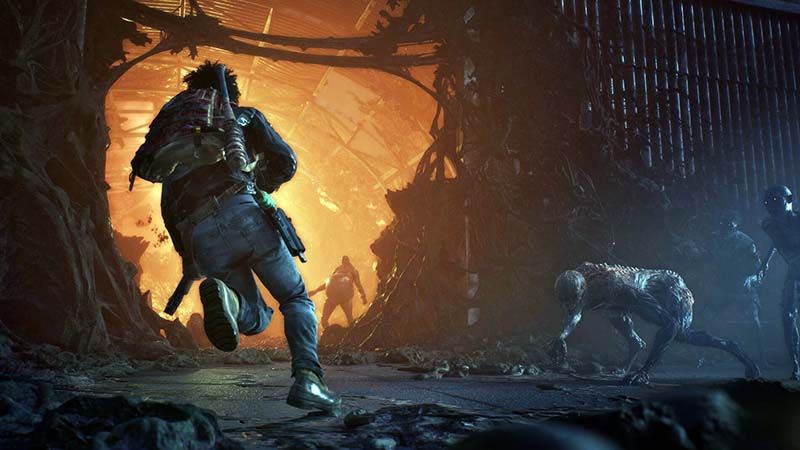
Image: thepcenthusiast.com
Undead Labs survived Xbox's reset, but not without significant cuts
Undead Labs studio head Philip Holt says he was "irresponsibly transparent" with employees while preparing them for likely job losses during the studio's separation from Xbox, according to an interview with The Game Business reported by VGC and Game Developer. Holt declined to give a headcount for the layoffs, saying he did not want to reduce affected colleagues to a statistic, but he acknowledged that a "significant" number of people left the company.
That is the hard fact at the center of the latest State of Decay 3 update: the game remains in development, the studio avoided closure, and Undead Labs is no longer inside Xbox Game Studios. The cost was a painful restructuring that Holt says staff saw coming because he chose to keep them closely informed even when the outlook was poor.
Holt told The Game Business that instead of keeping employees "in the dark" or manufacturing an alternate reality, he tried to bring them into the process. He said the team had direct conversations early in the process that under almost any scenario there would be job losses. In his view, that preparation meant people were not blindsided on the day layoffs happened, even though the outcome remained painful.
The tension is obvious. Transparency may have reduced uncertainty for those inside Undead Labs, but the need for that transparency came from a brutal business transition: a former Xbox first-party studio buying itself out, finding financing, reshaping its cost structure, and still trying to finish State of Decay 3 for a targeted 2027 release.
The phrase "irresponsibly transparent" points to a bigger studio leadership problem
Holt's wording is striking because it frames openness as both a virtue and a risk. According to VGC's account of The Game Business interview, he said he was "irresponsibly" transparent while the studio was going through Xbox's reset process. Game Developer similarly reported that Holt tried to be candid with employees as layoffs loomed during the move from Xbox ownership to independence.
In studio management terms, that is a difficult balance. Too little information leaves developers refreshing internal chat channels and outside reports while trying to build a game under threat. Too much incomplete information can create its own instability, especially when financing, ownership, publishing, and team size are all in flux. Holt's comments suggest he chose the second risk because the first one felt worse.
Game Developer connected Holt's approach to the broader principle behind advance layoff notice, citing California's WARN Act as an example of rules designed to give employees time before mass layoffs. The outlet noted that Undead Labs is located in Washington, so that California law is not presented as directly governing the studio. The useful comparison is ethical rather than legal: advance knowledge can help workers prepare, even when it cannot save the jobs.
Holt said the surviving team did not view the company, or him personally, as having done "great damage" to people they cared about, according to VGC's quoted excerpts. That is his assessment, and it should be treated as such. What is confirmed is that Undead Labs cut staff after its buyout, that Holt discussed likely layoffs ahead of time, and that the studio is now rebuilding around a smaller, independent structure.
State of Decay 3's early reveal now looks like a defensive move
The layoff comments land harder because Holt also discussed the original State of Decay 3 reveal in the same The Game Business interview. IGN reported that Holt said the game was announced early partly because he worried Undead Labs might be "swallowed up" or divested before it could show the world what it was working on.
State of Decay 3 was revealed at an Xbox showcase in 2020, two years after State of Decay 2 and two years after Microsoft acquired Undead Labs in 2018. According to IGN's report, Holt said a small team was working on the game at the time, but development did not pick up until 2023. He also described the announcement as a marker on the table: State of Decay 3 was public, the audience knew it existed, and the project had a visible place inside Microsoft's portfolio.
That context changes the shape of the game's long public timeline. A 2020 reveal followed by years of limited visible progress can look, from the outside, like ordinary showcase overreach. Holt's explanation adds a strategic motive. He saw Undead Labs as a relatively small game team inside a giant organization during a period when Microsoft was still acquisitive. IGN notes that Microsoft had acquired Undead Labs alongside Playground Games, Ninja Theory, and Compulsion Games in 2018, and later announced its plan to buy Activision Blizzard in 2022.
The reveal, then, was not presented by Holt as a pure production milestone. It was also a positioning move. That does not erase player frustration with long waits, but it helps explain why State of Decay 3 was made public before it had the staffing profile players might assume from a first-party showcase trailer.
Xbox first-party development strain is visible in the studio map
The Undead Labs story is part of a wider Xbox first party development strain reported across multiple outlets. VGC reported that Xbox CEO Asha Sharma revealed in June that Microsoft was "resetting" its games business, a process that later involved significant job losses and studio restructuring. VGC also reported that Undead Labs was at one point among studios facing closure unless a buyer could be found.
The Game Business reported that at the start of July, Xbox said Undead Labs had a buyer, and that the outlet understood UK developer Splash Damage was going to pick it up. By September, however, the new owner was Undead Labs itself. VGC reported that Xbox later confirmed Undead Labs had not been closed and had gone fully independent.
That sequence matters because it shows how unsettled the divestiture process appears to have been from the outside. The publicly visible outcome is clear: Undead Labs separated from Microsoft through a management-led acquisition, using a company called Full Measure according to VGC, and is issuing stock options to staff. The path to that outcome involved at least one reported alternate buyer, a search for financing, and layoffs shortly after independence.
Other former or affected Xbox studios appear in the same reporting ecosystem. IGN's article places Undead Labs' independence alongside reports of Ninja Theory layoffs amid closure and Compulsion Games charting its own path. Those examples should not be collapsed into one identical story, because each studio's circumstances differ. But together they point to a portfolio being rebalanced after years of acquisition, with smaller creative teams facing new pressure to justify cost, ownership, and publishing fit.
A first-party tentpole pitch became an independent survival equation
Holt described the shift in strategy bluntly in The Game Business. Inside Xbox first party, he said the idea for State of Decay had been that with proper support it could rise to tentpole status alongside some of Xbox's biggest brands. As an independent company, the studio now has to survive on a durable cost structure that can carry it through launch and be supported by the revenue the game produces.
That is a major change in the game's operating logic. A first-party platform holder can fund a project for reasons that include Game Pass value, portfolio breadth, brand presence, and long-term ecosystem strategy. An independent studio finishing the same game has to think differently about burn rate, publisher terms, investor confidence, staffing size, and post-launch revenue.
The Game Business reported that Holt believed Undead Labs was close enough to revenue that the capital needed to finish State of Decay 3 was not impossible for the studio to raise itself. He also said the market is challenging, with capital available but nervous, and that investors could easily say no when an opportunity carries complications around funding needs, team costs, and decision speed.
For a strategy-minded read of the situation, this is the pivot point. State of Decay as a design concept is about communities surviving under resource pressure. Undead Labs is now operating under a business version of that same constraint. The studio must protect the core promise of State of Decay 3 while lowering or stabilizing the cost base that a large first-party structure could previously absorb.
The game is still targeted for 2027, but unanswered questions remain
The most important practical update for players is that State of Decay 3 has not been cancelled. Game Developer reported that Holt says the game remains on target for a 2027 release. The Game Business reported that the project is in alpha, scheduled for release next year, and that cuts have required some changes but no radical rescope.
That is encouraging, but it is not the same as a dated launch plan. The provided reporting does not confirm a specific release date, price, final platform list, performance targets, editions, preorder timing, or how the new unnamed publisher will handle distribution. The Game Business says State of Decay 3 has a new, unnamed publisher. Until that publisher is announced, players should treat storefront details and platform assumptions with caution unless they come from an official listing or statement.
IGN reported that Holt said State of Decay 2's post-launch updates informed State of Decay 3's design, with the earlier game effectively serving as a laboratory for ideas. That is the most concrete design signal in the current reporting. It suggests Undead Labs is carrying forward lessons from years of live support rather than starting from a blank slate, though the sources provided do not specify which systems have changed.
For now, the responsible read is to separate three things. Confirmed: Undead Labs is independent, layoffs were significant, State of Decay 3 is still in development, and Holt says the game is targeting 2027. Reported but not fully detailed: the earlier buyer situation, the new unnamed publisher, and the internal changes caused by staff reductions. Still unannounced: the exact launch date, final commercial plan, and how much the game players eventually see will reflect the original Xbox first-party ambition versus the leaner independent version that now has to ship it.