
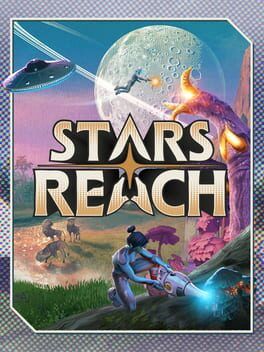

A preview of Stars Reach’s upcoming Steam Early Access launch, digging into Raph Koster’s design philosophy, its player‑driven sandbox systems, ambitious world simulation tech, and how it sets itself apart from modern MMORPGs.
Stars Reach is finally getting ready to throw open the doors. After years of quiet tests, design blogs, and tech talks, Raph Koster and Playable Worlds are aiming to bring their sci fi sandbox MMORPG to Steam Early Access this summer. Servers are shifting into near 24/7 operation, public playtests are ramping up, and the team is treating this as the moment when their “living galaxy” has to stand up to real player pressure.
That matters because Stars Reach is trying to do something different in a genre that has grown comfortable with static theme park rides and short session survival loops. Koster, best known for Ultima Online and Star Wars Galaxies, has spent decades arguing that virtual worlds should be places that run on simulation and social systems, not just combat content. Stars Reach is his attempt to build that manifesto into an MMO that can actually ship in the 2020s.
Early Access as a live world stress test
Playable Worlds has been running limited tests for a while, but this summer’s Early Access launch on Steam is meant to be the point where Stars Reach stops being a weekend experiment and starts behaving like a real online world.
The studio is targeting almost continuous uptime, with maintenance windows rather than long dark stretches between test phases. New invitations will keep rolling out, and the team wants players to treat the galaxy as somewhere they can log into at any time, build, trade, and fight, then come back to see what changed.
That shift is important for a game built on systems that are supposed to evolve over days and weeks. Dynamic economies, ecological simulation, and territorial control do not mean much if the servers are only on for a few hours. Early Access is less about content completeness and more about proving that the simulation can hold together when thousands of players push on it at once.
Raph Koster’s design philosophy: worlds first, content second
Koster’s fingerprints are everywhere in Stars Reach. His talks and blog posts keep circling the same themes: player agency, emergent play, and worlds that feel like they exist when you log off. Where many modern MMOs lean on handcrafted quest chains and linear progression, Stars Reach is structured more like a giant toolbox.
The game is classless and skill based. You improve at what you do and naturally drift into roles based on your behavior, not a menu choice at character creation. If you take time away from a craft, you may need to practice again to get sharp. That alone already marks it apart from vertical level treadmills that separate friends by item level and raid tiers.
Koster has also framed Stars Reach around a set of design pillars rather than a single feature. Systems should be interconnected so that combat, crafting, economy, and exploration feed into one another. Social structures, such as settlements and player organizations, are expected to provide long term goals instead of a traditional “finish the story and log out” arc.
In short, Stars Reach chases the kind of open ended play seen in the early days of the genre, but with lessons learned from decades of exploits, griefing, and churn.
A player driven sandbox instead of a scripted ride
When you drop into Stars Reach you are not being funneled down a quest corridor. You arrive on a frontier world that is mostly untouched, with other players carving out their own plans nearby. Progress is about changing that world in persistent ways.
Building is central. The team is in the middle of overhauling the construction system so that walls and floors snap to a grid and rotate in fixed 45 degree increments. That might sound dry, but it is a direct response to early tests where creative but irregular builds hurt server performance. The new system trades some raw freedom for smoother placement and better frame rates, then layers creativity back on with deeper texture customization for structures.
Crafting and maintenance are not optional side activities. Gear wears out, tools need repair, and industry chains matter. The studio has talked openly about wanting a real production ecosystem, where miners, refiners, builders, and explorers all rely on one another. Combat power is tied to that network instead of an endless loot treadmill dripping from instanced bosses.
The wildlife and environment are not just backdrop. Recent tests have featured new reptilian beasts, flying insectlike predators, and toxic puffball creatures that affect how you move through the landscape. These are tied into systems that govern population, behavior, and interaction with the terrain, rather than being simple spawn points.
Together, these pieces are meant to make Stars Reach feel like a place where your choices ripple outward. Establishing a settlement is not just dropping a prefab. It is an investment in infrastructure, defenses, logistics, and diplomacy with neighbors.
Under the hood: a cellular automata galaxy
The most ambitious piece of Stars Reach is its world simulation tech. Playable Worlds has described the foundation as a kind of cellular automata simulation, running both above and below the ground.
Terrain does not just sit still. Layers of soil, water, and atmosphere update in response to player actions and natural processes. Digging, building, and industrial activity alter the landscape over time. Resource veins can deplete or be rediscovered. Weather and climate vary between planets, and the team wants the simulation to be coherent enough that you can read the world like a map of past activity.
Creatures are also simulated entities, not just animated props. Each critter type runs its own AI logic that determines how it responds to players and to other species. Overhunting, environmental damage, or construction can all change local ecosystems. In theory, a frontier planet that experiences heavy exploitation should look and feel different weeks later.
This is the sort of technology Koster has said he wanted back when he worked on Ultima Online and Star Wars Galaxies, but could not fully realize at the time. With modern cloud infrastructure and more sophisticated simulation techniques, Stars Reach is positioned as the attempt to finally build that “living alternate world” he has been talking about for thirty years.
How Stars Reach differs from today’s MMOs
It is easy to look at screenshots of a sci fi character with a rifle standing in front of a base and think of a survivalbox or extraction shooter. Koster has been very explicit that Stars Reach is not that.
For one, it is a full scale MMO with a shared galaxy, not a small lobby based instance. Progress is long term and character centric, not run based. While there is survival style gathering, crafting, and base building, those pieces feed into a persistent economy and social hierarchy instead of a match that resets.
Compared to modern theme park MMOs, Stars Reach pushes in almost the opposite direction. There is no rigid raid tier schedule, no narrow “main story quest” that defines your experience, and no strong gear score ladder to climb every patch. The challenge is not beating the latest dungeon but shaping a world over months.
The closest obvious touchstones are older sandboxes like early EVE Online or the launch eras of Ultima Online and Star Wars Galaxies. Even then, Stars Reach leans harder on environment simulation and on presenting the galaxy as many different planetary frontiers rather than a single contiguous map.
All of this makes Stars Reach a risk. Many players have grown comfortable with clearly marked goals and short daily checklists. Playable Worlds is betting there is still a sizable audience hungry for a messier, more emergent type of MMO where community stories matter more than cutscenes.
The road into and through Early Access
The studio is realistic about what Early Access will look like. Systems will be in flux. Performance tuning for the building overhaul is ongoing. Combat balance, especially for indirect fire weapons like grenade launchers, is still being iterated. The onboarding experience has recently been revamped with a new intro sequence to better explain what you can actually do in the galaxy.
The key is that all of these changes will be happening in a world that stays online. As Stars Reach hits Steam, the team wants to watch how players colonize planets, which trades become dominant, how often ecosystems collapse, and whether the social fabric holds under pressure.
For MMO veterans who miss the sense that anything can happen when you log in, Stars Reach’s Early Access launch is one of the more intriguing experiments on the horizon. If the simulation tech holds up and Koster’s design pillars translate to fun, the game could be a proof of concept for a new wave of systemic virtual worlds. If not, it will at least be a fascinating case study in how far you can push simulation in a live MMO before reality pushes back.