
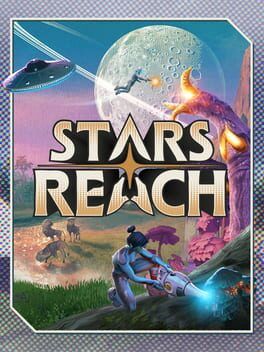
Stars Reach is now in Steam Early Access after its free playtesting window closed. Here is what Playable Worlds says is playable at launch, what is still planned, and how to judge the paid packs before buying in.
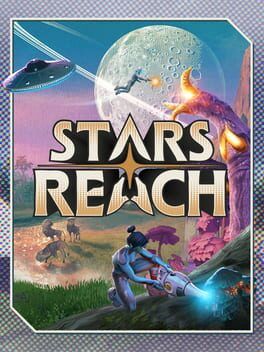
Image: IGDB
Store links: Stars Reach on Steam
Stars Reach has moved from free tests to a paid Steam launch
Playable Worlds has launched Stars Reach into Early Access on PC via Steam, turning Raph Koster’s long-running sandbox MMO project from a public testing effort into a paid release. MonsterVine and MMORPG.com both report that the game is now live in Early Access, while MMOHuts reported ahead of launch that Playable Worlds had shut down the Stars Reach test servers after a final public Server Slam.
That handoff is the key tension around the Stars Reach launch. This is not a quiet store-page flip for a conventional RPG with a fixed campaign and a clean checklist of finished zones. It is a paid entry point into a simulated online world whose central promise is that terrain, ecosystems, settlements, and player decisions can change the state of planets over time. MMOHuts described the shutdown as the end of the free testing window rather than a surprise closure, noting that Stars Reach had already gone through multiple wipes, alpha weekends, and pre-alpha sessions before Early Access.
Playable Worlds framed the August 18 date in its July 30 Starside post as the moment when the public could begin buying in through three Steam Early Access packs. GamesBeat reports that the launch follows eight years of work on the sci-fi online game. For players searching for Stars Reach early access details today, the practical question is less whether the servers exist and more whether this particular kind of sandbox is something to join while its rules, economy, and long-term political systems are still being assembled.
What is playable in the Early Access build
The current Stars Reach Steam Early Access version includes multiple planets, exploration, resource gathering and harvesting, combat, crafting, and player trading, according to MonsterVine’s launch report and GamesBeat’s launch coverage. Playable Worlds is positioning that as the foundation of a classless sandbox MMO rather than a theme-park MMORPG built around prescribed combat roles.
The systems pitch is broad. MonsterVine reports that players can carve rivers, melt stone into lava, gather resources, craft gear, build homes, form settlements, trade with other players, and contribute to governments for entire planets. GamesBeat describes the game’s larger ambition as a persistent galaxy where players can terraform worlds, build civilizations, tame fauna, create trade empires, and leave durable marks on the worlds they discover.
For an RPG player, the important difference is where progression appears to live. MonsterVine says Stars Reach uses a classless progression system with hundreds of skills, with room for combat, crafting, gathering, trading, exploration, settlement building, and other roles. In an earlier release-date report, MonsterVine described possible player identities as explorers, crafters, journalists, politicians, warriors, or hybrids. Those are reported role paths, not a confirmed full profession list in the sources provided, but they show how Playable Worlds wants players to think about advancement: less as a class pick at character creation, and more as a record of what a character repeatedly does in the galaxy.
Combat is part of the launch package, but the early access pitch is not centered solely on dungeon progression or raid ladders. MonsterVine’s launch report says combat spans land and space, with players defending homesteads and fighting hostile enemies. GamesBeat also reports that players battle enemies and defend homesteads across land and space. The sources do not provide performance targets, server capacity numbers, system requirements, controller support details, or a final endgame structure, so buyers should treat the current information as a systems overview rather than a complete buyer’s manual.
The sandbox promise depends on simulated consequences
Stars Reach is being sold on persistence and reactivity, and that is where its MMO identity becomes most interesting and most risky. Playable Worlds says its cloud-native technology powers reactive systems in which trees can grow from saplings, lakes can freeze, and caves can collapse either naturally or through player action, according to MonsterVine and GamesBeat. Those changes can close old routes, alter resources, and force players to adapt as planets change.
The strongest design claim in the source material is permanence. MonsterVine reports that player choices can leave lasting marks, including shifted ecosystems, disappearing wildlife, and player-built communities that rise or collapse based on what people do. GamesBeat similarly describes a galaxy where every asteroid, planet, and settlement exists in a persistent world that evolves through player actions. If that works at scale, Stars Reach is aiming for the older sandbox lineage associated with Koster’s career rather than the more curated MMO model that routes players from hub to hub.
The sources also make clear that this is a technical bet. MMOHuts says the final Server Slam was held so players could stress the game’s infrastructure before the paid release, and that Playable Worlds was already using data from that test for Early Access preparation. That matters because a simulated world is only as convincing as its stability under real population pressure. Rivers, collapsing caves, wildlife migration, and settlement economies sound powerful on paper, but Early Access is the stage where players will find out how those systems behave when communities optimize, grief, organize, hoard resources, or simply crowd the same starting paths.
Playable Worlds has made at least some pre-launch improvements before opening the paid build. GamesBeat reports that substantial updates prior to Early Access included an improved character creator with enhanced customization options, combat refinements, and enhanced wildlife migration with increasing threat levels if left unchecked. MonsterVine’s July release-date report also cited expanded character creation, combat changes, and wildlife migration that can become more dangerous over time. Those details suggest the studio is tuning the fundamentals of identity, fighting, and ecology together, which is exactly where a classless sandbox MMO either gains depth or becomes hard to read.
Playtesting ended, but the roadmap is still alive
MMOHuts reported that Playable Worlds shut down Stars Reach test servers before Early Access and described the final public test as a weekend Server Slam. The outlet also noted that the studio ran a “How to Homestead” session alongside the sendoff, focused on claiming land and keeping a player’s part of the galaxy intact. That emphasis is telling. Homesteads, settlements, and territory are not side dressing in the current pitch. They are part of the progression fantasy.
After Early Access begins, Playable Worlds plans to share a fuller list of updates and discuss its living roadmap, according to MMOHuts. The same report says the studio is presenting that roadmap as subject to change, so players should expect features to shift as testing continues. That is normal Early Access language, but it carries extra weight for a massively multiplayer sandbox. Changes to politics, factions, PvP, tools, or resource flow can reshape the value of a player’s time investment.
Playable Worlds has already named several planned additions. MonsterVine’s launch report says the studio plans to add spaceships, more species, factions, political systems, and PvP combat over time. Its earlier July report said PvP and factions were planned for the full 1.0 release. Read together, the available reports point to a game that is opening with the world-building, crafting, trade, exploration, and combat base in place, while several of the systems that usually define long-term MMO conflict and identity are still in development.
There is also a small but useful example of how messaging can move during this transition. MonsterVine’s July release-date report said future updates would introduce a galaxy-spanning hive mind capable of consuming entire planets. MonsterVine’s launch report says the Early Access version includes a cooperative threat in the form of a planet-eating hive mind. GamesBeat’s launch article also says the Early Access version introduces a unique threat, though the provided excerpt cuts off before completing that description. The safest reading is that launch messaging now treats the hive-mind threat as part of Early Access, while earlier pre-launch coverage presented it as future content. Players buying specifically for that feature should verify its current in-game state on the official Steam page or Playable Worlds channels before making the purchase.
Pricing, packs, and the cost of buying early
Stars Reach is a paid sandbox MMO early access release, not a free continuation of the prior playtest. Playable Worlds announced three purchase options in its July 30 Starside post, and MonsterVine and MMOHuts repeat the same pricing: the Firstlight Pack costs $29.99, the Voyager Pack costs $49.99, and the Cosmonaut Pack costs $79.99.
Playable Worlds described the $29.99 option as the base game in its Starside post. The same post says the higher tiers are for players who want to support the studio and receive cosmetics and early unlocks for two upgraded tools. MMOHuts similarly reports that the Voyager and Cosmonaut packs include extra cosmetics and early tool upgrades. The sources do not provide a complete itemized comparison for each tier, so the responsible advice is simple: if you mainly want access to the Stars Reach MMO as it exists today, the Firstlight Pack is the confirmed entry point. If cosmetics, support value, and early tool upgrades matter to you, the higher tiers may be relevant, but the provided sources do not support a deeper value judgment on their contents.
The creator program is also returning alongside Early Access. MMOHuts reports that applications are open through Creators.gg and that the program runs through September 4. Approved creators can earn keys, in-game titles, and merchandise, while unfinished progress from the playtest version of the program will carry over. That is worth knowing because early sandbox communities are often shaped by streamers, guide makers, settlement leaders, and economy organizers. A creator rewards program can help build visibility, but it can also accelerate the speed at which optimal routes, land claims, and social structures form.
For ordinary buyers, the main purchasing risk is time rather than a single feature. Early Access MMOs ask players to tolerate wipes, balance changes, outages, incomplete loops, and systems that may be reworked after communities begin relying on them. MMOHuts specifically notes that Stars Reach has already been through multiple wipes during testing. The provided sources do not say whether future wipes will or will not happen during Early Access, so players who care deeply about permanent character or settlement progression should look for an explicit Playable Worlds statement before treating any launch-week accomplishment as guaranteed forever.
Who should start now, and who should wait
The best case for buying Stars Reach Steam Early Access now is curiosity about systems. If your favorite RPG stories come from player choice, settlement drama, odd professions, trade routes, ecological pressure, and improvised group goals, Stars Reach is being built directly for that appetite. Koster’s history matters here because MonsterVine identifies him as the lead designer of Ultima Online and creative director of Star Wars Galaxies, two names that still carry weight among players who miss MMOs where social and economic roles had room to breathe.
The best case for waiting is equally clear. Playable Worlds is still planning major features, including spaceships, more species, factions, political systems, and PvP combat, according to MonsterVine. MMOHuts says the roadmap is living and subject to change. The sources do not confirm console versions, a final 1.0 date, launch server structure, long-term monetization beyond the paid packs, or detailed technical performance. If your MMO enjoyment depends on polished combat ladders, settled faction rules, large-scale PvP, or a known endgame path, the current Stars Reach launch may feel like entering during the foundation pour.
Players who do join early should approach it like a systems test with social stakes. Learn gathering and crafting, watch how wildlife migration and resource changes affect local planning, and choose a homestead or settlement group with the expectation that rules may evolve. In a classless game with hundreds of skills, early indecision can be productive if the game rewards breadth, but the sources do not yet explain respec rules, skill caps, or long-term build constraints. Until Playable Worlds clarifies those details, treat early characters as exploratory rather than solved builds.
Stars Reach’s Early Access launch is concrete: it is available on PC via Steam, with paid packs starting at $29.99, after the end of its free playtesting phase. The larger promise is still being tested in public. For sandbox MMO players, that may be the attraction. For everyone else, the smartest move is to decide whether you want to help shape an unfinished galaxy or wait until the galaxy has firmer laws.