
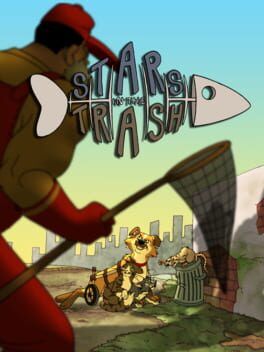

Why this traditionally animated, narrative-driven cat adventure is a cozy treat for fans of Stray and classic Disney-style films.
If your ideal holiday game is something warm, whiskered, and a little bit nostalgic, Stars in the Trash quietly ticks all the right boxes. Developed by Valhalla Cats, this narrative-driven 2D platformer feels like someone pulled a classic animated movie out of the VHS era, then let you jump inside it as the star of the show.
You play as Moka, a spoiled housecat who decides that being pampered indoors is not enough. After slipping out into the city, Moka’s world opens up into alleyways, rooftops, junkyards, and neon-lit streets. The setup is simple, but the emotional tone is closer to the kinds of animal adventures you’d expect from an older Disney feature or a Don Bluth film. There is comfort and coziness in every frame, but also a hint of danger and melancholy as Moka discovers the reality of life outside.
That mood is sold first and foremost by the animation. Stars in the Trash is traditionally hand-drawn, frame by frame, with characters that squash, stretch, and emote like they were inked on animation cels. Backgrounds look like watercolor storybook paintings, with soft hues during quiet interior scenes and richer, deeper color when the city comes alive at night. It is the kind of art that immediately reads as film-quality rather than “just” game art, and the animations linger on little details like Moka’s tail flicks, ear twitches, and clumsy jumps. If you grew up on 2D animated films and have always wished you could walk around inside one, this is very close to that fantasy.
Underneath all that artistry is a side-scrolling platformer that keeps things approachable. You guide Moka through layered environments, hopping between ledges, squeezing through gaps, and using that nimble cat body to explore vertical spaces. The platforming is cinematic rather than punishing, so you are rarely dealing with precise, split-second jumps. Instead, the game gives you enough room to move, land, and soak in the scenery while still feeling like you are actively navigating a physical world.
Exploration is just as important as jumping. Each area is packed with small interactions that reinforce the fantasy of being a curious cat. You knock things off shelves, dart under furniture, hide in boxes, and paw at objects that might open up new paths. You also encounter other animals and humans, some friendly and some threatening. In a kennel sequence, for example, you are sneaking through cages and shadows, keeping a wary eye on the imposing kennelman. These moments lean more into tension than difficulty, with light stealth and timing challenges that keep the story moving.
Puzzles are woven into the environments instead of interrupting them. You might lure a dog away from a fence using a distraction, tip over an object to create a makeshift ramp, or time your movements with passing vehicles or patrolling humans. Solving these scenarios feels intuitive, as if you are improvising your way through a living animated scene rather than pausing everything to “do a puzzle.” The overall structure is compact and focused, making Stars in the Trash feel like a short feature film you play through in a handful of cozy sittings instead of a sprawling epic.
If you are coming from Stray, the appeal is immediate. Both games center you in the world as a cat, shifting familiar city spaces into towering, alien landscapes where every ledge and vent becomes meaningful. The key difference is tone and perspective. Stray imagines a sci-fi robot city in 3D, with a more overtly mysterious, sometimes lonely mood. Stars in the Trash keeps things side-on and hand-drawn, telling a more intimate, grounded story about a domestic cat discovering both the thrills and risks of independence. Where Stray leans into cyberpunk curiosity and environmental storytelling, Stars in the Trash leans into traditional animation and storybook heart.
That classic cartoon DNA is felt beyond visuals. The pacing echoes older animated features, with distinct emotional beats: the initial burst of freedom, the playful early city wanderings, the darker brush with capture and danger, and the potential for reconciliation or acceptance at the end. There are few words and a lot of expression. The soundtrack leans on gentle, melodic themes that swell at key cinematic moments and sit quietly underneath exploration, perfect for late-night or winter-evening play sessions.
This makes Stars in the Trash a particularly good fit for the holiday season. It is short enough to complete across a weekend, or to tackle over a few evenings in between gatherings and obligations. The cozy framing of blankets, hot drinks, and soft lighting matches how the game actually feels to play. Families can pass the controller around without worrying about complex systems or intense combat, while solo players can wrap themselves in the bittersweet comfort of an animated cat adventure that knows when to tug the heartstrings and when to simply let you bask in a well-drawn cityscape.
For fans of Stray, there is the joy of inhabiting another feline perspective, this time filtered through hand-drawn, old-school animation that feels familiar and fresh at once. For fans of classic animated films, Stars in the Trash is like finding an unearthed 2D feature from a bygone era and discovering that you are the one guiding its hero scene by scene. In a season full of big, noisy blockbusters, this small, tender game might be exactly the slower, softer kind of adventure you are looking for.