
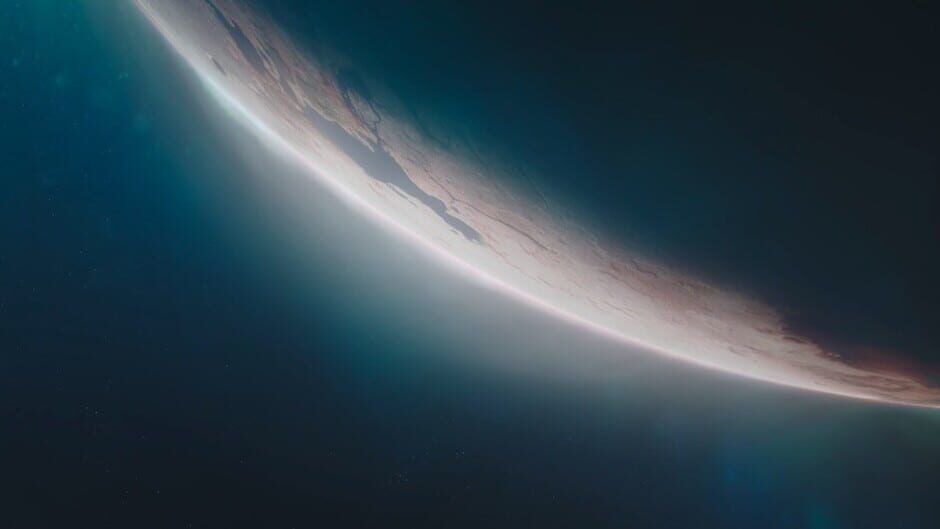

Real-time system travel, smarter loading, and a combat-heavy expansion are turning Starfield’s weakest systems into a new pitch for PS5 players.
A systems-first makeover for Starfield
Starfield’s long-teased second act is finally defined. On April 7, Bethesda is rolling out the Free Lanes update, the Terran Armada story DLC, and a full PS5 launch all on the same day. It is not just a content drop. It is a structural attempt to rebuild how the game moves, loads, and rewards you for living in its universe.
For a game that launched with an exploration fantasy undercut by loading hitches and menu mazes, this is the closest thing to a systemic apology. The question now is whether Free Lanes plus Terran Armada is enough to finish Starfield’s quiet redemption arc, and how that package lands with a PlayStation audience meeting the game for the first time.
Free Lanes: from fast travel network to lived-in star systems
At launch, Starfield’s star map was powerful but clinical. Jumping from orbit to orbit was efficient, yet the gaps between points were nothing but fades to black. Free Lanes is Bethesda’s attempt to weld those cut seams into something that feels like a continuous place.
The headline change is real-time flight between planets in a single system. You can pick a nearby world, set a vector, and burn toward it rather than chain fast travels through menus. Importantly, this is not full Elite Dangerous style seamless traversal between every star in the galaxy. Free Lanes is scoped to local space in each system, but that scope is aimed directly at the game’s biggest pain point: short hops that felt weirdly abstract for a space RPG.
Cruise Mode is the connective tissue. Once engaged, your ship sets course and maintains speed, letting you leave the pilot seat and move around your interior while space scrolls by outside. Encounters now spawn into that space rather than out of thin air after a loading screen. Asteroid fields, derelict ships, ambushes, and points of interest appear along the route like environmental punctuation instead of separate scenes.
The friction change here is subtle but profound. Previously, any decision to travel somewhere had two costs: the literal loading time and the mental tax of diving back into the map, finding the right icon, and confirming another cut to black. Free Lanes removes one of those loops altogether. You still hit loads when you break between planet surfaces, interior cells, and systems, but the busywork links inside each system are now spaces you can inhabit, not slots in a UI.
Smarter loading: sanding down the seams instead of hiding them
The Free Lanes update does not magically erase all of Starfield’s loading screens, but it changes when and why they happen.
Most importantly, many of the shortest, most annoying loads are now absorbed into Cruise Mode. In the launch version, going from one orbital activity to another in the same system could mean multiple transitions: map, select destination, confirm, load into new instance. Now, much of that friction is folded into one continuous space where your ship is already moving. Loading becomes reserved for major context shifts like landing on a planet or warping to another star.
On top of that, fast travel itself is getting less fussy. Favorite locations and streamlined menu flows reduce the series of confirmation steps that used to make every hop feel like filing a flight plan at the DMV. The idea is not to pretend that loading does not exist. It is to ensure that when it does, the decision leading to it felt meaningful.
Add the Moon Jumper land vehicle to this and you get another layer of friction reduction. Surface traversal was often a choice between over-encumbered slogging or yet another fast travel. The new boost-heavy rover cuts the dead air between points of interest without forcing another trip through a loading tunnel.
Taken together, these tweaks do not suddenly transform Starfield into a fully seamless space sim, but they reshape the pacing curve. Less time staring at progress bars, more time perpetually “doing something” in transit, whether that is managing your ship, chatting with crew, or diving into a surprise skirmish along the lane.
Loot, crafting, and New Game Plus: closing the systemic loop
Free Lanes is also Bethesda’s biggest attempt so far to fix the feeling that Starfield’s systems never quite locked into a satisfying progression loop.
The new X-Tech resource sits right at the junction of space traversal and character power. You acquire it through higher-end activities and invest it into systems that were previously too random or too limited, like weapon perks and ship tuning. Legendary modifiers can now be rerolled and eventually chosen outright, letting players deliberately chase specific builds instead of hoping the loot table finally cooperates.
Quantum Essence, which used to be a vague currency tied to Starborn powers and New Game Plus, has been recontextualized into something far more concrete. Being able to spend it directly to level up powers turns a nebulous endgame grind into a clear, trackable set of upgrades. The Quantum Entanglement Device, which lets you carry a curated set of items through the Unity resets, attacks one of the sharpest complaints about New Game Plus: that it felt like it erased your history rather than honored it.
These are systemic tweaks with narrative consequences. Traversing universes no longer means letting go of every hard-earned artifact and weapon. Investing in specific builds is less of a gamble. For returning players that already bounced off once, this is the kind of systems patch that can justify a fresh run.
Terran Armada: combat as cohesion
If Free Lanes is the plumbing overhaul, Terran Armada is the new wing built atop it. The DLC is a paid expansion that leans into the game’s military fiction, focusing on a faction of former Colony War soldiers who have reinvented themselves as a mechanized fighting force.
Mechanically, Terran Armada looks like an excuse to put the updated systems under stress. Its new campaign arcs around a fresh hub structure, a new companion named Delta, and an Incursion system designed for repeatable combat operations. That structure dovetails with Cruise Mode and systemic travel. Instead of selecting contracts from a terminal and blinking into an instanced battle, you are more likely to use Free Lanes to patrol, intercept, and respond to threats as they manifest in space around you.
Thematically, this also matters for the redemption arc. One of Starfield’s lingering criticisms is that its various factions sometimes feel like parallel tracks rather than parts of a single living constellation. By giving a specific military faction its own mechanical footprint across the star systems, Terran Armada has a chance to make the universe feel more reactive and less like isolated quest pipelines.
If the DLC can tie space battles, boarding actions, and ground assaults into the same web of traversable lanes that Free Lanes is stitching together, then Starfield’s combat sandbox starts to resemble a true campaign map rather than a list of missions.
The redemption arc: from promising tech demo to cohesive RPG
The shape of Starfield’s recovery is clearer now. Shattered Space laid early groundwork by adding a focused, horror-tinged storyline and a more distinctive region of space. Free Lanes and Terran Armada push in a different direction, targeting the skeleton of the game rather than its side stories.
In 2023, Starfield felt like a brilliant toolkit trapped inside its own loading screens. Systems such as ship building, outpost construction, and perk-driven combat were deep, but the connective tissue between them was frayed. The friction to move between activities was rarely satisfying friction. It was administrative friction: menus, fades, and backtracking.
With Free Lanes, Bethesda is effectively admitting that the criticism was accurate and using that as a design north star. Put more of the gameplay into the gaps. Make travel its own activity instead of a tax. Turn currencies that once felt abstract into tangible levers. Let New Game Plus carry scars and souvenirs instead of wiping the slate.
Terran Armada slots into that arc by offering a scenario that depends on the new systems working together. If you want players to feel that your reimagined travel has value, give them a reason to crisscross systems in a living military campaign rather than simply beelining to the next main quest marker.
Whether this becomes the moment people talk about Starfield the way they now talk about No Man’s Sky’s renaissance depends on execution. But structurally, this is the first time the game’s big systems, its live update strategy, and its narrative ambitions all seem aligned.
PS5 launch: a second first impression
For PS5 players, April 7 is not a patch. It is the baseline. They will never see the launch version of Starfield or its most notorious loading bottlenecks. What ships to PlayStation is effectively Starfield 2.0, with Free Lanes wired in from the start and Terran Armada ready as an immediate expansion path.
That has serious implications for how the game will be perceived. On Xbox and PC, word of mouth for months centered on the contrast between huge production values and oddly stilted exploration. The PS5 audience instead meets a space RPG where flying between planets in a system is simply how it works, where the New Game Plus loop is already modernized, and where the universe feels busier thanks to additional encounters and DLC hooks.
From a systems perspective, that means the PS5 crowd will likely judge Starfield less on what it could have been and more on how its current structure stacks up against other platform staples. It lands in a library where games like No Man’s Sky, Final Fantasy 7 Rebirth, and Cyberpunk 2077’s overhauled 2.0 edition have already demonstrated what strong post-launch pivots can look like.
If Free Lanes and Terran Armada hold up in practice, PlayStation players might experience Starfield not as a flawed giant being slowly healed, but as a confident, feature-complete interstellar RPG arriving fashionably late.
What matters most for the next audience
Looking at the total package, three changes seem most crucial for Starfield’s new wave of players.
First, the reworked traversal model turns spaceflight inside a star system into a stage rather than a series of loading lobbies. That makes ships feel like vehicles and homes instead of just load-bearing UI.
Second, the updates to loot, crafting, and New Game Plus plug systemic holes that previously punished long-term investment. When building a character, a ship, or an outpost feels less like gambling on bad rolls and more like steering a build, players are more likely to live in this game instead of sampling it.
Third, Terran Armada provides a focused content track that depends on those systems to sing. It gives returning players a reason to come back and offers new PS5 captains a coherent arc to follow after the main story or in parallel to it.
Starfield has always had the bones of a great systemic RPG. Free Lanes, Terran Armada, and the PS5 launch are Bethesda’s attempt to finally put those bones in motion. If the update can make every trip through the stars feel intentional rather than obligatory, then this might be the version of Starfield that people remember.